Electricity networks are winning a turf war over competitive markets with industry experts saying the latest triumph, $33 million in grants to install kerbside electric vehicle (EV) chargers, further weakens consumer protections.
But opponents of what could be seen as a systematic weakening of market ringfencing rules are not giving up, and are waging a battle royale against what has been variously described as a hot mess, gold plating 2.0, and evidence-free.
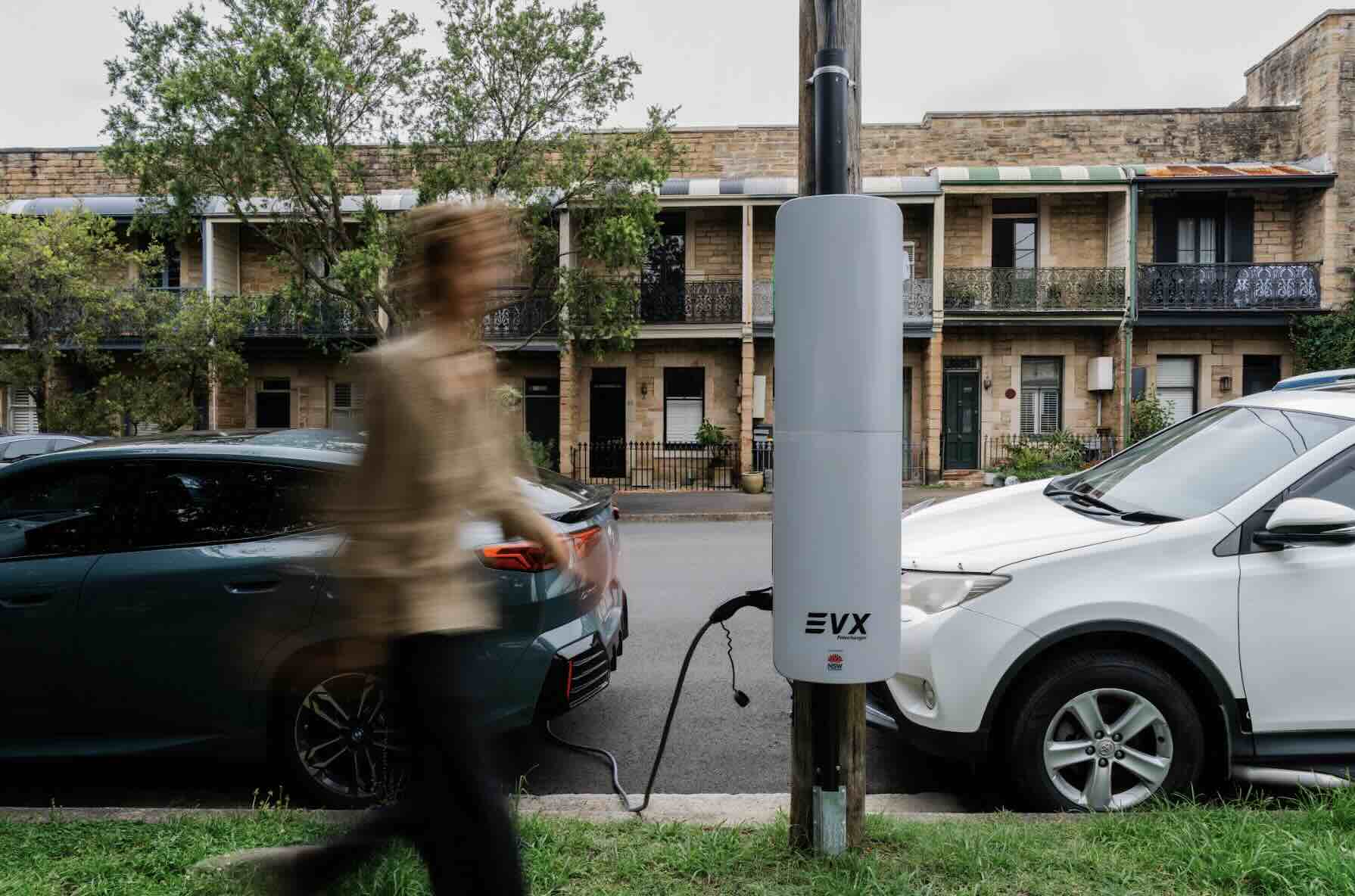
In September, the Australian Energy Market Commission (AEMC) released a draft regulation that will bend electricity market rules to allow distribution network service providers (DNSPs) to install more than 14,000 kerbside chargers using government and consumer money.
The federal Accelerating EV Charging Program will run from 2026-27 to 2028-29, and pay DNSPs to install kerbside chargers as a provider of last resort.
But industry analysts, consumer groups and private charging companies are horrified at what ended up being proposed, which allows DNSPs to install chargers and make money from them whether they’re used or not – by recovering the costs through electricity bills.
The AEMC expects the consumer share of the installations alone to add $1 to all household bills in a network area, whether they own an electric vehicle or not. It doesn’t estimate what the ongoing maintenance and operation cost over years will be.
The Justice And Equity Centre says the costs, of which 70 per cent will be paid for on consumer bills, is an “inappropriate” cross subsidy from general electricity consumers to EV users.
“The draft would result in electricity consumers that do not use the EVCI (EV charging infrastructure) being charged for a service they do not receive,” it said in a submission to the AEMC.
“This is fundamentally contrary to the consumer interest and risks setting a dangerous precedent.”
The ground for this precedent has already been well prepared, however, with a series of waivers from ring-fencing rules already in place allowing networks in New South Wales (NSW) and Victoria to run kerbside charger trials.
Ring-fencing rules expressly forbid networks, which are monopolies with guaranteed revenue, from competing with private industry.
Gold-plating 2.0
Nexa Advisory director Stephanie Bashir, who had a hand in writing the ring-fencing rules, says networks have been undermining these for years as they look at electrification as “gold-plating 2.0”.
“We cannot, in a cost of living environment, afford to put the gouging interests of the electricity networks and their shareholders on electricity bills and make it a burden on electricity users,” she says.
“The commissioners are about to approve a rule change with no evidence. That is the most dangerous precedent we can set right now, especially when electricity is so politicised.”
Bashir cites the ring-fencing waivers for kerbside charging trials in Melbourne and Sydney, another for Ausgrid’s controversial proposal to own neighbourhood batteries and rooftop solar in two Sydney areas, and the federally funded community battery program which networks have struggled to deliver on time and at reasonable cost.
“The kerbside charging program will fail like the community battery program, now a network battery program,” she says.
“This is only a stepping stone for the networks to remove any ring-fencing on all consumer assets that are controllable.”
She believes networks are ultimately wanting to be allowed into orchestration of consumer assets, a field that already lacks trust.
“You need to draw a line for consumer assets because they should not be a monopoly,” she says.
“There is no social licence for orchestration anyway and forcing this on everyone rather than having companies find the right products… This is not the time to be hiding costs on bills when we need trust from people.”
Iced out
On kerbside charging, New South Wales (NSW) DNSP Ausgrid has pushed to be allowed to install them with no dedicated parking, saying in advertising materials in 2024 that it wanted the devices to be “so widespread” dedicated parking isn’t needed.
But experts say that scenario means deploying too many chargers that aren’t used, but are paid for by all electricity users.
“The outcome of this [recent government program] will be thousands of kerbside chargers that are routinely blocked by petrol cars,” says Vehicle Charging Solutions Australia director Ross de Rango.
“It’s objectively a terrible plan.”
De Rango commissioned research in May that suggests Australians are not incentivised to buy an EV when they see a local kerbside charger.
But routinely seeing chargers blocked by petrol cars, is a real disincentive to 85 per cent of the respondents to the YouGov research.
De Rango says the AEMC is “not making evidence based decisions at this point,” but he will continue to argue against this particular rule in the hope that policymakers will listen in future.
“If it turns into a public hot mess, if we end up with thousands of EV chargers that are routinely blocked by petrol cars and there is media reporting on that, we can say we told you this would happen and maybe next time you’ll listen to the evidence,” he says.
Under pressure from the announced government policy, the AEMC appears to agree despite putting through the draft rule change to allow it.
The rule maker said the quiet part out loud a number of times in its draft ruling.
It noted evidence showing sites without dedicated parking, which are most likely to be used by DNSPs, aren’t used, acknowledge there isn’t evidence that kerbside chargers lift EV uptake, and found the DNSPs need between 1.5 and 3.8 more EVs on the road to cover the cost of installing kerbside chargers but private companies can reach breakeven immediately.
And it acknowledged that DNSPs are putting up barriers to entry for private companies, including months-long connection timeframes and pole access charges that range between zero and $300,000 a pole, and called for “a targeted and time-limited program” to get DNSPs to cooperate.
Evie Networks chief networks officer Bernhard Conoplia says they do the work with councils to find out where drivers need chargers, because they are investing “at risk”.
“The DNSPs do not do that,” he says.
“They just deploy where it suits their network because there is a guaranteed return paid for by consumers.
“We are not asking for special favours. We just want a level playing field. Networks could do [kerbside charging] today but they have to do it under the same rules as we have to do it. And they don’t want to play under the same rules.”
Toeing the line?
Networks have long argued they can toe the line between monopoly and competitive markets when it comes to kerbside chargers.
Various DNSP representatives have told Renew Economy over the years that since they own the infrastructure – and are under a regulatory obligation to make money from it – they are the most logical owner of pole-mounted charging equipment.
They already have the data on where to put the devices and won’t need to pay themselves the rent they are obligated to charge others.
Conoplia does not buy this argument.
Instead of throwing $33.2 million at DNSPs to fix a problem, governments could have required DNSPs to make space available and offer tariffs that provide a decent return for charger owners.
“If you remove the barriers then the competitive market will flood in,” he says.
“Networks have an important role and that is enabling connection, innovating with tariffs to make sure that everyone can connect to the network and use it in the way it’s designed.
“The competitive market’s responsibility is to deploy infrastructure and services for consumers. That’s really clear, when you start blurring those lines, you end up with a situation where you don’t have a level playing field.”
If you would like to join more than 29,000 others and get the latest clean energy news delivered straight to your inbox, for free, you can click here to subscribe to our free daily newsletter.