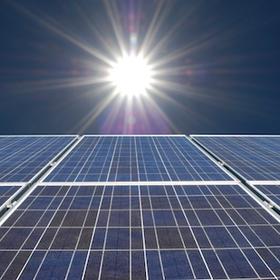
Across Australia, households with rooftop solar are generating more electricity than ever, yet most are paid less than 5 c/kWh for what they export. Meanwhile, those without solar face high and rising retail tariffs, often with a premium for any accredited “green” power.
Why? Because the current market is broken: It treats locally generated electrons as if they’ve been sent the full length of the legacy electricity system and back – incurring charges along the way – even when they’re used by a neighbour next door.
For years, the Renew Illawarra Network have argued that this model is outdated. Instead, we’ve championed Community Energy Zones (CEZs) – localised, integrated networks that produce, store, use and share renewable electricity within their own communities. The benefits: cheaper energy, fairer access, and a more resilient grid.

The building blocks of CEZs are assembling
Rooftop Solar is already the single largest contributor to the National Electricity Market (NEM) and its potential is far from tapped. Alongside, battery storage – in homes and at the community scale – is rapidly expanding.
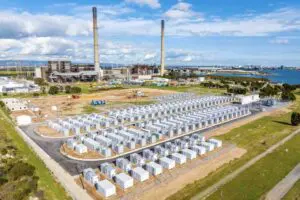
We were early advocates of mid-scale community batteries (CB’s, 50 kWh–5 MWh). These are now rolling out nationwide, enabling apartment dwellers, renters, and low-income households to share in solar benefits. Locally, the University of Wollongong is adopting CBs and network operator Endeavour Energy is installing across its service area.
Batteries on wheels – electric vehicles equipped for vehicle-to-grid (V2G) operation – will collectively offer substantial and flexible storage capacity most of the time.
Combined with energy-efficient electric appliances and passive building measures like shading, insulation, and draught-proofing, these technologies are the backbone of localised energy systems.
Integration at the local level
Home Electrification (HE) brings these components together, replacing fossil fuel use in households. Under local resident Dr Saul Griffith’s “2515 Project”, HE is being rolled out in the northern suburbs of Wollongong, with expansion planned across the Wollongong LGA and nationally.
These Consumer Energy Resources (CER), part of the broader category of Distributed Energy Resources (DER), are widely and closely distributed across towns and suburbs. The July 2024 National CER Roadmap and its state equivalents have built on past advocacies for DER.
Integrating vast numbers of small-scale systems requires advanced digital coordination. Here, artificial intelligence, machine learning, and smart control systems will allow sophisticated orchestration of local networks.
A market still in need of reform
The legacy electricity market – overseen by the AER, AEMC, and AEMO – was designed for a centralised, hub-and-spoke grid configuration. While intended to serve consumers’ long-term interests, it has too often protected vested interests and resisted change.
The Finkel Review (2016), Energy Security Board (2017-23), Energy Advisory Panel with ACCC involvement, then the scathing findings (2025) of the Select Committee have all exposed governance gaps, market failures, and even price gouging.
The current Nelson Inquiry still does not address the “not fit for purpose” hub and spoke model based on remote generators and long transmission lines, nor even the ongoing abuse of market power within that legacy system.
Our position is clear: the transition of our Electricity System must also focus on small, behind-the-meter community and household systems. The model needs expanding – from centralised supply to include decentralised generation, local storage, and peer-to-peer trading.
What we advocate
Locally
1. Maximise rooftop and small-scale solar and battery deployment – including home batteries, behind the meter private BESS (to 5MW), CBs and V2G EVs.
2. Enable peer-to-peer electricity trading to keep energy local and value in the community.
3. Allow distribution network service providers (DNSPs) to also operate as generators, while expanding third-party network access.
Nationally
4. Reduce dependence on costly long-distance transmission by increasing local production and consumption.
5. Build a fair, democratic grid that does not burden households with fees for irrelevant services.
6. Empower the ACCC to address anti-competitive market rules and regulatory conflicts of interest.
Progress – from Integrated System Plans to Local Blueprints
For years, AEMO’s Integrated System Plans (ISP) have prioritised remote generation and high-voltage transmission. Distribution networks – where rooftop solar, batteries, EVs, microgrids, etc are installed – have been overlooked.
That’s changing. DNSPs now stress that they can host large amounts of renewable capacity at far lower cost than the current reliance on remote Renewable Energy Zones (REZs).
Integrated Distribution System Planning (IDSP) is being promoted, while AEMO’s next ISP (2026) will incorporate CER and distribution systems. Reform of DNSPs towards DSOs (Distribution Services Operators), which was behind overseas practices except probably in South Australia, our most renewables state, is also now well on the agenda.
Progress – precursors to CEZs
Research and trials have already shown the potential of decentralised models:
– Analysis of the California Power System (2018) observed back then that the centralised, top-down power grid was outdated and it was time for bottom-up redesign – leading to locally-owned and operated electricity services, including DSOs, along with local revenue retention etc
– In Australia, DERtopia (Mark Byrne, 2021) envisioned users supplying themselves first, with DNSPs as back up within local energy markets operating without central control.
– Also, DER Saturation Modelling by Gabrielle Kuiper quantified the benefits for all consumers if policy and regulation align.
– More recently, Virtual Power Plants (VPPs) and Virtual Energy Networks (VENs) are linking small generators and consumers via digital platforms. VPPs function like centrally controlled power plants while VENs, in which we are involved locally, focus on decentralised trading on local markets.
Going beyond these precursors are Queensland’s Local Renewable Energy Zones (LREZs) – pilots at Caloundra and Townsville – aiming to coordinate CER/DER assets and optimise the overall system so everyone is in a win-win situation.
The Illawarra Urban Renewable Energy Zone (UREZ)
In the Illawarra, we’ve been engaging with community groups, local councils, state and federal ministers to make the region Australia’s first UREZ.
A roundtable at the University of Wollongong brought NSW ministers together with community members, coinciding with a new memorandum of understanding between EnergyCo (which leads NSW REZ delivery) and Endeavour Energy.
This was followed by the release of the Illawarra Clean Energy Industry Roadmap. The Roadmap indicates a pathway for the Illawarra to prosper from the clean energy transition, identifying billions of dollars of local economic potential.
Our community specification for CEZs and UREZs

• Dozens of local community batteries in substations and private installations, managed locally for jobs and accountability.
• Thousands of V2G EVs acting as storage assets.
• Integration into the grid at the suburb level, with targeted renewable charging during surplus periods.
• Only appropriate Local Use of Service fees (LUoS), eliminating national generation and transmission tariffs not applicable to CEZs.
• A not-for-profit, community-owned energy retailer, possibly sponsored by a local energy developer or other enterprise
• A local energy market built on neighbourhood collaboration as much as competitive pricing.
• Profits retained within the community for energy equity programs.

This is the energy transition brought down to the scale of streets, suburbs, and towns – where the governance and benefits governance are local, and the system serves communities who use it.
Neville Lockhart, Greg Knight, and Ty Christopher are members of Renew Illawarra