China is likely to have installed a record capacity of wind and solar power in 2020, as shown in data emerging from China’s “National Energy Agency” covering the country’s wind power growth. Analytics outlet China Energy Portal suggests a total of 71.1 gigawatts of new wind power capacity was installed in the year 2020, up from around 28 gigawatts in 2019. Solar installations were at 48.2 gigawatts, the second highest on record and up from 30 gigawatts in 2019.
NEA reports mind-blowing 71.7 GW of new wind.
That's a tripling of 2019 installations, and twice as much as the record year of 2015.Solar PV up 48.2 GW, close to record years.
Total cons. 7,511 TWh, up 3.1% yoy.
Thermal power 5,279 TWh, up 1.2%.More details soon. pic.twitter.com/rCarqKJAYM
— China Energy Portal (@ChnEnergyPortal) January 20, 2021
The data come with important caveats. Many projects may have been rushed through at the end of 2020 to qualify for a subsidy scheme which ended in 2020, suggesting this level of growth may not be sustained into 2021. The numbers for 2020 are unusually high, and are likely to need further verification.
“By the end of Q3 2020, China reported 13.8GW of new wind for the year. This is such a crazy number that I’d like to see this verified with follow up reporting”, wrote the China Energy Portal Twitter account. They also point out that much of these installations were in the final month of the year, suggesting a rush to formalise projects. Another factor may have been the loosening of restrictions in certain regions such as Inner Mongolia,
China's 2020 wind power installations, by month.
Surely there was an actual rush to finish projects.
And authorities may have been kind and accepting near-finished projects considering the force majeure of Covid this year.
But this needs to be taken with a little grain of salt. pic.twitter.com/c25Xx04oAw— China Energy Portal (@ChnEnergyPortal) January 20, 2021
“The wind and solar figures were so high that analysts questioned whether the government adjusted the way it calculated capacity,” wrote Dan Murtaugh at Bloomberg, with some suggestions that partially completed projects may have been counted towards the December statistics. “The new wind figures suggesting China alone commissioned 120% of 2019 global capacity in 2020…”, wrote Bloomberg’s Nat Bullard on Twitter.
If this level of growth can become consistent, or can average out over a longer period, it is likely that the installation rate required for China to begin the process of significantly reducing its power sector emissions on track to net zero by 2060 could be met.
The Global Wind Energy Council predicted 71.3 gigawatts of wind capacity to be installed globally in 2020, suggesting China’s surprising statistics will have an impact on global zero carbon energy production into 2021 and 2022. “Over 50 per cent of the onshore wind capacity added between 2020 to 2024 will be installed in China and the US, led by installation rushes to meet subsidy deadlines,” wrote GWEC.
“China, the world’s largest wind power market and largest carbon emitter, has pledged to go carbon-neutral by 2060. To have a chance at achieving this target, we need to be installing 50 GW of wind power per year in China from now until 2025, and then 60 GW from 2026 onwards”, said Feng Zhao, Strategy Director at GWEC, in November 2020, prior to the release of this new data.
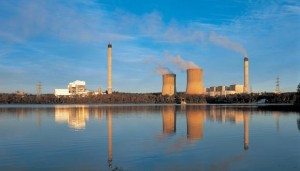
Unfortunately, 2020 was also a record for rising coal output in China, which was at its highest level on record since 2015, according to the latest data. This is despite restrictions in coal imports and complications around coal mining in Inner Mongolia.
Six new coal mining projects were approved in China in January 2021, with a “combined annual production of 15.3 million tonnes, in the northwestern region of Xinjiang”, according to Muyu Xu and Shivani Singh of Reuters.
While the construction of renewable energy is accelerating, demand continues to grow in China. Time will tell if the growth in renewables is sufficient to lead to coal output peaking or falling in the next five years.