BYD-supplied parts have arrived on site at Fortescue’s five-hour North Star Junction battery project in the Pilbara, and with installation underway the mining giant is turning its focus to the next one on its list.
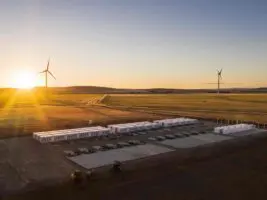
The North Star Junction battery is a 50 megawatt (MW), 250 megawatt hour (MWh) system using BYD parts with liquid cooling to handle the Pilbara heat, and 12 inverters from Spanish company Gamesa Electric.
All going well, the battery will be commissioned in 2026.
“This is a big moment for Fortescue. We’re fundamentally changing the way we power our mines,” said Fortescue CEO Dino Otranto in a statement.
“These systems let us store solar power and use it when we need it most, helping us cut diesel and gas and run our sites on renewable energy.”
Fortescue also revealed today that its next big battery will be a 20 MW, 120 MWh system at its Eliwana iron ore mine, about 100km south-east of the Solomon battery which is at the edge of Fortescue’s 220 kilovolt (kV) transmission network.
The company says the Eliwana battery will supply both the namesake site and the Flying Fish mine further east, and it’s building 140km of new network to connect them to the Solomon outpost.
The components, also to be sourced from BYD, are scheduled for delivery and installation in early 2026.
The North Star Junction is the biggest battery to date for the iron ore miner, but its third in total. The company has another five on its to do list, including one at the mammoth 644 MW Turner River solar hub, just 25km north of North Star but with an as yet unknown size or capacity.
Already on the North Star Junction site is another battery, the 26 MW North Star system which was installed in 2023. It also has a 16 MW battery at the Solomon mine. Both have only 20 minutes of storage as they were designed purely as spinning reserve backup to any gas generation outages or sudden changes in solar output.
The latest battery, however, will store power from the 100 MW solar farm next door and supply Fortescue’s Pilbara Energy Connect (PEC) network at night as a direct replacement for fossil fuel energy.
Fortescue wants to reach real zero at its Pilbara operations by the end of the decade, which means burning no gas or diesel for terrestrial transport or mining operations.
It has signed a $4 billion deal to source giant electric haul trucks and other mining equipment, and is currently building a 190 MW solar farm at the Cloudbreak mine, following the completion last year of the 100 MW North star solar farm.
It also buys power from the 60 MW Chichester solar farm from APA Group.
In May, Fortescue unveiled plans for a 2.1 gigawatt wind project, which would be the biggest in the country, featuring giant “self lifting” turbines made by Nabrawind, in which Fortescue has an undisclosed investment.
If you would like to join more than 28,000 others and get the latest clean energy news delivered straight to your inbox, for free, please click here to subscribe to our free daily newsletter.