Home » Black coal generation hits new low, as wind and solar reshape Australian grid

Black coal generation hits new low, as wind and solar reshape Australian grid

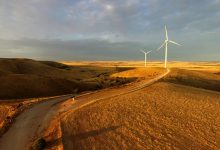
Photo credit: David Clarke

The re-shaping of Australia’s main grid continues apace, with black coal generation setting a new record low in the National Electricity Market, and the combined output of wind and solar matching the combined output of brown coal, black coal and gas on Saturday.

With the addition of hydro, they did – and provided 51% of net demand as pumped hydro and batteries chose a cheap time to charge.

The new record was set at 1pm on Saturday afternoon, when rooftop solar was its peak. The share of wind and solar might have been higher, and the amount of coal generation lower, had not around nine large scale solar farms in Queensland switched off due to constraints or because of negative prices.

As illustrated by this graph below from Dylan McConnell, from the Climate and Energy Institute, the output of black coal generators was little more than one third of their registered capacity.

Some coal generators, like Liddell, are operating at reduced capacity due to their age and imminent closure. Others are starting to make a habit of dialling down their output when rooftop solar provides much of the daytime needs.

As this next chart shows, rooftop solar is no longer taking small bites out of black coal generation, it is now taking large chunks. And around the time that this occurred, wind and solar were producing 49.2 per cent of total output, equal to the combined output of brown and black coal, and various gas generation sources.

As time moves on, and as more wind and solar is connected to the grid, as well as more storage, this share will dramatically increase.

As Paul McArdle, over at Watt Clarity, noted that Queensland, which has the most rooftop solar PV (and the most large scale solar too), reached its lowest level of black coal generation in 16 years – just over 3,800MW on Saturday, then went even lower on Sunday.



Giles Parkinson is founder and editor-in-chief of Renew Economy, and founder and editor of its EV-focused sister site The Driven. He is the co-host of the weekly Energy Insiders Podcast. Giles has been a journalist for more than 40 years and is a former deputy editor of the Australian Financial Review. You can find him on LinkedIn and on Twitter.

Latest posts

S-curve modelling says renewables can kick coal out of Australia by 2032. But is this soon enough?

S-curve modelling says renewables can kick coal out of Australia by 2032. But is this soon enough?

In the race to renewables, the big question is whether “faster than we thought” is the same as “fast enough.” S-curves say we can do the first. Nothing in the modelling tells us we’re on track for the second.
“It’s a commercial system. And it has a customer:” Sodium-ion battery sale hailed as a first for Australia

“It’s a commercial system. And it has a customer:” Sodium-ion battery sale hailed as a first for Australia

The sale of a 100 kilowatt and 200 kilowatt-hour sodium-ion battery system is being claimed as an Australian first – and may herald next generation of storage tech.
Energy Insiders Podcast: Will the green bank save the Tomago deal?

Energy Insiders Podcast: Will the green bank save the Tomago deal?

CEFC boss Ian Learmonth explains why big wind projects may finally get delivered this year. Plus: Tomago aims for 100 pct renewables, and the big utility profits.
Balcony solar or building integrated PV? The emerging options for apartment dwellers and owners

Balcony solar or building integrated PV? The emerging options for apartment dwellers and owners

A Victorian parliamentary inquiry on apartment energy issues has recently reported and identified several issues that require urgent attention to address the failures of energy policy. One interesting issue that relates to both high rise apartments, and plug-in ‘balcony solar’, is where solar fits into apartment occupant energy costs.  High rise apartment buildings have very […]