The NSW state Labor government has take the extraordinary step of opening up the state for new fossil gas exploration, reversing a ban that had stood for more than a decade.
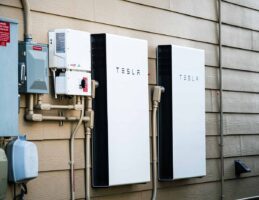
The decision is being justified on the basis that the state is facing an “energy shortfall”, even though the Australian Energy Market Operator has made clear that the emergence of renewables and particularly battery storage means less gas fired generation than previously forecast will be required in coming years.
The shocking news was immediately slammed by environmental groups, who accused the government of using the Iran way as cover to further its fossil fuel ambitions.
“It’s deeply unsettling to see the NSW government once again bending over backwards to please the gas lobby, who have been pushing aggressively to expand exploration under the cover of the illegal war on Iran,” said Solaye Snider, a campaigner at Greenpeace Australia Pacific.
“This decision won’t solve any problems for Australians – in fact it will create them. Any new gas coming from the Far West would be more expensive than renewable energy and take decades to come online.
“It would also destroy the environment, cause enormous and irreversible climate damage, and delay the transition to what is irrefutably a cheaper, cleaner source of energy, renewables.”
The NSW Labor government decision comes as the Queensland state LNP government promises to fast-track planning approvals for a new oil and gas development, at the same time as putting a halt to many wind and storage projects, and ripping up that state’s renewable energy and climate targets.
The NSW decision comes just months after news that the country’s biggest coal generator, the 2.8 gigawatt Eraring facility on the Central Coast, will be kept open until 2029, four years after its promised closure date.
A first two-year extension was underwritten by the state government, although Eraring owner Origin Energy – which has invested in no new wind and solar farms since announcing the planned “early closure” of the facility at the start of the decade – has not needed to access that money.
The state has also given approval for the extension of a large coal mine near the Eraring facility to ensure that another ageing coal generator, Vales Point, continues to operate into the early 2030s.
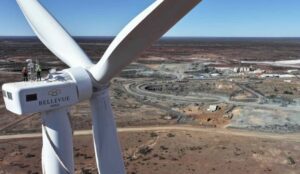
NSW has a nominally ambitious renewable energy roadmap, but its failure to ensure that new wind farms are being built – there is only one under construction at the moment at Uungula – has resulted in coal closure delays.
State natural resources minister Courtney Houssos says applications to search for fossil gas will be opened in both Bancannia and Pondie Range troughs, north of Broken Hill, ostensibly to complement the existing and controversial Narrabri gas project.
Fees for the exploration have also been slashed, from $50,000 to a token sum of $1,000.
Houssos says gas is essential for use in homes and industry, and to firm up the grid when wind and solar output is low.
““We can’t flick a switch and have this come online overnight,” Houssos said in a statement.
“What we need to do, carefully and methodically, is make sure we are responsibly pulling every lever to support a stable and robust energy grid for decades to come. Current global events make this work more important than ever.”
Those claims ignore the fact that AEMO’s forecast for gas generation has already been dramatically reduced because of the growth in large scale and household batteries. Even new gas generators such as Snowy’s Hunter project will be rarely used.
Australia, as many analysts have pointed out, has no shortfall in gas, but chooses to export most of it at high prices, forcing local prices to also be higher.
Premier Chris Minns doubled down on the “gas is needed’ line, and even added the “when the sun don’t shine and wind don’t blow” meme popular with the federal Coalition, renewable critics and climate deniers.
“We’re doing an enormous amount of heavy lifting when it comes to renewable energy”, he told reports.
“However … we will need gas in the system when the wind isn’t blowing and the sun isn’t shining. That’s just the reality of it.”
But Nature Conservation Council climate campaigner Jacqui Mills also noted it would take a decade for these projects to be up and running, even if they discovered reserves that could be exploited commercially.
“In that time, we’ll have more renewables in the system including pumped hydro to provide firmed energy to the grid,” she said.
“The Net Zero Commission has said NSW is not on track to meet emission reduction targets and we need to reduce our dependence on gas.”
But supporters of the expansion of gas exploration say without boosting onshore production, emissions would simply be generated overseas.
“Energy-intensive manufacturers across NSW depend on reliable and affordable gas. Without it, jobs go offshore and emissions go with them,” Australian Workers Union NSW secretary Tony Callinan said in a statement included in the NSW government media release.
With AAP
If you would like to join more than 29,000 others and get the latest clean energy news delivered straight to your inbox, for free, please click here to subscribe to our free daily newsletter.