AGL Energy, which remains the biggest generator of coal-fired power in Australia, has reported steady earnings for the last half year, with an increase in customer margins and a sharp lift in big battery earnings emerging as the highlights.
The increased customer margins will be no surprise to many that have seen their electricity bills jump significantly in the last year, some over and above the recommendation regulatory increases.
“In Customer Markets we saw an improvement in customer margins, driven by growth in our customer base and a return to more sustainable margins,” AGL says in its results presentation, which showed underlying pre-tax profits steady at $1.1 billion, and underlying net profits down 6 per cent to $353 million.
The issue around customer margins is likely to be a major theme of the current reporting period, with Origin Energy also due to report this week and EnergyAustralia later this month. Electricity bill tariffs have soared in the last year, causing outrage among consumer advocates.
It also comes amid huge success for the federal home battery rebate, and as the federal government pushes for its “solar sharer” – effectively an offer of free power to customers for three hours in the middle of the day – to come into effect from July this year.
AGL already has a similar offer in place to customers in South Australia, and through Ovo Energy, but CEO Damien Nicks says the industry is concern about the lack of detail of the proposal, which is still working its way through regulatory consultations and design.
“We are obviously supportive of the intent, (but) we are very concerned about the timeline, and we’re sitting here in February right now with what, not an ounce of detail on it,” AGL CEO Damien Nicks told Renew Economy in an interview on Wednesday.
“So we have got to make sure we get this right for our customers and also shareholders. We have products in both Ovo and we also have, through AGL, a product in South Australia too. But we’re just pausing that roll out until we get some more clarity.”
Perhaps the biggest positive from the results, and likely the most significant for AGL as it continues its slow transition from coal to green energy, is the performance of its growing portfolio of big battery assets.
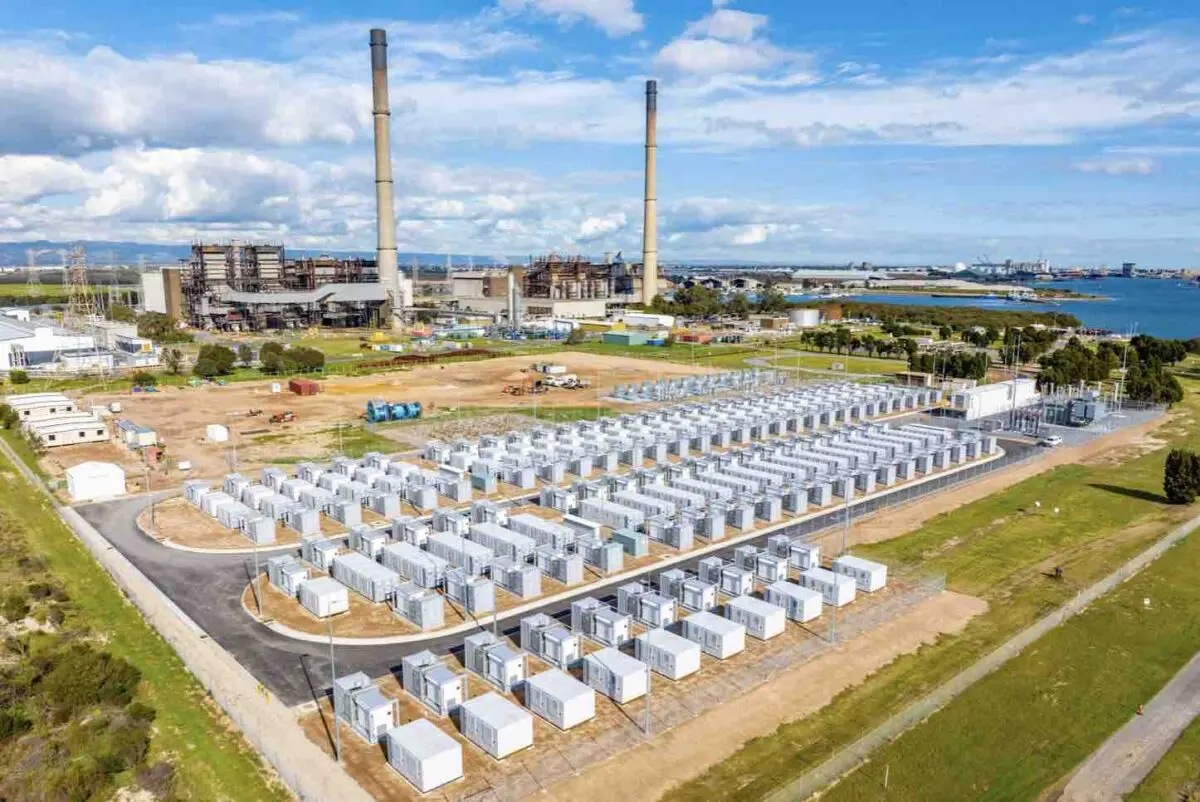
AGL currently has just two operating big batteries – at Torrens Island in South Australia and Broken Hill in NSW – and an off take agreement with the Wandoan battery in Queensland and the small Dalrymple battery in S.A.

In the last six months, earnings from those big batteries jumped significantly from $25 million to $35 million, despite unusually low volatility on wholesale electricity markets.
AGL puts this down to the success of the trading algorithms it has been developing in-house (with a team of five) over the last few years. The true benefit of that should be realised when the Liddell and Tomago batteries – rated at 500 MW and 1,000 MWh and 500 MW and 2,000 MWh respectively – are completed.
“Three years ago, we took the decision to rather than buy something off the shelf, to actually build in house,” chief commercial officer David Moretto told Renew Economy.
“We were of a scale that we thought it was worth making that investment. So we’ve actually got five people dedicated to actually building up battery bidding algorithms. We’re really proud of it, and once we get Liddell on line later this year, it’s going to be a big step change for us.”
That has translated into a market premium of 20 per cent for its dispatchable assets, and a 24 per cent “yield” on the Torrens Island battery, calculated as annualised EBITDA divided by the total project capex cost of $189 million.
“Given the strong operating performance of both the Torrens Island and Broken Hill Batteries, we remain confident in targeting the upper end of our seven to 11 percent IRR range for our grid-scale battery projects, noting that these are ungeared, post-tax, asset level returns,” the company says.
Nicks says volatility in the markets will inevitably resume, particularly as more coal fired power stations exit. He noted the 4.7 hours of peak pricing in January, compared to 4.4 hours over the last six months, but noted that the market is now facing a winter peak rather than a summer one.

AGL has a number of other big battery projects in the pipeline, including the “late stage” 500 MW, 2,000 MWh Tuckeroo battery, and the 400 MW Pottinger battery that will support the neighbouring 831 MW wind farm. AGL has at least two other smaller battery projects it is developing in NSW.
The company, however, still sources 79 per cent of its generation from its two coal-fired power stations, Bayswater in NSW and Loy Yang A in Victoria, and that will continue to be the case for the next five years at least.
AGL has been working on improving the flexibility of its coal units, to help it dance around rooftop solar and negative market price, and even “two-shifting” at Bayswater, which means shutting down a unit for a short period, reasoning that the costs of doing would be smaller than paying someone to take its output.
But testing will continue.
“It’s all about getting data and insights and then from both the trading team and the ops team how to actually optimize and run those assets,” Nicks says.
“You want to be able to bring it down, and you also want to be able to bring it back up exactly when you need it to. And I think the last couple of times we’ve done it, we’ve done it within a minute or 30 seconds of our scheduled time. That’s exactly where we want to be.”
In the meantime, rival Origin Energy has confirmed that it will keep the biggest coal generator in the grid, Eraring, online for another two years. Nicks says it won’t affect AGL’s operations, but it underlines the need to have firm closure dates for coal generators to provide guidance for new investments.