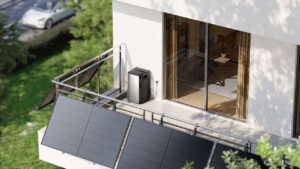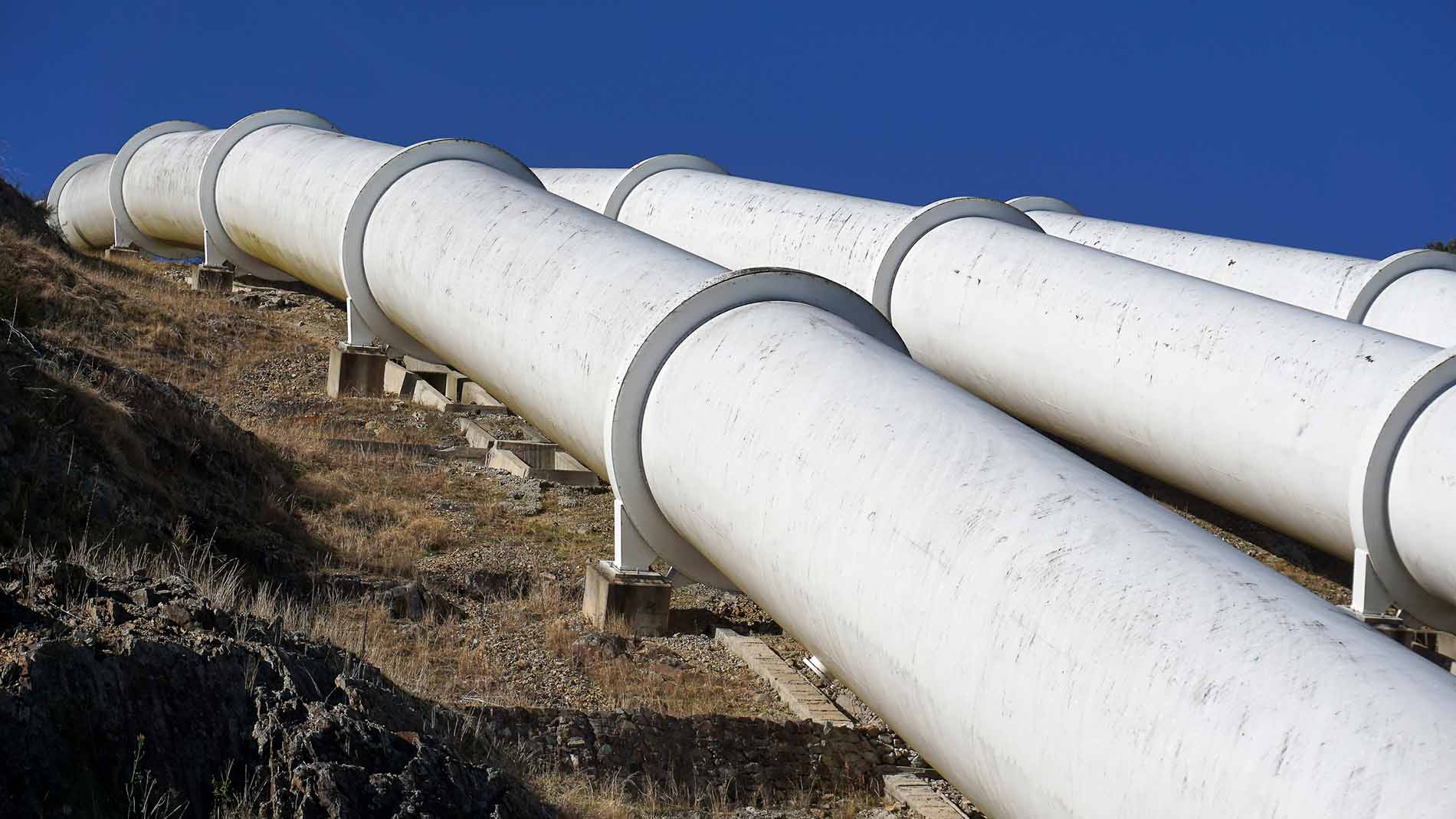
Australia is in the midst of its energy transition, driven by state and federal government targets and the urgent need to decarbonise, and is building world-leading solar and wind capacity.
Current forecasts from the Commonwealth Scientific and Industrial Research Organisation (CSIRO) and the Australian Energy Market Operator (AEMO) indicate that as much as 95% of the National Energy Market (NEM) would need to come from variable renewable energy (VRE) to meet Australia’s emission reduction goals by 2050.
Yet, without a strong backbone of long duration energy storage (LDES), which can provide uninterrupted on-demand energy or heat for 8 hours or more, the grid remains vulnerable to the volatility of weather, demand, and global energy shocks.
LDES offers an unmatched opportunity to deliver reliable, clean power, heat, or steam, boost regional jobs, and strengthen energy security in Australia.
The LDES Council recommends the Australian federal government implement the following to ensure energy flexibility and resilience and become a renewable superpower:
– Set a national target of 30 gigawatt (GW) of LDES by 2040. Australia needs to determine a target for different flexibility scenarios, considering how much power and low-carbon heat will be needed, and when it will it be required ensuring industries and communities have reliable services.
– Update AEMO modelling frameworks to fully reflect the range of services LDES provides in balancing the grid, as well as providing round-the-clock heat or steam for industrial processes.
– Improve market access and regulatory certainty for LDES investments.
States are leading the charge. Victoria’s 6.3 GW storage target and New South Wales’s 28GWh by 2034 are strong examples. Indeed, these are world-leading policies which are attracting global interest and seeing international pioneers in LDES technology invest in Australia.
However, it could be even better – the fragmented approach can lead to inefficiencies, investor uncertainty, and uneven regional expansion into LDES.
The LDES Council recommends a federal LDES target of 30 GW by 2040. This sends a powerful investment signal and provides the policy certainty that developers, manufacturers, and investors need to scale up. State-level ambition is essential, but without federal leadership, Australia cannot unlock the full potential of its clean energy future.
A renewable grid is only as strong as its ability to deliver power when and where it is needed. LDES technologies, such as pumped hydro and chemistry-based storage, can store and then discharge energy for hours, days, or even weeks, making them critical for the following:
– Grid stability and frequency/inertia control;
– Blackout prevention and disaster recovery;
– Seasonal balancing during low-supply periods.
By embedding long-duration energy storage into the heart of the grid, Australia can move from variable renewable supply to 24/7 renewable energy on which communities and industries can rely across days, weeks, and seasons.
Long-duration energy storage brings clean power closer to the end user. In remote towns, industrial zones, and mining regions, on-site storage reduces reliance on long-distance transmission lines and costly imported fuels. This not only cuts costs but also builds energy independence.
LDES enables diverse applications including providing resilient microgrids, reliable backup for hospitals and data centres, community uses, and decarbonised energy for mines and heavy industry. These are critical national assets for which constant power or heat are essential.
Jobs, industry and the circular economy
LDES is also a job-creating engine, not just an energy-reliability and decarbonisation technology. Each LDES deployment creates jobs across engineering, construction, and operations. Many of these opportunities are regional, exactly where they are most needed.
There is a broader economic loop: Australia is rich in the minerals required for energy storage. By coupling mining operations with on-site LDES, the country can both decarbonise production, reduce costs, and add value at home by boosting the local economy through domestic processing, thus closing the loop on a truly circular clean economy.
AEMO must model the full value of LDES
The Australian Energy Market Operator (AEMO) plays a critical role in shaping the country’s energy future. Yet current modelling underrepresents LDES’s unique contributions, particularly in providing system strength, inertia, frequency control, and seasonal balancing.
The LDES Council recommends that AEMO adopt improved modelling criteria that explicitly captures the diverse benefits of LDES. This includes considering 8-hour plus durations, dispatchability, and the ability to alleviate transmission congestion and strengthen local system reliability.
Additionally, Thermal Energy Storage offers significant potential for industrial decarbonisation and for shifting solar energy into the night to replace traditionally fossil-fuelled processes. But to succeed, LDES must be treated as core infrastructure, not a bolt-on.
The LDES Council recommends:
– Inclusive grid planning that prioritises storage from the outset;
– Removing grid connection fees for standalone LDES;
– Streamlining project approvals for faster deployment.
LDES delivers system strength, inertia, and reliability via load following and frequency regulation and capacity, which are services currently undervalued in market planning. With these changes, the benefits of LDES will be available more quickly and cheaply to more Australians.
Storage technologies need market access and regulatory certainty
In our Annual Report 2024, LDES is already commercially viable in many countries. To increase grid flexibility more rapidly, the industry needs market access and regulatory certainty to scale LDES.
Governments can improve the speed of LDES deployments by:
– Eliminating outdated connection fees that disadvantage storage projects and providing regulatory clarity that de-risks investment.
– Enabling data centres and energy-intensive industries, like mining and minerals processing, to co-locate LDES assets.
– Allowing participation in ancillary service and capacity markets where LDES can deliver high value.
– Creating dedicated market mechanisms for long-duration capacity. Australia should expand on New South Wales’s Long-Term Energy Service Agreements (LTESAs) to derisk investment and reward technologies that deliver flexibility, stability, and clean energy outcomes.
These actions are powerful mechanisms to decrease the friction that otherwise holds back cost-saving technologies from scaling.
The time to act is today
LDES technologies are operational around the globe today. Australia has the industrial network base and the national interest to support a growing LDES market. What Australia needs now is supporting policies to grow the markets and provide ongoing regulatory certainty.
By setting a federal target, improving AEMO modelling, and creating the right market and regulatory conditions, Australia can unlock the full potential of LDES, and in doing so, flexibly power, heat, or cool a clean and reliable energy future.
By Julia Souder is the CEO of the LDES Council, a global organisation advancing decarbonisation by facilitating the accelerated deployment of LDES solutions.
The LDES Council provides fact-based guidance, and members span a spectrum of innovation, including mechanical, thermal, electrochemical and chemical solutions in 24 countries. To learn more about the LDES Council, visit www.ldescouncil.com.