Polls suggest the Coalition will be a shoo-in as next Victorian government, which means it will be faced with an unpalatable choice: implement its energy policies and send both gas and electricity prices skywards, or stick with the direction set by Labor over the last 12 years.
Data, and experts, are suggesting the Coalition’s energy policy plans will do the opposite of what it is promising voters in Victoria, by raising power prices and adding pressure to already-scarce gas supplies.
Furthermore, the state’s “tricky” electricity system may mean it has to lean into a New South Wales-like (NSW) support system for renewables, says Grattan Institute energy director Alison Reeve.
“Regardless of who the energy minister is after the 28th of November, all of this is going to be sitting on their desk on day one,” Reeve said during a briefing today on the challenges facing a future Victorian government.
“Fiddling around the edges is not going to cut it.
“It does involve some quite strong decisions that need to be made about direction, about what role the market is going to play and where the government is going to direct things to happen.”
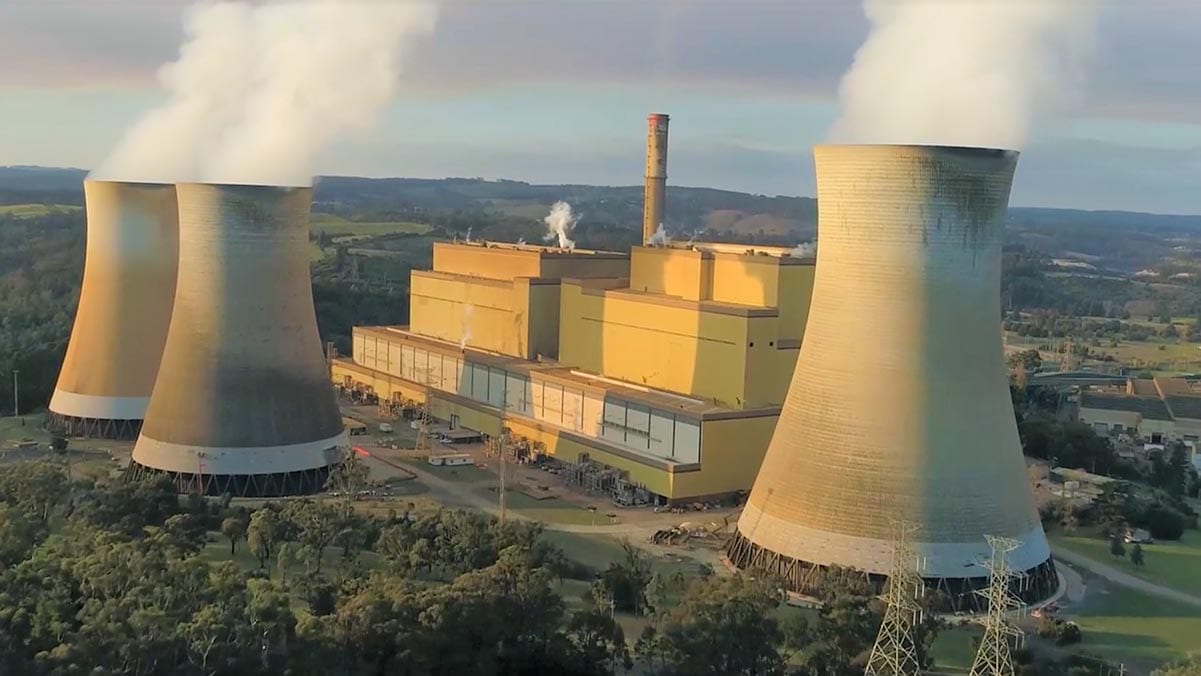
Reeve says it might mean paying EnergyAustralia to keep the 1.45 gigawatt Yallourn coal power station open for longer, an outcome that advocacy group Environment Victoria says would lift retail electricity bills by an extra $408 to $614 a year.
But it could also mean leaning into NSW-like support for renewables by backing in the renewable energy zones, building transmission and underwriting projects.
Liberal shadow energy minister David Davis recently softened the party’s stance on renewable energy, telling a Melbourne conference in October that renewable energy would be the state’s “single biggest component of generation.”
Catch-22: gas or transmission
The conundrum facing the Coalition is real.
It wants to relax the ban on gas connections to new homes and on replacing gas appliances with electric ones, cancel the VNI West transmission line on the grounds the final $7-11 billion price tag will add $600 a year to retail bills, review Vicgrid’s other network plans, and set up an urgent tender for gas-firmed power supported by local gas fields.
But dwindling Bass Strait and Otway Basin reserves mean the state must start importing gas for the first time as production slips below consumption, just as the Coalition wants to ramp up gas use in households and in the energy sector.

Image: Environment Victoria, “Bill shocks and blackouts: The impact of gas, nuclear and coal on Victoria’s energy costs and security“
The Coalition’s plan to scrap the upcoming ban on gas connections to new homes and requiring an electric replacement for old gas appliances will compound the problem of dwindling gas supplies.
Reeve says any relaxation of the ban will mean less gas available for the electricity system, just when Victoria most needs it in 2028, when the Yallourn coal power station in Gippsland closes.
Not enough renewable capacity has been built in the state to replace it and nor will the VNI West interconnector, proposed to suck in cheap power from New South Wales (NSW), be ready.
The Coalition’s plan to cancel VNI West both cuts off another avenue to import cheap power, and could make it more difficult for developers to justify building projects in Victoria.
“The other thing that is going to make it very hard for the Victorian electricity system are the [Coalition] decisions to cancel or delay some transmission,” Reeve says.
“If it drags on for more than about six months, then I think a lot of developers will probably just go somewhere else.
“That is going to make it harder to build new capacity to replace Yallourn.”
Replacing the Yallourn coal power station by running existing gas power stations harder will run down gas reserves in the Bass Strait, faster, and push up prices for both the fossil fuel and electricity prices, Reeve says.
All of which will make the calculus of electrifying homes more difficult as electricity prices rise, which will tie up more gas for longer.
Gas imports by 2029
Davis is promising to throw Victoria open to gas exploration, but even if anything is found the state will need to import gas in the interim.
The Australian Energy Market Operator (AEMO) is forecasting Victoria to see gas shortages in the 2030s, and that is before the impact of Coalition policies.
A new report called Bill shocks and blackouts from advocacy group Environment Victoria suggests state gas production will fall below consumption by 2029, which will mean imports will be needed.
“With a supply crunch looming, Victorians are already paying 62 per cent more for gas each year than five years ago, with worse to come. Meanwhile, retail electricity prices have risen just 18 per cent over the same period,” the report says.

Image: Environment Victoria, “Bill shocks and blackouts: The impact of gas, nuclear and coal on Victoria’s energy costs and security“
Leaning on gas fired power stations may be necessary after Yallourn closes, the report says, but building new ones could be tricky.
Reeve points out that no one is willing to finance gas power stations needed for just weeks a year, nor are gas sellers willing to provide certain supply for just that period of time.
Furthermore, there are warnings that Victoria’s gas sector might also be be uninvestible.
Last week, plans to build a $1 billion gas storage project off the coast of Gippsland collapsed after repeated delays and a quadrupling of costs.
The AFR reported warnings of investment “strikes” to follow the end of the project dubbed Golden Beach.
The project was supposed to provide critical backup for Victoria, and had signed up Origin Energy as a key customer and support from the government.
If you would like to join more than 29,000 others and get the latest clean energy news delivered straight to your inbox, for free, you can click here to subscribe to our free daily newsletter.