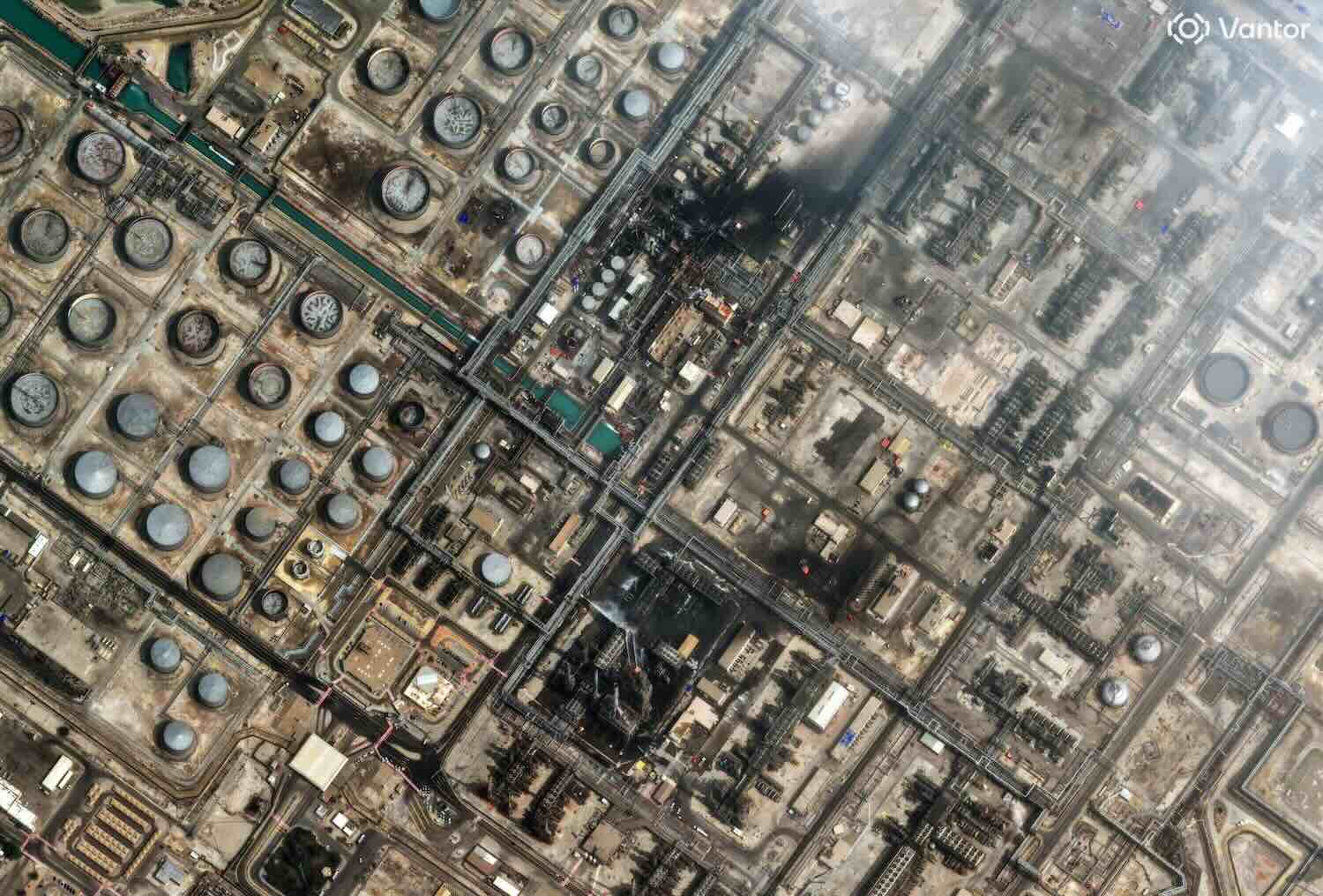
The US-Israel war against Iran and the ongoing threat of disruptions to oil and gas supplies has elevated renewables “to the top of the policy agenda in many countries,” with solar photovoltaics leading the advance, the International Energy Agency said a new report.
“Because renewable resources are widely distributed, every country has domestic potential that can be developed competitively to strengthen energy security,” the IEA said .
“Yet governments do not have to choose between security, affordability and sustainability.”
The issue of so-called energy security has been cited by various governments as an excuse to develop new fossil fuel sources, such as oil sands and related pipelines in Canada, and North Sea oilfields in United Kingdom’s territory.
In Australia, scientists within the CSIRO recently discussed climate risks at internal discussions that also included increased interest in energy security over carbon emissions reductions, according to videos viewed by Renew Economy.
The IEA’s report, though, said global renewable capacity would continue to power ahead, forecasting it would expand by almost 4,800 gigawatts (GW) in the 2026-2031 period.
That’s 57% more than in the previous six years, “with growth in emerging and developing economies outside China matching that in advanced economies for the first time,” it said.
In actual generation, renewables are predicted to supply almost 45% of global electricity in 2031, up from a third in 2025. Wind and solar PV combined more than doubles it share globally, reaching more 28% of generation by 2031, with solar overtaking hydropower by 2029 as the largest source of renewable electricity.
During this coming six-year period, India would become the world’s second-largest growth market after China, while renewable capacity additions across Southeast Asia, the Middle East and Africa will almost triple, the IEA forecasts.
The benefits for energy security, increased ambitions, supportive policies and the improving competitiveness of wind and solar PV raised the IEA’s forecast for emerging and developing economies by almost 20% compared with the agency’s renewables report just one year ago.
While the focus has previously been on utility-scale changes, the spread of low-cost solar, in particular, has produced “one of the most striking shifts” for consumer behaviour, compared with recent – typically, fossil fuel – energy crises.
“We estimate that additional rooftop solar capacity has improved electricity access and services for at least 70 million households since 2022,” the report said. “Off-grid solar PV capacity is expected to increase by 2.5 times to around 80 GW by 2031, led by Pakistan, sub-Saharan Africa and Southeast Asia.”
Australia has been reporting similar trends. In our case, the Albanese government’s Cheaper Home Battery scheme has prompted many households to expand existing solar PV systems – or add them for the first time. That’s prompted the year-to-date small-scale solar energy industry to hit fresh eyes, according to SunWiz data reported by Renew Economy.
The IEA noted that falling battery costs were also driving rapid growth in consumer-led storage deployment globally. So-called behind-the-meter battery storage is forecast to expand almost sixfold to more 670 GW-hours by 2031, with more than one-third of home PV systems including a battery by that year.
“As storage becomes more affordable, households and businesses are using batteries to reduce their exposure to electricity price volatility, it said, noting an outcome familiar to Australia’s market watchers:
“Where market and regulatory design, price signals and incentives are appropriate, behind-the-meter batteries can also help meet overall system flexibility needs.”
Storage on wheels, otherwise known as electric vehicles, are also on the rise, globally.
“Renewable energy consumption in transport is forecast to increase by 60% in the forecast period [out to 2031] in our main case, raising its share of global transport energy demand to 6%,” the IEA said.
“Renewable electricity used by electric vehicles accounts for almost half of this growth, with China and Europe together contributing 80% of the increase in EV-related renewable electricity use.”
China’s share of new renewable energy growth is forecast to shrink from a massive 60%-plus level in 2025 to a still remarkable 53% share by 2031.
“The downward forecast revision for China is more than offset by stronger outlooks for the United States, India, Southeast Asia, sub-Saharan Africa and Latin America,” it said.
“Outside of China, Asia Pacific adds more than 840 GW of renewables over the 2026-2031 period, more than double the level in the 2020-2025 period, with the forecast revised up by 15% on stronger solar PV growth in India and Southeast Asia.”
The strains of China’s overcapacity of production are one less promising aspect of the industry.
“China’s global dominance of solar PV supply chains persists amid high financial strains and mounting bankruptcies, while India is emerging as an important source of diversification,” the IEA noted.
“Over 90% of major Chinese solar PV manufacturers have reported losses in 2026, and more than 70 companies have filed for bankruptcy since 2024, as overcapacity and falling prices have eroded margins.
“Despite this industry turmoil, solar PV supply chains remain highly concentrated in China at every stage, from polysilicon to modules,” it said. “However, by 2031, India is expected to be the only country besides China capable of manufacturing every major component of the solar PV supply chain at scale, contributing to supply chain diversification.”
“Wind supply chains are more geographically diverse than solar PV today, but the competitive landscape is shifting as Chinese wind manufacturers expand rapidly into international markets,” the IEA said.
If you would like to join more than 29,000 others and get the latest clean energy news delivered straight to your inbox, for free, you can click here to subscribe to our free daily newsletter.