
Australian businesses looking to ditch gas and diesel can do the sums, find electrification will save them money, and then run smack into trying to connect to the electricity grid.
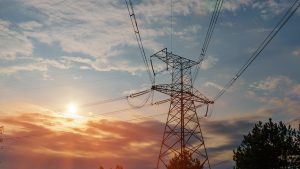
Jeremy Sung, head of policy at the Energy Efficiency Council, says commercial customers can face months of delays and hundreds of thousands of dollars in feasibility studies just to establish whether the local network has enough capacity to accommodate their new electric equipment.
It’s just one of the barriers that the newly launched Electrify Australia campaign wants governments and regulators to dismantle as it pushes to accelerate electrification not just in Australian homes, but across businesses, farms, transport, manufacturing, mining and industry.
More than 30 consumer, business, industry and civil-society organisations have joined the campaign, including the Energy Efficiency Council, Energy Consumers Australia, Rewiring Australia, the Electric Vehicle Council and Green Building Council of Australia.
Sung says businesses are already running into cases where the economics of switching stack up, until they try to connect.
“This is a classic story that we’ve heard quite frequently from businesses,” Sung told Renew Economy’s SwitchedOn podcast.
“They want to go electric. They do the maths, it makes sense, and then they get slugged with this time and cost to connect to the grid.”
But the networks themselves acknowledge the process needs to improve, and there are signs from some that it will.
Speaking at the Everything Electric conference in Sydney this week, Ausgrid head of customer network solutions Adam Baxter conceded its connection process could be faster and better, describing its existing connections portal as essentially paperwork that had been digitised.
He announced that Ausgrid is preparing to launch a new automated service, Ausgrid Connect, which Baxter says will speed up applications and give customers much greater visibility over where their projects are in the connection process.
Potentially more significant for businesses is a rethink of how much grid capacity they need to pay for in the first place.
Traditionally, Baxter says, networks have designed a connection around the maximum amount of electricity a business could possibly draw, assuming it might need that maximum capacity all the time.
Ausgrid is now experimenting with more flexible connections, where businesses can agree to reduce demand during the relatively small number of periods when the network is under greatest pressure.
Baxter pointed to a recent pilot where they connected a large EV charging operation at a site where the network had excess capacity and “reduced what would have been millions of dollars worth of connection infrastructure to $90,000.”
“They’re not paying for that additional capacity. We’re just giving it to them when it’s available, which is most of the time.”
It’s the sort of reform Sung argues could unlock significant business electrification, and connection times and costs should be transparent and DNSPs need the right signals from government to maximise the utilisation of their existing networks and minimise network costs for all consumers.
“In a tight fiscal environment, we need regulatory reform as well,” he says.
Australian households have already demonstrated what can happen when technology, economics and policy line up. More than 4.5 million rooftop solar systems have been installed, while home battery installations have surged following the introduction of the federal rebate.
But electricity still accounts for only around 21 per cent of the energy Australia consumes, with businesses and industry continuing to rely heavily on gas and diesel for process heat, machinery and transport.
Sung says the economics underpinning that equation are changing much faster than many people in the energy industry anticipated.
Solar PV modules, batteries and EV technology have all fallen in price much faster than expected.
“We’re seeing this exponential decrease in price,” Sung says. “We just need the policy to kind of catch up.”
That is the broader ambition of Electrify Australia: to get the policy, regulation and investment settings aligned with a transition its supporters argue is increasingly being driven as much by economics and energy security as by climate.
And Sung says the latest global energy crisis makes the timing particularly important.
“We are facing one of the biggest global energy crises the world has ever faced.”
“This is a pivotal moment, and they say never waste a good crisis.”
To join more than 29,000 others and get the latest clean energy news delivered straight to your inbox, for free, click here to subscribe to our free daily newsletter.