Farmers manage enormous uncertainty: volatile markets, rising input costs, labour shortages and climate variability. We’re living through droughts, floods, extreme heat and unpredictable seasons.
Our own farm struggled through two years of drought leading up to 2020, followed by some of the wettest years on record. For the first time, we didn’t plant a cotton crop over the summer of 2023.
Hugh Killen from Impact Ag Australia said it best.
“The capacity to absorb shocks is often described as a defining strength of the sector. But there is a point at which resilience stops being a strength and becomes a warning. Because what we call resilience is, in many cases, simply exposure carried quietly on farm balance sheets. Assumed and accepted, rather than addressed.”
The fuel and fertiliser price spikes and supply shortages we’ve experienced this year are exactly the kind of warning Hugh describes. They matter because they affect food security, which can quickly become a national security issue. So how do we ensure these risks and vulnerabilities aren’t being amplified by the system itself?
At the same time, agriculture is being asked to decarbonise, electrify, host renewable infrastructure and help underpin Australia’s energy future. That is a big ask.
But it is also a significant opportunity, if we get the settings right.
Renewables are already becoming another tool on the farm alongside tractors, irrigation systems and grain silos. Farmers are installing solar to reduce electricity bills, batteries to improve energy resilience, electric pumps and machinery where practical and bioenergy systems that turn waste into value.
Others are combining agriculture with renewable energy infrastructure by grazing livestock beneath solar panels or using wind turbine income to strengthen their farming businesses.
These investments are helping reduce costs, improve resilience, diversify farm income and lower emissions, while supporting continued access to increasingly carbon-conscious export markets.
If we are serious about decarbonising food and fibre production, we need policies that recognise the realities of farming businesses and provide clear signals so capital can be deployed against a predictable baseline. We also need support for on-farm energy innovation and regional electricity networks that can enable electrification.
Importantly, governments and industry need to work in partnership with farmers, not just around them.
And partnership goes both ways. The energy sector needs to care about food security and keeping our most productive land productive. Equally, farmers need to engage with the energy transition and help shape how these projects work on the ground.
I’m speaking with a farmer near Casino who has around 100 hectares of high-value agricultural land that a developer is keen to use for solar. He sees the benefit of the additional income but wants to continue farming the land.
His proposal is simple: raise the solar panels by just 20 centimetres so he can graze young cattle beneath them until they’re about two years old.
So far, there’s been little willingness to adapt the design because of the perceived additional cost. Yet the cattle would reduce the need for mowing and spraying, while helping maintain community confidence by ensuring the land continues producing food.
It’s a small example, but it illustrates a much bigger point. The best renewable energy projects won’t be the ones that replace farming. They’ll be the ones that work with farming, allowing us to produce food and clean energy from the same landscape.
These are exactly the conversations taking place at the National Renewables in Agriculture Conference and Expo. The conference brings together farmers, researchers, energy companies, policymakers and regional communities to explore how agriculture can remain productive while contributing to Australia’s energy transition.
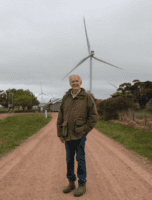
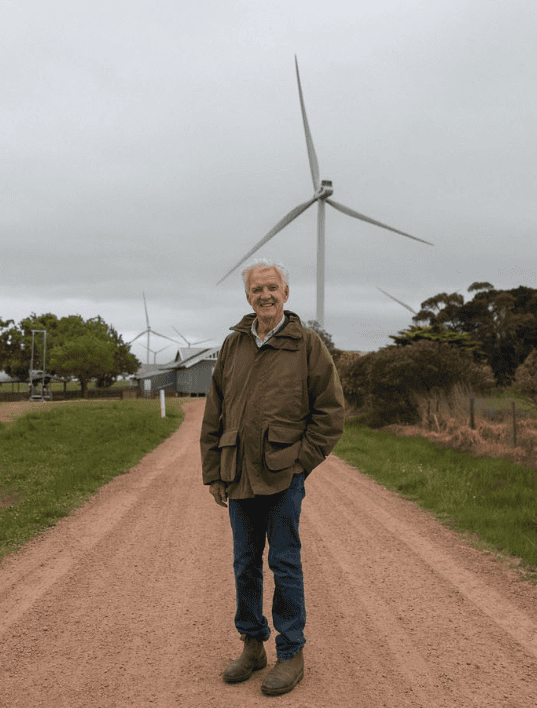
The examples emerging are encouraging. Farmers are grazing sheep beneath solar arrays, demonstrating that food and energy production can coexist. Farmer Peter Coy is using income from wind turbines to help send country students to university.
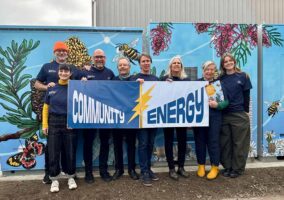
Communities hosting renewable developments are exploring ways to share the benefits through start-ups like Reswitch, delivering cheaper power to local households.
In south-west NSW, farmer Monica Morona is investigating how renewable energy can produce anhydrous ammonia to use as fertilizer, reducing exposure to global supply shocks for her business and potentially many others.
These examples show that the transition isn’t simply about reducing emissions. It’s about making farming businesses more resilient, strengthening regional economies and improving Australia’s food and energy security at the same time.
Ultimately, the energy transition should not be transactional. It should deliver enduring, legitimate change that leaves regional communities stronger, builds trust and increases their capacity to manage change over time.
That is the measure of success. And while there’s still a long way to go, there is every reason to believe we can get there if farmers remain at the centre of the conversation.
The Renewables in Agriculture conference is being held in Orange, NSW, on August 12.