We included this graph below as part of the monthly review written by the good folk over at Open Electricity and published here earlier this week, but it is so stunning, and has sparked so much interest on LinkedIn and elsewhere, that it’s worth highlighting all by itself.
For decades peaking gas remained supreme in Queensland’s peak demand periods, adding revenue cream to the country’s most coal dependent grid by switching on as demand surged, particularly in the evening peak.
Queensland, in fact, was the country’s largest gas-generating state, as well as being its most coal dependent.
Then along came battery storage.
As the first big batteries came on line, they started to nibble into the evening peak. Then, as numbers grew, they ate more and more of the peaking gas generators’ party mix until – in March and April this year – they have pretty much eaten the whole lot.
The graph below illustrates how.
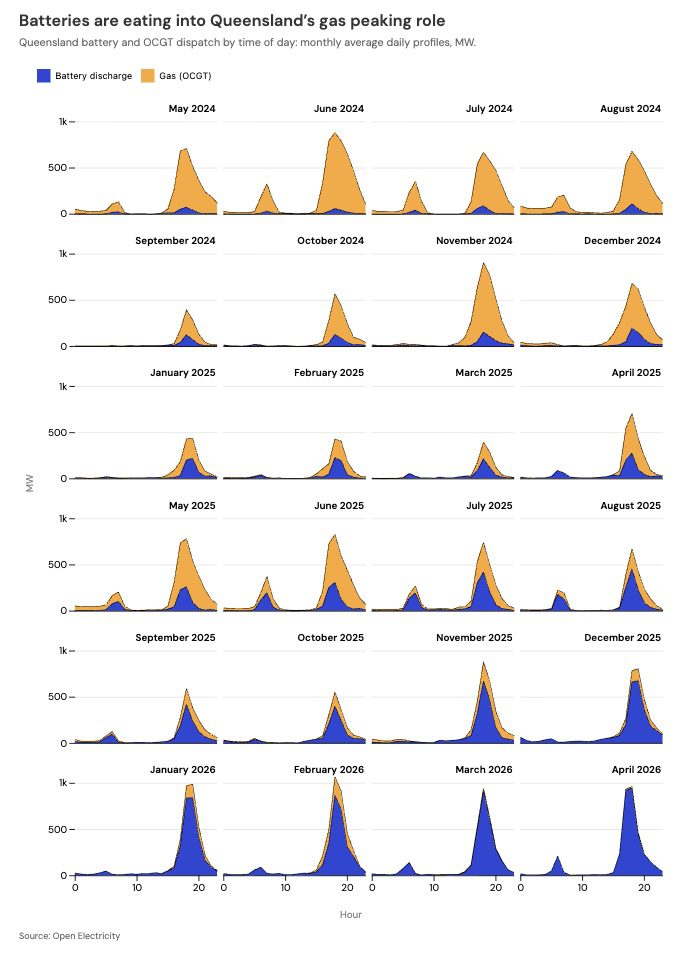
It’s a spectacular change in such a short period of time. And significant too, because so many forcecast are based around the assumption that gas is essential for balancing out the grid, and is being used as justification by state governments to open up new regions for gas exploration.
Gas generation will play a role in the future, renewables dominated grid, but it will rapidly diminish and likely focus on seasonal lulls in wind and solar generation, rather than daily variations – on that they can no longer compete with battery storage, particularly as more households install their own battery back-ups.
If you would like to join more than 29,000 others and get the latest clean energy news delivered straight to your inbox, for free, please click here to subscribe to our free daily newsletter.