BHP’s half year results today mentioned renewable energy and batteries nine times across 198 pages of presentation, speeches and results reporting, while decarbonisation was mentioned five times.
Two of those mentions were of the surrender of Renewable Energy Certificates.
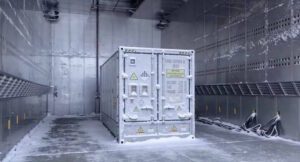
Two were in the same sentence in the investor presentation noting the arrival and trials of battery-electric haul trucks and two 7 megawatt-hour (MWh) battery electric locomotive prototypes.
Instead of discussing its own electrification and decarbonisation efforts in the six months to December 31, BHP is focused on how other industries’ changes in this arena will benefit its business.
“Over the long term, population growth, urbanisation, rising living standards, and the infrastructure required for digitisation and decarbonisation are all expected to drive demand for steel and copper,” BHP said in its report lodged with ASX.
Revenue rose to $US2.7 billion ($A3.8 billion) due to the “significant” acceleration of copper and iron ore prices.
For the first time ever, copper revenue made up the majority of underlying earnings before interest, tax, depreciation and amortisation (EBITDA), with 51 per cent or $US8 billion of the total.
That is, provided climate change doesn’t damage those aspirations, one of the risks noted in the forward looking statement which might “affect our future operations and performance, including the actual construction or production commencement dates, revenues, costs or production output and anticipated lives of assets”.
But while the mining giant notes ‘energy transition’ as being a big source of growth for its resurgent copper division – after ‘traditional’ which takes in house building and home appliances – data centres are where it sees the next line of growth in future.
The company says data centres’ copper demand alone could by six times come 2050 to 3 million tonnes a year, of the 50 million tonnes of copper it expects to be mining by then.
Unlike Pilbara competitor Fortescue, which is aiming for zero fossil fuel use by 2030, BHP is aiming for the much simpler net zero by 2050.
This goal, and the pathway there, was not mentioned in the half year results.
According to BHP’s website, it’s aiming to start replacing its diesel machinery from 2030 onwards.
That’s not to say the mining giant is doing nothing.
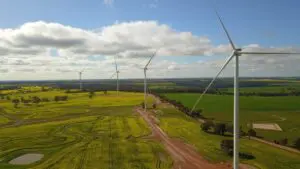
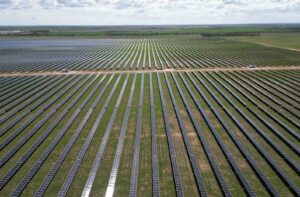
Also going unmentioned are the five wind projects and single battery project currently under development that BHP is either looking at building itself or has offtake agreements over, such as the Goyder North wind and battery project.
It also has offtake agreements with 11 wind and solar farms and batteries around the country. While the total capacity of those agreements is unknown, the total capacity of those projects is 1.17 gigawatts (GW) and 405 megawatt hours (MWh).