Home » Storage » 1414 Degrees lands funds from Woodside for thermal energy storage technology

1414 Degrees lands funds from Woodside for thermal energy storage technology

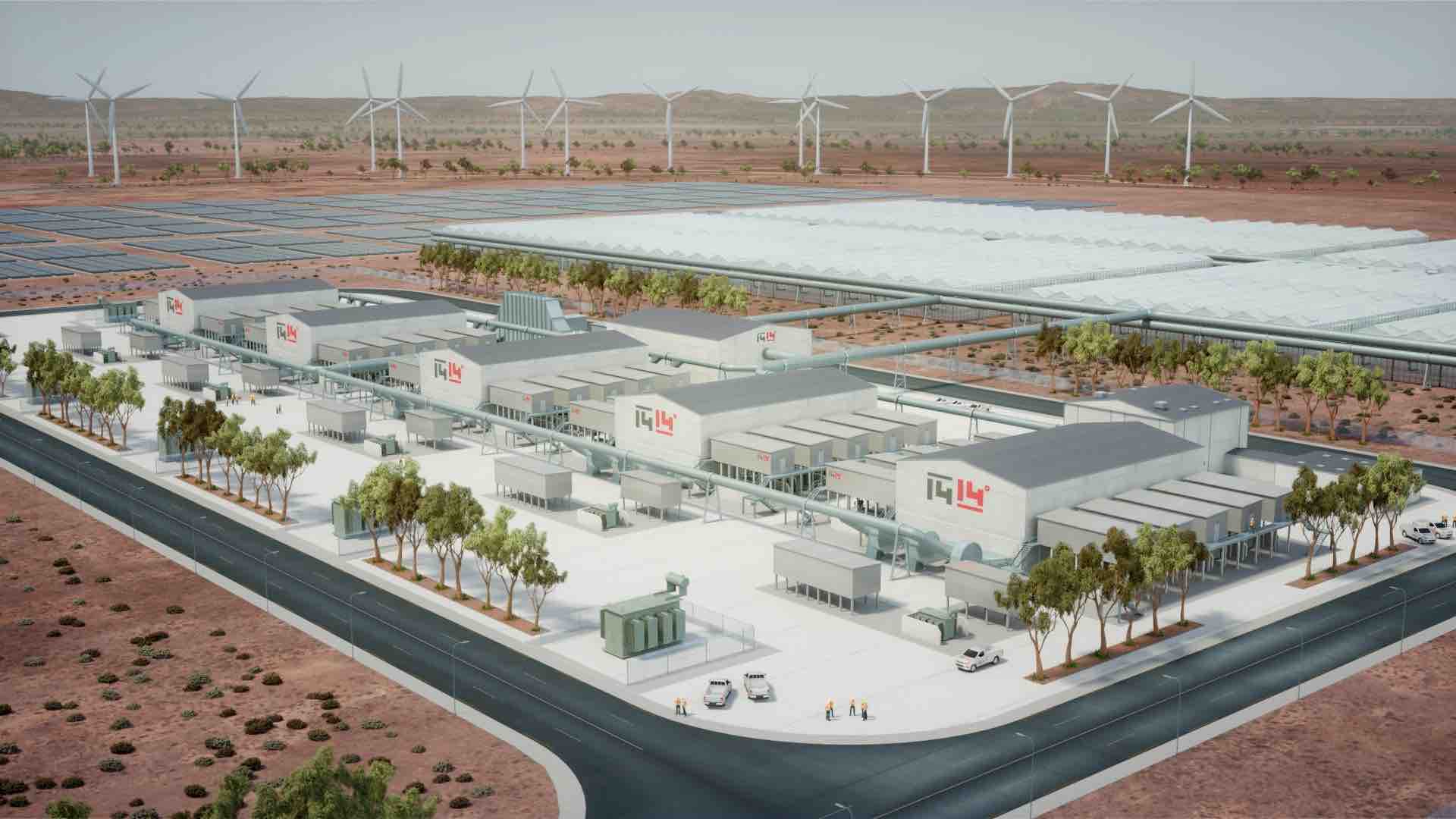
1414 Degrees 1GWh storage concept.
Image supplied

Australian thermal energy storage company 1414 Degrees has obtained funding from Australia’s biggest gas producer Woodside Energy to support the further development of its SiBox technology.

SiBox differs from other storage technologies because it can store renewable energy and release it as both heat and electricity, potentially opening up markets in industrial and district heating applications.

SiBox stores thermal energy as latent heat in molten silicon – which has a very high melting point of 1414° Celsius, hence the company’s name. The similarly high energy density of molten silicon means that it can hold much more energy than other phase change materials, delivering maximum energy efficiency.

In a new deal announced on Wednesday, Woodside will contribute up to $2 million for a 1MWh SiBox demonstration module, which will be used to validate the technology under a variety of operating conditions in laboratory furnaces before moving to a commercial scale 75MWh multi-module project.

Woodside will have the opportunity to partner with 1414 Degrees on jointly developing and commercialising the SiBox technology.

“This is positive news for 1414 Degrees,” said 1414 Degrees CEO Matt Squire. “This partnership with Woodside, is a vote of confidence in our SiBox renewable energy storage,” which he said is a simpler solution than hydrogen.

“Our core belief is that renewable electricity is now a necessity and will only grow in abundance. Our focus on storing this electricity and delivering renewable heat will offer long term solutions to decarbonising as well as compelling returns to shareholders.”

1414 Degrees is continuing work on the Aurora Energy Project in Port Augusta, which it bought in late 2019 after the collapse of US solar developer SolarReserve, and where the storage technology may be deployed.

Joshua S. Hill is a Melbourne-based journalist who has been writing about climate change, clean technology, and electric vehicles for over 15 years. He has been reporting on electric vehicles and clean technologies for Renew Economy and The Driven since 2012. His preferred mode of transport is his feet.

Related Topics

Latest posts

S-curve modelling says renewables can kick coal out of Australia by 2032. But is this soon enough?

S-curve modelling says renewables can kick coal out of Australia by 2032. But is this soon enough?

In the race to renewables, the big question is whether “faster than we thought” is the same as “fast enough.” S-curves say we can do the first. Nothing in the modelling tells us we’re on track for the second.
“It’s a commercial system. And it has a customer:” Sodium-ion battery sale hailed as a first for Australia

“It’s a commercial system. And it has a customer:” Sodium-ion battery sale hailed as a first for Australia

The sale of a 100 kilowatt and 200 kilowatt-hour sodium-ion battery system is being claimed as an Australian first – and may herald next generation of storage tech.
Energy Insiders Podcast: Will the green bank save the Tomago deal?

Energy Insiders Podcast: Will the green bank save the Tomago deal?

CEFC boss Ian Learmonth explains why big wind projects may finally get delivered this year. Plus: Tomago aims for 100 pct renewables, and the big utility profits.
Balcony solar or building integrated PV? The emerging options for apartment dwellers and owners

Balcony solar or building integrated PV? The emerging options for apartment dwellers and owners

A Victorian parliamentary inquiry on apartment energy issues has recently reported and identified several issues that require urgent attention to address the failures of energy policy. One interesting issue that relates to both high rise apartments, and plug-in ‘balcony solar’, is where solar fits into apartment occupant energy costs.  High rise apartment buildings have very […]