Home » CleanTech Bites » Qld regions to get just 6.3c/kWh for solar exports

Qld regions to get just 6.3c/kWh for solar exports

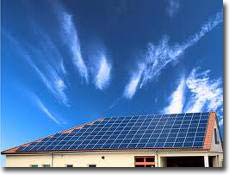
The Queensland pricing regulator has recommended a feed-in-tariff for household rooftop systems of just 6.31c/kWh for electricity exported back into the grid from homes in regional Queensland.

The new tariff was published on the Queensland Competition Authority website late last week. It follows an announcement earlier this month that the 8c/kWh FiT paid to households in south-east Queensland be removed at the end of the current financial year and replaced with a “voluntary” payment system.

However, because there is effectively only one retailer in remote parts of Queensland – the state owned Ergon Energy – the QCA recommended that a minimum tariff be set.

According to its calculations, the figure should only represent the estimated wholesale price of electricity, plus ancillary fees and the value of transmission losses. It says all other costs are unavoidable. The estimate includes no calculation of the potential benefits of rooftop solar, such as reducing peaks and avoiding or delaying infrastructure upgrades.

The QCA says that if the carbon price remains, the FiT should be 8.784c/kWh, but this should reduce to 6.321c/kWh in the carbon price is removed. (Wholesale electricity prices are expected to fall if the carbon price is removed).

The QCA approach is different to that of Horizon Energy in Western Australia, which has recommended tariffs of up to 50c/kWh in some towns in remote and fringe of grid areas because of the benefits that solar can bring. It has recently tendered for large battery storage systems to reduce the dependence of some towns on the grid.

Electricity consumption in regional Queensland is heavily subsidised by the government ($600 million a year) because of the cost of delivery to remote areas. Indeed, Ergon Energy said last year that within a decade, it may be cheaper for households to generate and store their own electricity using solar and battery storage, rather than using the grid.

The QCA ruling would appear to simply provide an extra incentive for solar households to consume a maximum of their rooftop solar system on site, and to potentially add storage.

qca regional FiT

booh

Giles Parkinson is founder and editor-in-chief of Renew Economy, and founder and editor of its EV-focused sister site The Driven. He is the co-host of the weekly Energy Insiders Podcast. Giles has been a journalist for more than 40 years and is a former deputy editor of the Australian Financial Review. You can find him on LinkedIn and on Twitter.

Related Topics

Latest posts

S-curve modelling says renewables can kick coal out of Australia by 2032. But is this soon enough?

S-curve modelling says renewables can kick coal out of Australia by 2032. But is this soon enough?

In the race to renewables, the big question is whether “faster than we thought” is the same as “fast enough.” S-curves say we can do the first. Nothing in the modelling tells us we’re on track for the second.
“It’s a commercial system. And it has a customer:” Sodium-ion battery sale hailed as a first for Australia

“It’s a commercial system. And it has a customer:” Sodium-ion battery sale hailed as a first for Australia

The sale of a 100 kilowatt and 200 kilowatt-hour sodium-ion battery system is being claimed as an Australian first – and may herald next generation of storage tech.
Energy Insiders Podcast: Will the green bank save the Tomago deal?

Energy Insiders Podcast: Will the green bank save the Tomago deal?

CEFC boss Ian Learmonth explains why big wind projects may finally get delivered this year. Plus: Tomago aims for 100 pct renewables, and the big utility profits.
Balcony solar or building integrated PV? The emerging options for apartment dwellers and owners

Balcony solar or building integrated PV? The emerging options for apartment dwellers and owners

A Victorian parliamentary inquiry on apartment energy issues has recently reported and identified several issues that require urgent attention to address the failures of energy policy. One interesting issue that relates to both high rise apartments, and plug-in ‘balcony solar’, is where solar fits into apartment occupant energy costs.  High rise apartment buildings have very […]
5 Comments