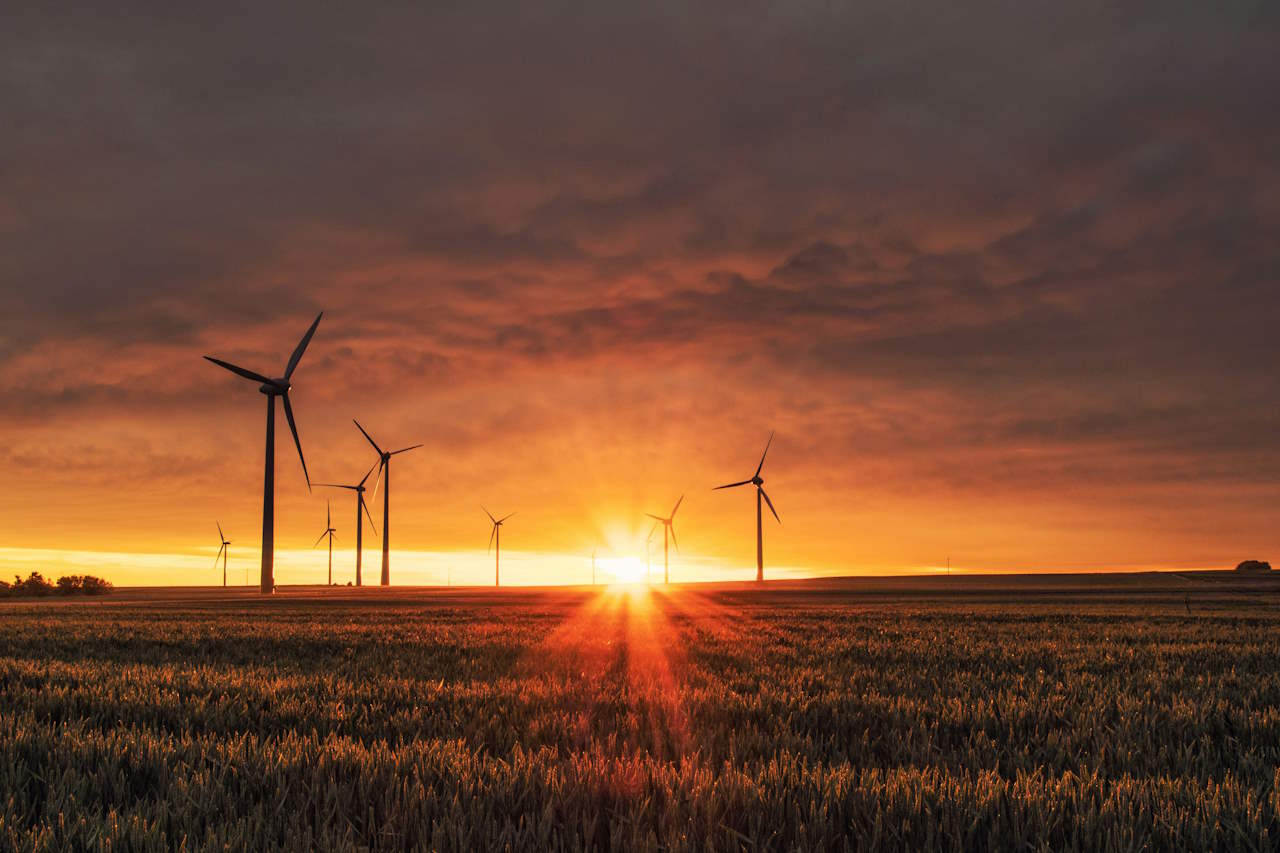
Wind and solar have posted a new record for instantaneous output on Australia’s main grid, as the number of new projects are connected to the grid and some of the country’s biggest wind farms work through their commissioning processes.
According to data from GPE NEMLog, wind and solar set a new output peak of 12,563 megawatts (MW) at 10.30am on Monday, easily beating the previous peak of 12,261 MW set in December last year.
At the time, the share of renewables in the main grid – known as the National Electricity Market – was around 65 per cent, well short of the record of more than 75 per cent, reflecting higher demand at the time.
Most of the record setting in Australia’s main grid, and in individual states, over the last few months has come in battery storage, with a number of new battery projects joining the grid. This has coincided with a new low for gas output reached at 11.05am on Sunday, with a share of just 0.4 per cent.
But the commissioning of a number of new projects, including the country two biggest at MacIntyre in Queensland, and Golden Plains in Victoria, along with other sizeable projects at Goyder South in South Australia and Clarke Creek in Queensland, has boosted the wind component considerably.
GPE NEMLog’s Geoff Eldridge reported earlier on Monday that Victoria reached a new maximum instantaneous output for wind of 4,352.8 MW, surpassing the previous record by 132.7 MW. Eldridge says that a year ago, the peak was 3,706.1 MW (set at 7.25pm on July 7, making this latest mark 646.7 MW higher.
Eldridge says this step change reflects a shift in the composition of Victoria’s wind fleet: “Newer wind farms are driving the growth – Golden Plains Wind Farm East Units 1–3 alone added 486.1 MW to the year-on-year difference,” he writes on LinkedIn.
And this is despite a couple of legacy sites, the notoriously under performing Macarthur project (-60.1 MW) and Bulgana (-82.3 MW), recorded lower outputs than they did a year earlier.
At the time of the record, wind contributed 55.1% of Victoria’s total generation (4,353 MW of 7,901 MW), followed by coal at 43.1 per cent.
Output from both utility-scale solar and rooftop PV was negligible at that early hour and Victoria was exporting 1,635 MW to other NEM regions, indicating strong interconnector flows supported by high local output.
“Earlier in the morning, wind output had briefly approached 5 GW, but curtailment of up to 1 GW was observed,” Eldridge said.
“This reflects the emerging challenge of local generation exceeding local consumption and export limits during lighter load periods. Strong interconnector flows at the time helped reduce this curtailment. There was also some battery charging underway, responding to negative pricing that occurred during the excess supply period.”
He also noted that the timing of this record — early morning rather than late evening — highlights how renewable generation patterns are reshaping typical supply-demand dynamics.
AAP