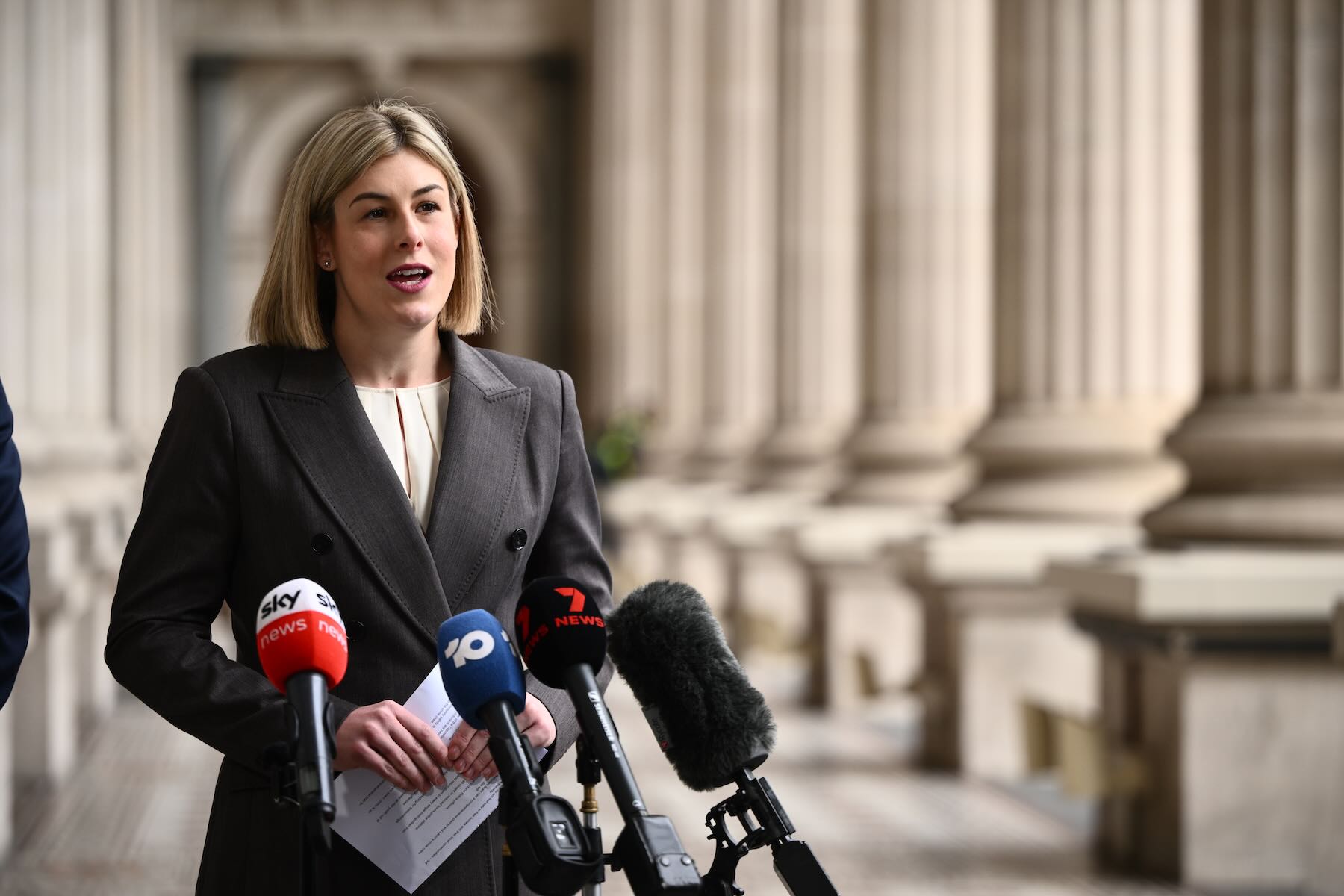
The Victorian Coalition is being accused of throwing away jobs and economic opportunities for the regions, after Liberals leader Jess Wilson officially promised to scrap the VNI West transmission project, one of the major planks of the state’s energy transition.
The state Liberal and National parties on Tuesday promised to scrap the controversial interstate link, rather than pause and review as they had previously indicated.
Industry and community groups say the new policy position is a threat to the state’s energy security, and does nothing to solve the problem of where to find an extra 1.45 gigawatts of power when the Yallourn coal fired power station closes in mid 2028.
There are growing fears, too, that a Coalition victory at the state election in November, as some polls indicate may happen, could see a repeat of the Queensland LNP government’s attack on renewable policies that it has implemented since sweeping Labor from power in that state in late 2024.
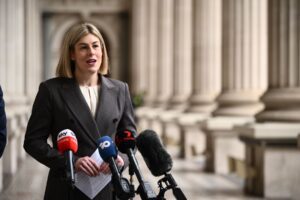
“Victoria doesn’t need more unnecessary poles and wires that bulldoze through regional communities, it needs more gas and more firm generation,” Liberal leader Jess Wilson said in a statement.
“A Liberal and Nationals government will cancel VNI West and take immediate action to secure more gas for our state – meaning lower prices and a secure energy future.”
RE-Alliance national director Andrew Bray says the promise to cancel the project – a key part of grid plans to link Snowy 2.0 to the grid and connect more wind and solar farms – will throw farmers and small communities that want the transmission line and the associated energy projects under the bus.
“Farmers who choose to host wind or solar should not have that choice taken away because the politics has changed in Melbourne,” Bray said. “We need stable, bipartisan energy policy – not a new plan every time the government changes hands.
“Cancelling VNI West means lost income for farmers, lost work for regional contractors and fewer opportunities for surrounding communities to negotiate lasting regional benefits.
“The loudest opponents do not speak for every farmer. Many farmers have actively chosen to host projects so they can diversify their income, strengthen their farm businesses and keep farming through droughts and volatile commodity prices.”
Bray says the state Coalition must show Victorians “in detail” how it plans to keep the lights on.
The VNI West transmission line is a proposed 500 kV link to New South Wales that can tap into energy resources in that state, as well as South Australia. But it is also expected to bolster the business case for new renewable generation and storage projects in the west of the state.
The initial planning stages, however, were badly mishandled by the national energy market operator, and the resulting trust issues among farmers have created fertile ground for anti-renewable energy organisations.
Thin on substance
The Liberal’s energy plan is still thin on substance, amounting to little more than five – now six – dot points in a press release.
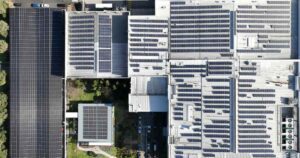
These dot points include ending the gas ban for new homes, reviving gas exploration in the state, creating an “Energy Security Requirement” to underpin new gas-led generation, repealing property access laws, and encouraging more commercial and industrial rooftop solar installations
Wilson’s office did not respond to a request for further comment.
State Nationals leader Danny O’Brien reiterated promises to repeal compulsory acquisition powers, and remove fines against farmers who prevent transmission line officials from entering their land.
But with the process of closing the Yallourn coal power station in 2028 already underway, and the earliest possible date for offshore wind being 2032, questions are being asked about precisely how the Liberals propose to fill that gap.
“The Coalition says gas will fill the gap, but Victorians deserve to know where that gas is actually going to come from,” Clean Energy Council chief Jackie Trad said in a statement.
“Victoria’s existing gas fields are declining. Announcing a tender does not create gas reserves. It does not build a power station and it does not put additional electricity into the Victorian grid.”
Victoria opened a petroleum tender for conventional offshore gas exploration in September 2025 following requests from industry, but no suitable applications were made.
Development applications for two LNG import terminal projects are making their way through the state process, but that is an expensive alternative to gas.
Newly appointed state energy minister Jaclyn Symes called the decision to kill off VNI West “reckless” and warns it will “destroy electricity reliability across Victoria, guaranteeing blackouts and pushing up power bills.”
“The Liberals and Nationals are lying to Victorians. There is no restriction on bringing online new gas supply through conventional means in Victoria. Is Jess Wilson promising to overturn the ban on fracking in Victoria?” Symes said in a statement.
Shadow energy minister David Davis said today at a forum in Gippsland that he believes gas “can be brought on relatively quickly.”
An onshore gas field typically takes between five and 10 years to take from exploration through to production.
One of the rising number of questions about Coalition energy policies is which gas fields and reserves it thinks can be brought on quickly enough to fill the generation gap.
“If you are going to cancel one of the major pieces of Victoria’s future electricity system, you have an obligation to show people what replaces it,” Trad said.
“Cancelling VNI West without a credible replacement leaves Victorians in the dark… Victorians are entitled to see a serious energy security plan before they are asked to take that risk.”
Furthermore gas, which hasn’t been cheap in Australia for a decade, comes with its own community engagement problems.
VNI West is the focus of the very well funded Farmers Fightback organisation, which used to be the old Wallaloo Gre Gre Alliance Facebook group, and is opposed to transmission pylons on farms.
And the prospect of opening up farmland for mining, be it for mineral sands or gas exploration, is also bringing landowners to the streets, an indication that simply throwing “open the doors to new conventional gas projects” is unlikely to be as easy as the Coalition makes out.
Farmer for Climate Action wants to know what compensation it plans to pay for those who stand to lose thousands of dollars in hosting fees, and what guarantees it will give that farmers won’t be forced into hosting gas exploration instead.
“Transmission is a tough issue, because most farms are powered by electricity delivered via high-voltage transmission running across other farms,” Farmers for Climate Action Verity Morgan-Schmidt says.
“The average modern payment for hosting a wind turbine is around $45,000 per turbine per year. For example, the 59 turbine Cannie wind farm, plans to connect to the proposed transmission line and will pay farmers roughly $66.37 million over 25 years.
“How many energy project cancellations does the Coalition expect if this interconnector project is cancelled and how many millions in drought-proof income will farmers lose? How will these farmers be compensated?”
Morgan-Schmidt also wants to know how the Liberals plan to replace the 700 construction jobs and apprenticeships and traineeships the transmission project is proposing to bring to regional Victoria.
Time to add, not subtract
There are real questions to be asked about what will fill the void when the Yallourn power station closes in 2028, and about the huge blowout in the cost to build VNI West to more than $11 billion.
But removing options such as the VNI West interconnector, which is expected to enable more generation by providing more transmission capacity, rather than adding new ideas is causing many people to scratch their heads.
In a speech to the Gippsland New Energy Conference on Wednesday, Davis acknowledged the problem of Yallourn closing and reiterated the solution as being gas power, but did not explain where the gas will come from.
He also appeared to say the government must start managing the cost of building new generation projects in order to bring down power bills.
“I’m making a point here that there’s a broad problem of construction costs in Victoria, and we need to be aware that the electricity sector, both renewables and traditional projects, are not immune from this,” he told the forum.
“We need to make sure that those costs are managed, and we’re determined to inject competition where we can, and ensure that the costs are held at levels that our community can bear.”
To join more than 29,000 others and get the latest clean energy news delivered straight to your inbox, for free, click here to subscribe to our free daily newsletter.