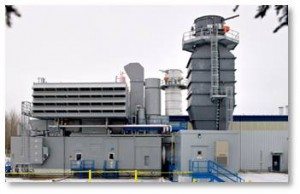
Solar thermal technology company Vast Solar is looking to provide critical grid services even when it is not generating by using its turbines as synchronous condensers.
Vast Solar says the adoption of Doosan Škoda Power turbines with a clutch could improve the economics of its technology, and help hasten the exit of the traditional providers of synchronous power, coal and gas generators.
Synchronous condensers – large spinning machines that do not burn fuels – are becoming an increasingly important part of the technology mix in grids dominated by renewables.
In South Australia, the installation of four such syncons has allowed the market operator to dial down gas generation to minimum levels, and double the amount of wind and solar that can be generated at any one time.
Advanced battery inverters – also known as grid forming inverters – are also expected to provide much of the same grid services, particularly inertia and system strength.
Vast Solar says the Doosan turbines are pretty much of the shelf technology that can be adapted to the particular needs of solar thermal.
CEO Craig Wood says that combined with a solar PV plant, a solar thermal turbine could provide synchronous services while still storing the solar from its own arrays for generating at night.
“It gets the best of both worlds,” Wood told RenewEconomy, adding that the added revenue from providing such grid services, as markets develop, will help with the economics of the technology.
For this reason, Wood says it could be useful to provide stability services for large-scale green hydrogen projects and massive subsea electricity export projects such as the $20 billion Sun Cable (Australia – Singapore) in Northern Territory and Xlinks (Morocco – UK).
Vast Solar is currently working on a major project in the Mt Isa region, as well as other parts of the main grid and some off-grid projects. Wood says the interest from mining companies is increasing.
“To generate power, CSP uses turbines like those at the heart of coal and gas fired power plants,” the company says in a statement.
“A clutch can be added to disengage the generator, which remains spinning, from the turbine when it is not generating.
“The spinning generator then acts as a synchronous condenser, providing ongoing system strength, inertia and voltage control services to support intermittent renewable energy such as solar PV and wind.”
It notes similar clutches have been used on Tasmanian turbines, enabling hydro generators to operate as synchronous condensers.