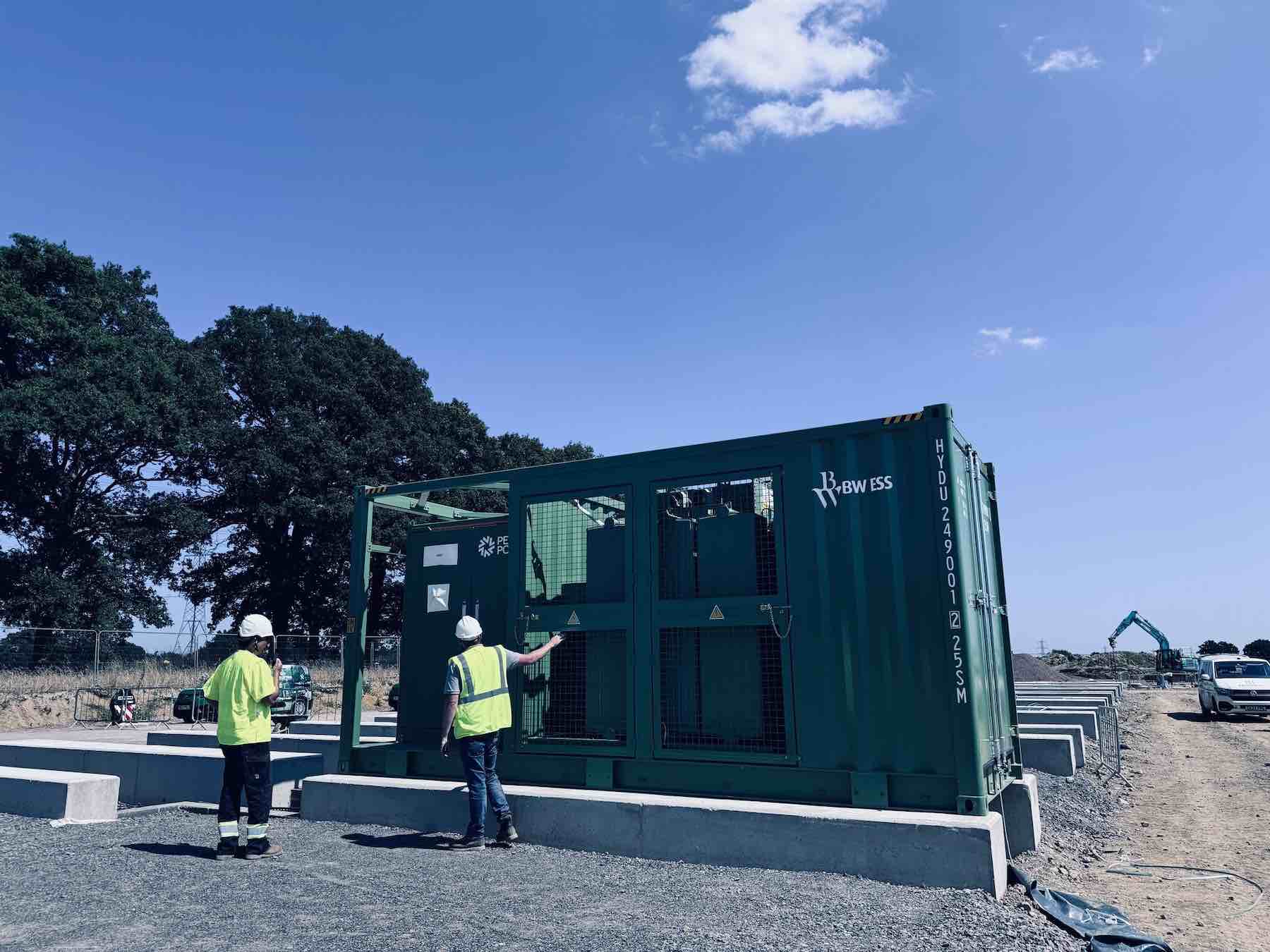
Another huge battery project could be coming to New South Wales (NSW), after the state planning department received a proposal for a whopping 400MW/1,600MWh standalone battery storage facility slated for McCullys Gap, near Muswellbrook.
The application was submitted last week on behalf of the Australian development arm of UK-based BW ESS, which plans to invest upwards of $A800 million into the project.
With a claimed development pipeline exceeding 2.6GWh worth of BESS capacity across the country, the project has the potential to solidify BW ESS as a leader in Australia’s energy storage space.
BW ESS’s McCullys Gap BESS project will be located approximately 6 kilometres northeast of Muswellbrook in NSW within the Hunter-Central Coast Renewable Energy Zone (HCC REZ).
According to the application, BW ESS has already secured site control for the development that’s expected to encompass around 13.38 hectares of land. Initial development of the McCully Gap project was carried out by UK-based developer Penso Power, which became part of BW ESS in October 2024.
The HCC REZ, touted as the first region of its kind in Australia, has been home to the state’s hyper-polluting coal industry for over a century. However, NSW is slowly moving away from outdated energy sources, with the state’s four remaining coal-fired power plants set to close over the next 15 years.
As Australia (and the world) transitions away from burning fossil fuels, green sources of dispatchable energy, such as battery storage, will become vital for firming up the electricity grid during periods of low solar and wind generation.
The project will connect to Transgrid’s Muswellbrook substation via a 330kV transmission, forming part of NSW’s high voltage electricity transmission network.
Construction on the McCully Gap BESS is expected to take approximately 18 months to complete, with BW ESS hoping to break ground sometime next year.
BW ESS global presence
Globally, BW ESS claims to have a development pipeline of BESS projects of around 17GW across Europe and Australia.
This includes the company’s flagship 750MW/3,000MWh Bannaby BESS project that’s also slated for NSW and expected to come online during the first half of 2028.
Alongside its own exploits, BW ESS partnered with private equity firm Gaw Capital Partners in 2023 to form a joint venture for the development of utility-scale BESS in Australia. The JV, known as Valent Energy, has pledged over A$2 billion for the development of energy storage across the country.
Although a specific supplier wasn’t named in BW ESS’ recent application, the developer expects to utilise lithium-ion based BESS at its McCullys Gap site.
Despite its widespread deployment, the technology has faced intense public scrutiny over the past six months, following a major fire at an energy storage facility in the US that took place at the beginning of the year.
The cause of the fire at Vistra’s Moss Landing facility has yet to be determined, however, the Texas-headquartered developer, along with the project’s battery supplier, have already been hit with a class action lawsuit seeking damages for the blaze.
Despite the huge media attention these sorts of events cause, the vast majority of facilities across the world continue to operate without any issues. According to data from the BESS Failure Incident Database, only eight failure incidents were reported worldwide last year, which worked out to less than 0.1 incident per deployed GWh.
The worldwide health burden caused by fossil fuels, and the importance of clean alternatives, is also worth pointing out. A 2020 report revealed that each year in Australia, the burning of coal is responsible for 800 premature deaths, 14,000 cases of asthma symptoms in children and 850 cases of low birth weight in newborns.
However, the dangers of thermal-runaway in lithium-ion based technology still exist, which is why developers may explore alternative technologies.
Last week, Australia-based Allegro Energy unveiled its proprietary redox flow battery, hailing it as a safer and lower-cost alternative to more commonplace solid-state alternatives.
See also Renew Economy’s Big Battery Storage Map of Australia for more information.