Western Australia has committed to closing all its state coal generators by 2030 and power the South West Interconnected System (SWIS) with more renewables.
But the rollout of transmission infrastructure and large-scale renewable projects is a complex process that’s taking much longer than anticipated. Without complementary solutions, there’s a risk that this plan could be further delayed.
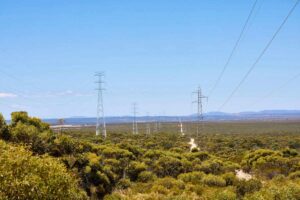
The State Government’s recently announced SWIS Transmission Plan to make WA a renewable energy powerhouse sets out the infrastructure needed to unlock new renewable energy zones.
Yet, apart from the Clean Energy Link North, most of the plan remains unfunded which creates investment uncertainty for developers and leaves the transition plan incomplete.
Without decisive action, gas generation risks filling the gap created by coal’s exit.
Why Transmission Funding Matters
Transmission is key to the clean energy transition. Without transmission capacity in the appropriate locations renewable projects currently in the pipeline cannot secure a connection to the grid.
Energy Policy WA made it clear in last week’s industry online briefings attended by over 1,000 people that “renewables firmed by batteries and gas are the lowest cost energy solution”.
The SWIS Transmission Plan is credible and a commitment to fund and deliver the plan is urgent. Otherwise, WA risks falling short of its stated target of doubling renewable generation to 70% by 2030.
At the same time, we cannot rely solely on large projects and transmission expansion, which recent experience shows is hard, expensive and faces community resistance and delays.
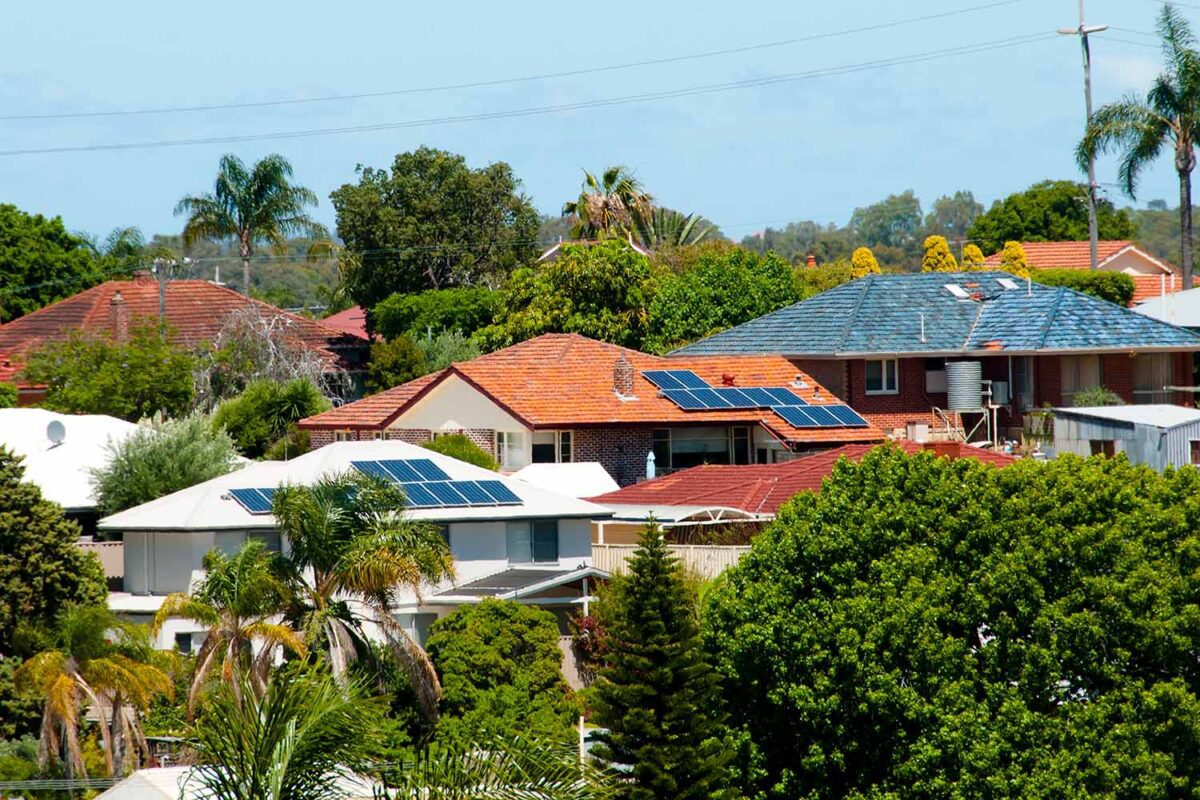
Sustainable Energy Now’s latest report, Western Australia Battery Backed Rooftop Solar Optimisation Study shows that WA’s rooftops hold a vast untapped resource across residential, commercial and industrial properties:
- Only 13% of suitable rooftop area across the SWIS is currently being used for solar;
- Unlocking the remaining rooftops used battery backed solar and flexible exports could deliver 16 GW of capacity, more than double the current SWIS generation;
- Pairing solar with behind the meter batteries and flexible exports would cut the need for more than half the high-voltage transmission projects forecast under the SWIS Demand Assessment, saving taxpayers an estimated $14.5 billion.
Battery-backed rooftop solar is not only faster and cheaper to deploy, it is also the most democratic solution: every home, apartment, school, and business can be part of the transition. Federal analysis shows households with rooftop solar plus a battery can save an average of $2,252 a year on bills.
How Government Can Help
To ensure WA’s transition stays on track, policy must advance on two fronts:
- Fund and fast-track the SWIS Transmission Plan – unlock renewable zones and provide certainty for investors.
- Scale up battery backed rooftop solar – expand access to renters, strata, and low-income households; incentivise commercial and industrial uptake; and modernise grid connection rules for batteries.
New transmission and battery-backed solar are complementary. One without the other risks slowing WA’s progress towards being a clean energy powerhouse and increases reliance on gas. Together, they provide a proven, scalable pathway to cheaper bills, stronger grids, and faster emissions reductions.
WA’s clean energy future does not need to wait for large projects alone – it can start today in our homes, businesses, and communities using a resource right above our heads.