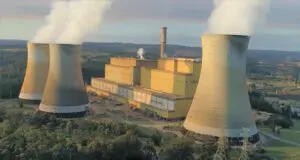
Waste-to-energy projects risk sending out more emissions than even some of Australia’s dirtiest coal generators, just as the country is set on scaling up the industry, according to a new report.
At least 15 waste-to-energy projects are in development across Australia, and could incinerate up to 4 million tonnes of what’s known as municipal solid waste, or much of the stuff that ends up in landfill, says a new Smart Energy Council (SEC) report.
These facilities will come with serious emissions, however, and report author Nick Harford says governments and companies need to stop referring to waste-to-energy as low emission, renewable, clean, and safe for human health and the environment.
“Government authorities and project proponents are incorrectly stating that waste to energy is a circular economy solution, and capable of reducing emissions from direct use of fossil fuels,” he said in a statement.
“Such claims warrant closer scrutiny. Waste-to-energy is not low emissions, renewable or clean energy.”
Gas power stations produce emit between 500g and 650g of carbon dioxide equivalent per kilowatt-hour (CO2-e/kWh), says the report Waste-to-energy in Australia: Energy Solution or Problem?.
Waste-to-energy emissions are even higher, ranging between 700g to 1,700g CO2-e/kWh, the SEC report says, citing a US study in Plos Climate and work in Europe.
That upper limit is higher than the Clean Energy Regulator’s latest readings for the dirtiest coal power stations in Australia, Yallourn which delivered 1350g CO2-e/kWh and Loy Yang B with 1015g CO2-e/kWh.
In the UK the BBC is reporting average emissions around 720g CO2-e/kWh, while emissions estimate for Western Australia’s own waste-to-energy facility at Kwinana emissions estimates are 790g CO2-e/kWh.
This is in an era when solar and wind generation have got scope 2 emissions from grid electricity down to an average of 620g CO2-e per kWh, according to the 2025 National Greenhouse Accounts Factors.
SEC chief David McElrea says classifying burning rubbish as renewable is demonstrably false.
“I shouldn’t have to state the obvious, but this is waste-washing,” he said in a statement.
“Waste-to-energy operators claim to be electricity generators, but in reality only 10-20 per cent of revenue comes from power generation – the majority of earnings are derived from waste processing.”
“Federal legislation is very clear, you cannot burn rubbish and call it renewable energy. Any attempts to circumvent that fact are strongly rejected from the renewable energy industry.”
Small scale waste-to-energy technologies are relatively commonplace in Australia on industrial sites such as paper mills and sugar refineries, or agribusinesses such as piggeries, the SEC report says.
The units burn their own waste and put the heat or steam back into their operations.
The issue is that the move towards bigger facilities is being pitched as a circular economy way of dealing with waste.
Under federal legislation it’s definitely not “renewable” either, which excludes waste-energy produced from fossil fuel-based materials such as plastic or many textiles from being allowed to use that definition.
The report also points out that once a waste-to-energy facility is built, it needs to be fed which could run counter to waste reduction policies.
“The USA commissioned 80 or more of them and Europe about 400 of them [since the 1980s],” the report says.
“It is also notable that many countries that built waste-to-energy infrastructure at scale in the 1990s and 2000s now have excess capacity and are importing waste to keep plants operating or are scaling back waste-to-energy facilities.”
The US facilities produce just 0.5 per cent of the country’s electricity supply, while in the EU it’s 2.4 per cent — although it also uses the technology for heating.
If you would like to join more than 29,000 others and get the latest clean energy news delivered straight to your inbox, for free, you can click here to subscribe to our free daily newsletter.