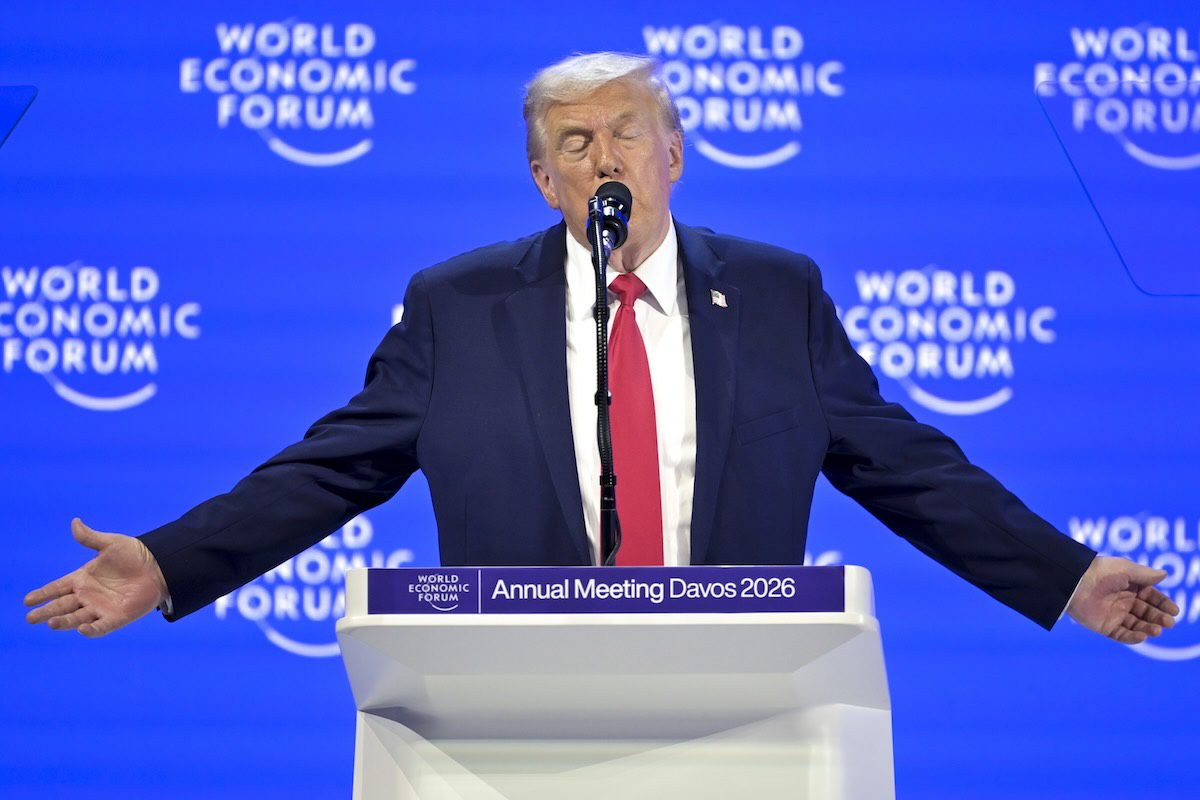
US president Donald Trump and his commerce secretary have launched extraordinary new attacks on renewables at the World Economic Forum in Davos, Switzerland, even sparking a walkout by senior European officials and an early closure of an event hosted by BlackRock boss Larry Fink.
Trump doubled down on his claim that there are no wind farms to be found in China, despite the fact that China has installed more wind capacity than the world’s next 18 biggest markets – including the US – combined.
“They sell them to the stupid people that buy them. They don’t use them themselves,” Trump said, before insisting that China only built a “couple” of wind farms to show people what they could look like.
“They don’t spin, they don’t do anything,” he said. “They make a fortune selling the windmills. They killed the birds, they ruin the landscape.”
Trump’s remarks might be waved away as the demented ramblings of an ageing wanna-be autocrat, who happens to be head of the world’s most powerful economy, but it is important to remember they do form the basis of political and planning discussion in Australia.
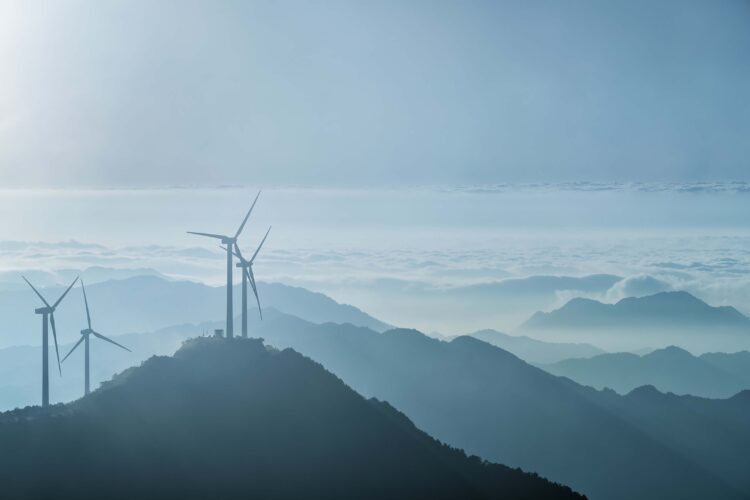
The Australian conservative parties and their media supporters have managed a near-two decade campaign against wind power – and more recently solar farms and utility-scale batteries – often describing them as “swindle” machines, and part of a global climate hoax that promotes “renewa-bull” technologies.
The submissions made in protest against large scale wind farms, solar farms and batteries – mostly by people who live more than 100 kms from the actual project – are full of such claims.
It is the result, of course, of some skilful puppetry by the fossil fuel industry, which has masterminded a campaign of misinformation and disinformation that – as the Australian Senate inquiry has found – has seeped into the higher echelons of political power, and had devastating impacts on local communities.
Trump’s commerce secretary Howard Lutnick, caused great offence later that evening when he told a dinner event of corporate and political leaders that Europe and the world should focus on what he calls “big, beautiful” coal generation, rather than renewables (perhaps taking a leaf out of the Queensland LNP government policy).
It sparked a walkout – led by ECB head Christine Lagarde – and an outburst from former vice-president and climate campaigner Al Gore, who heckled and booed Lutnick.
“It’s no secret that I think this administration’s energy policy is insane,” Gore said in a later statement. “And at the end of his speech I reacted with how I felt, and so did several others.”
Appalling though they are, some experts suggest that the US fossil fuel first energy policy may be self-defeating and – irony or ironies – end up doing more than any climate agreement to accelerate electrification, and clean electrification, across the globe.
That, at least, is the assessment by leading energy analyst Gerard Reid, who points to the “brutally clear” economic advantage of renewables, and particularly wind, over fossil fuels, which means that countries across the world are becoming structurally less reliant on oil and gas.
“The transition has entered a new phase,” Reid writes in a LinkedIn post.
“It is no longer being led by governments. It is being pulled forward by customers who want cheap, reliable electricity as fast as possible. China understands this better than anyone.
“In 2025 alone, it exported more than $US200 billion of clean energy technologies. That number will only grow as countries across the Global South look for ways to reduce their exposure to volatile fossil fuel markets and to provide low cost energy to their growing populations.
“Every solar panel installed is one less long term customer for LNG. A panel bought once replaces fuel bought forever.”