EV and battery storage giant Tesla has reaped its first billion-dollar quarterly profit from its energy storage operations, with a record $US1.1 billion ($A1.7 billion) gross earnings from the division in the September quarter.
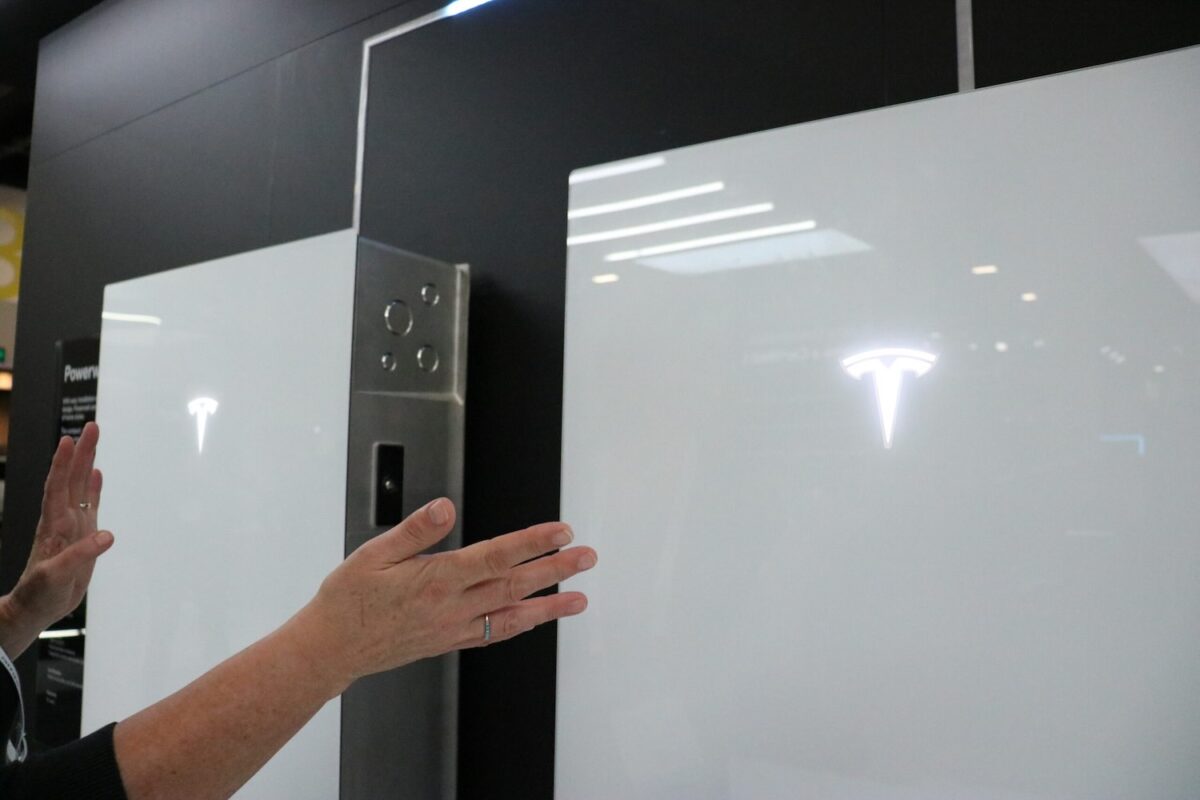
The company has long led the deployment of large scale batteries in Australia, and around the world, and says that its Powerwall household battery has also enjoyed record deployments in the last quarterr, helped by a surge in its US home market, even if the product has slipped down the volume rankings in Australia.
The battery business did not feature much in the Tesla panalysts and the shareholder call with CEO Elon Musk, which is a bit surprising given that he has said that battery earnings could overtake EV earnings as the green transition accelerates.
In Australia, that is already the case. See: Tesla battery storage revenue trumps electric vehicle sales in Australia as revenue tops $5 billion for first time
The conference call was dominated by talk of FSD, Robo-cars, Ai and the “robot army” that Musk wants to build – for the benefit of humanity no doubt.
But it’s the energy storage division that is showing the strongest profit growth for the company, and having the biggest impact on the global energy transition, particularly in markets like Australia, California and Texas where renewable penetration is high.
Tesla built the first big battery in Australia, and the world, at Hornsdale, and recently completed the biggest battery in Australia, the 560 MW, 2,240 MWh Collie battery in W.A., which has more than 12 times the storage.
It is also supplying the Supernode battery in Queensland, which will be bigger again at more than 3,000 MWh, with the potential of growing to more than 5 GWh with the addition of an eight-hour fourth stage.
Battery storage is playing an increasingly important role on the grid, providing essential services such as frequency control and system strength, acting as a kind of giant shock absorber to increase capacity on transmission lines, and soaking up excess solar and feeding it back into the grid in the evening peak.
In isolated grid such as W.A., battery storage is accounting for more than 20 per cent of the evening supply at times, and this will more than double as more big batteries enter the grid. In South Australia, with the highest share of renewables, the battery share in the evening peak has topped 30 per cent at times.
“We achieved our highest quarterly energy storage deployments, bolstered by the continued ramp of Megafactory Shanghai and another record quarter of Powerwall deployments,” the company said in its quarterly statement.
The Shanghai Megafactory is now supplying the Australian market, with first shipments delivered to Neoen’s Western Downs battery, now the biggest in Queensland.
Tesla is also rolling out its next-generation industrial storage product, Megablock, which it describes as a pre-engineered, medium voltage battery that integrates four Megapack 3s and can significantly reduce costs.
“This new and simplified architecture incorporates hardware, software and services in a single package up to medium voltage, enabling rapid utility-scale deployment with faster interconnection to the grid and reduced complexity for customers.
It says Megapack 3 production will begin at Megafactory Houston in 2026, with up to 50 GWh per year of manufacturing capacity, and the company is believed to be already working on Megapack 4, such is the speed of technology change.
In the household market, tesla has recently launched a lease offering for rooftop PV and Powerwall batteries, but in Australia its one-time market leadership has been ceded to new players such as SigEnergy as household installations surge thanks to the federal government’s battery rebate scheme.
If you would like to join more than 26,000 others and get the latest clean energy news delivered straight to your inbox, for free, please click here to subscribe to our free daily newsletter.