Australia became the first of Tesla’s subsidiary country operations in 2024 to deliver a bigger profit from its battery storage division than it did for selling and maintaining its electric vehicles. It seems only a matter of time, as Elon Musk has often predicted, that it will soon do so on a global basis.
Tesla on Thursday morning (Australian time) delivered its second quarter profits for calendar 2025, which Tesla itself flagged as a transitional period from a focus on EVs and energy to AI and robotics.
The key metrics are not great. EV deliveries were down 13 per cent, revenue was down 12 per cent – largely because of the decline in vehicle deliveries and price wars – and operating income plunged 42 per cent to $US0.9 billion, because of those same price wars and despite a growth in profits from the energy and storage division.
Tesla even gave up giving EV sales forecasts, saying it is difficult to measure the “impacts of shifting global trade and fiscal policies on the automotive and energy supply chains.” It might have added too, but didn’t, the impact of Musk’s political interventions on consumer sentiment.
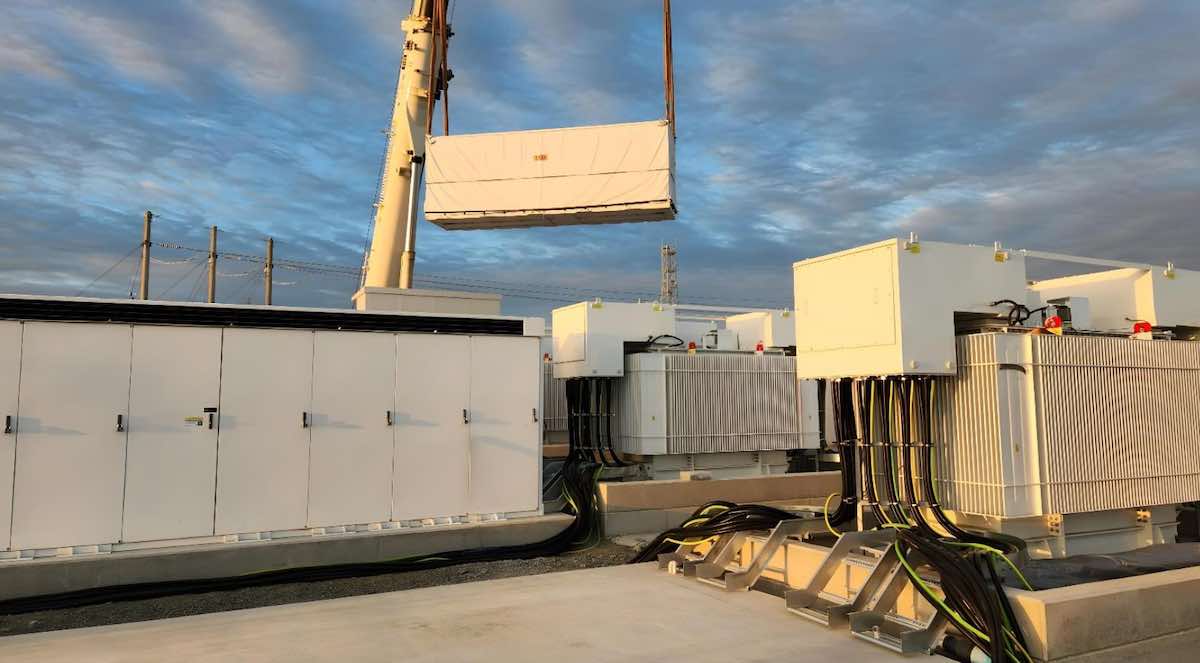
Energy storage demand, however, remains strong, and the division delivered a record quarterly gross profit of $US846 million, boosted by record Powerwall deployments and the shipping of grid-scale Megapack batteries from its new Shanghai megafactory, particularly to Australia where Tesla retains a major share of the big battery market.
is difficult to measure the impacts of shifting global trade and fiscal policies on the automotive and energy supply chains, our cost structure and demand for durable goods and related services.
Musk said the storage division was strong, despite the impacts of tariffs that have caused one US-battery supplier Powin file for bankruptcy, caused another, Fluence, to downgrade its revenue forecasts by more than $1 billion and Finnish supply Wartsila to report a plunge in sales and profits in the latest half.
“I think not that many people appreciate just how gigantic the scale of battery demand is,” Musk said on the earnings call.
“The way you think about it is that the sustained power output for the US grid is around one terawatt, but average usage is less than half a terawatt. If you add batteries to the mix, you can run the power plants, 24/7, at full capacity, thus doubling, more than doubling, the energy output per year of the US, just with batteries.”
That comment may raise some eyebrows because it seems to infer that fossil fuel generators that often have to wind back production because of falling demand or production in lower cost wind and solar, will simply charge the batteries. But Musk in the last year has not been as dogmatic about the need to eliminate fossil fuels as he once was.
However, Tesla says that despite Trump’s “one big beautiful bill”, which rips out funding support for wind and solar projects, it is confident that solar projects, which are most commonly paired with Megapack batteries, will be built.
“We believe solar projects will still get built because the energy is necessary,” Mike Snyder, the head of the energy and charging division said.
“The projects are well developed and they’re ready for execution, and there’s really no alternatives in the near term, given gas turbine lead time and pricing, we also can continue to see growth in the data center segment and in standalone storage projects, providing capacity to the grid in several markets across the US.
Tesla also expects its first LFB battery cell manufacturing facility to be online by the end of the year, and it is launching its third battery megafactory in 2026.
Tesla CFO Vaibhav Taneja said storage is also a high margin business, and the other main driver for battery storage demand is the growth in data and AI centres.
“The energy requirements are increasing at a rapid scale as application, as AI applications are very energy hungry,” he said. “The quickest path to scale up energy is deployed storage. This is something that our customers have started realizing.
“And despite this business having the largest impacts from tariffs, we’re seeing customers willing to accept some of the tariff impacts.
“The Big Bill has certain adverse impacts, even for the energy business, most notably on the residential storage business, due to the early expiration of consumer credits by the end of this year, the challenges of the storage business therefore remain both from the bill and from tariffs. We’re doing our best to try and manage through this.”