The Tamworth regional council has been left carrying the can on a lawsuit against the contested Hills of Gold wind project, after the former lead appellant pulled out.
Local taxpayers say they are livid that they will now be obliged to fund the lawsuit, with radio callers denouncing the situation earlier this month.
The New South Wales (NSW) council voted in November last year to support a court case by anti-wind group Hills of Gold Preservation Inc, which was appealing the final state approval of Engie’s 372 megawatt (MW) wind project in the Nundle hills.
The council officially joined the court action on March 31.
Shortly after, the Hills of Gold Preservation Inc pulled out, leaving the council to carry the cost of the suit.
In NSW court lists, the Tamworth regional council was listed as the lead appellant on May 23 for a notice of motion.
Hills of Gold Preservation Inc did not respond to Renew Economy’s inquiry.
The Tamworth regional council was not able to respond before publication.
But in a statement to local press in mid-May, liveable communities director Gina Vereker confirmed the council was alone in the suit and considering its options.
“It has always been Council’s intent to achieve resolution of the significant adverse impacts of the development on the community of Nundle and to avoid the long-term maintenance costs that will negatively impact ratepayers across the region,” she said in the statement, but without mentioning the potential costs of a lawsuit.
The situation is uncomfortable for the council, which is now facing complaints from Nundle residents about using taxpayer funds to run the lawsuit alone – particularly after raising rates by 36.3 per cent over the two years from 2024.
“Council is aware some community members may be feeling uncertain regarding council’s position,” Vereker said.
Can’t approve roads
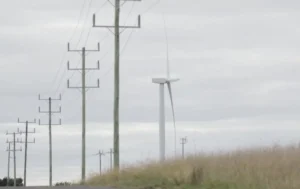
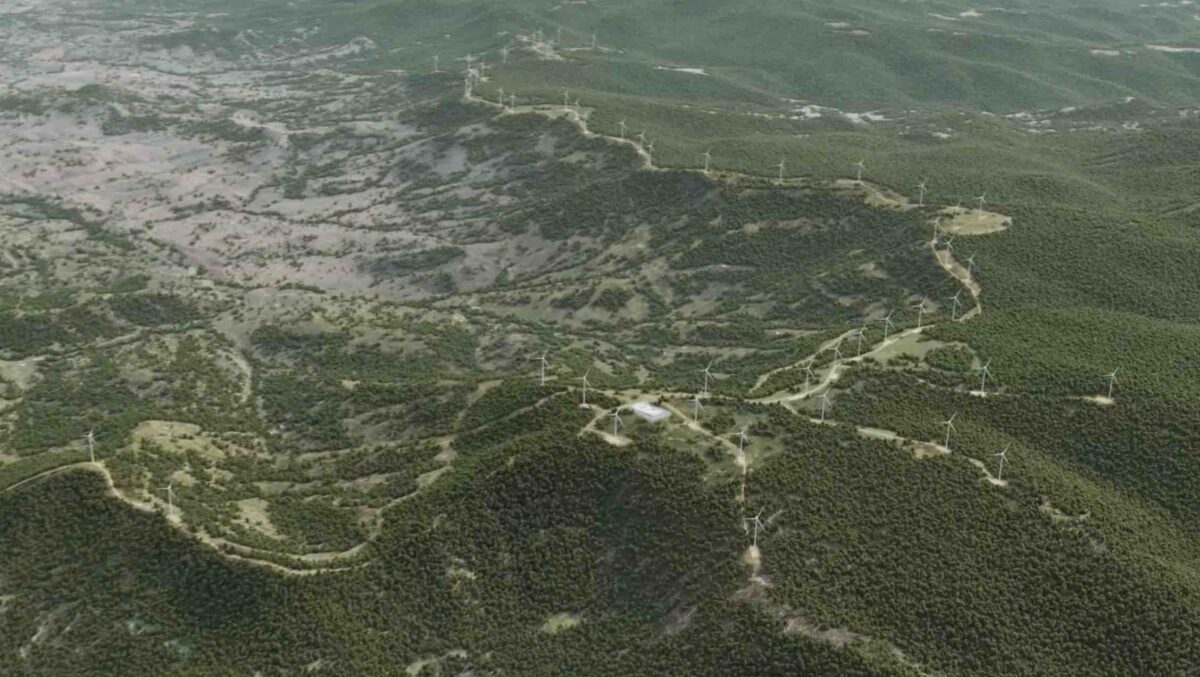
The legal suit is against the Independent Planning Commission (IPC), which in September last year approved the Hills of Gold wind farm project in Nundle as a 62 turbine project with a 100 MW battery, a 330 kilovolt transmission line and other associated ancillary infrastructure.
First mooted in 2018, the Hills of Gold project first won approval from the state government planning department late in 2023.
But this was for only 47 turbines and a shrunken capacity of 290MW, down from 64 turbines in its final application and an original 97 turbines.
The project owner, the French energy giant Engie, asked for 15 of the 17 turbines that had been removed to be reinstated, arguing that without them the project was commercially unviable.
The project has also been closely watched by industry, because of its threatened derailment by the use of so-called “phantom dwellings” by its opponents, and also because planning approvals for wind projects, particularly in NSW, have been the subject of heavy delays, with only a few approved in recent years.
But as it has successfully moved through state and federal planning processes, local opposition has become more intense.
By the time it voted to join the court case last year, the Tamworth Regional Council had already lodged six different objections to the wind farm.
In April, the council said its share of the lawsuit would focus on road jurisdiction. It alleged it can’t give planning consent to road upgrades that might encroach on private land, if the landowners haven’t first given their consent, and it doesn’t have enough information yet about public road works.
Engie said in a statement that the conditions of its development consent require it to do road upgrades to the standard of local authorities, and must repair and development-related damage to public roads.
With rumours still flying in Tamworth about Engie’s intentions, the company reiterated that it will contribute about $6.2 million to the Tamworth regional council for infrastructure, such as roads and community projects, and also offered the council 1.5 per cent of capital investment value through a Voluntary Planning Agreement, which, at the time, was worth about $9.5 million.
It also addressed concerns around decommissioning, saying its development consent requires it to decommission and remove all wind farm infrastructure within 18 months of the end of wind farm operations and restore the land capability to its pre-existing use, at its own cost.