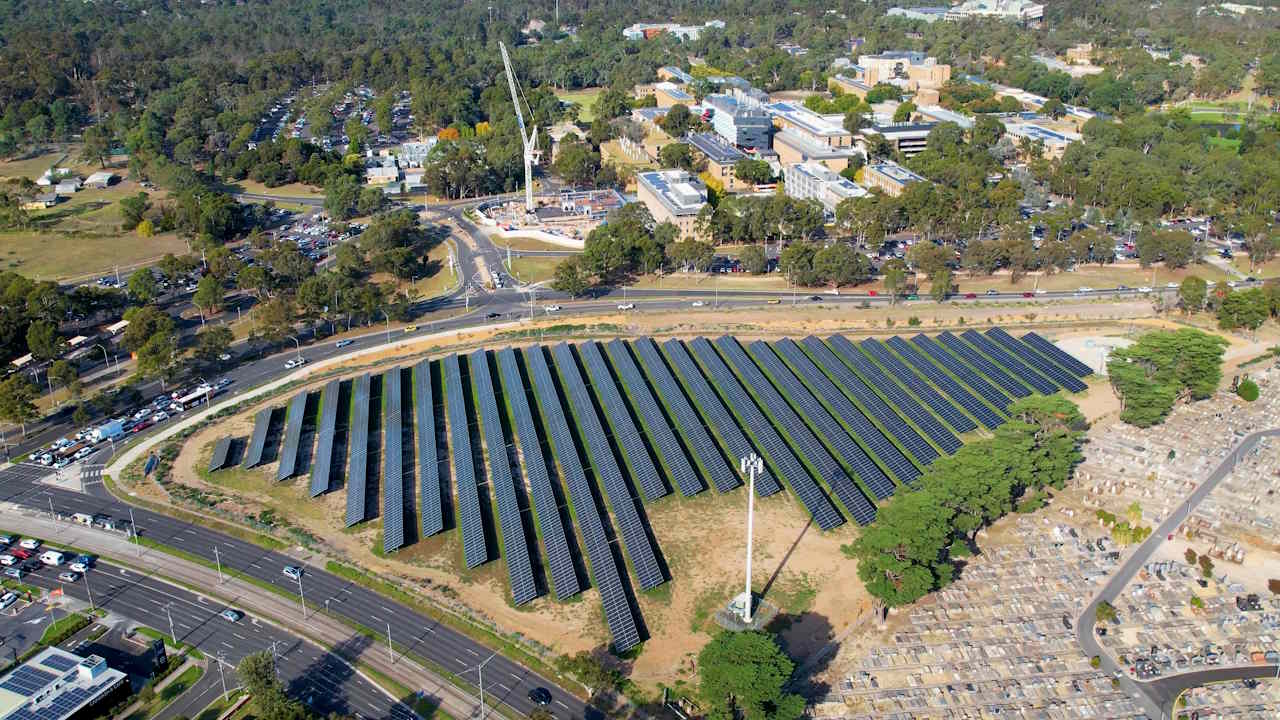
The largest urban solar farm in Victoria has officially been powered on at La Trobe University’s Bundoora campus in Melbourne’s north-east, consisting of a 2.9 MW solar system paired with a 4.5 MWh battery energy storage system.
La Trobe University made the announcement late last week, crowing about its $10 million, 3.5-hectare solar farm and its role as part of the University’s larger efforts towards achieving carbon neutrality by 2029.
Consisting of 4,300 solar panels spread out over 11,250 square metres of solar-generating area, the 2.9MW solar farm and 2.5 MW/4.5 MWh battery system is expected to cut the University’s total energy emissions by a further 15 per cent, taking overall emissions reduction at the Bundoora campus to over 65 per cent, or around 35,000 tonnes, since the launch of La Trobe’s Net Zero program in 2019.
To put that into perspective, La Trobe University says that its new solar farm will generate in one year the equivalent power that would be needed to power the MCG’s light towers for 11 consecutive years.
It also brings installed solar capacity at La Trobe University’s Bundoora campus to 5.8 MW.
“La Trobe is a leader in higher education and this project is an exemplar of our ongoing commitment to investing in sustainability and the environment,” said Professor Theo Farrell, vice-chancellor and president of La Trobe University.
“This investment will deliver ongoing emissions and cost savings to the University for the next 25 years.”
Already, La Trobe’s regional campuses in Bendigo, Shepparton, Albury-Wodonga, and Mildura have been certified as carbon neutral, while its new Shepparton campus is its first completely electric institution.
Now, with more than 98 per cent of the power generated by its new solar farm to be used to power the Bundoora campus, La Trobe University is further reducing its energy costs and emissions.
All together, since the launch of its Net Zero program, La Trobe University has cut energy emissions by more than 50 per cent across all its campuses.
Tthe new Bundoora solar farm and battery is connected to the grid, meaning that La Trobe will be able to provide support to the grid when required in emergencies to help avoid power issues in the local community.
The university is also using the site of its new solar farm to double-down on its efforts to reach carbon neutrality by 2029, planting 40,000 plants and 600 trees to increase vegetation on the site by 200 per cent, with a focus on indigenous species from La Trobe’s Nangak Tamboree Wildlife Sanctuary.
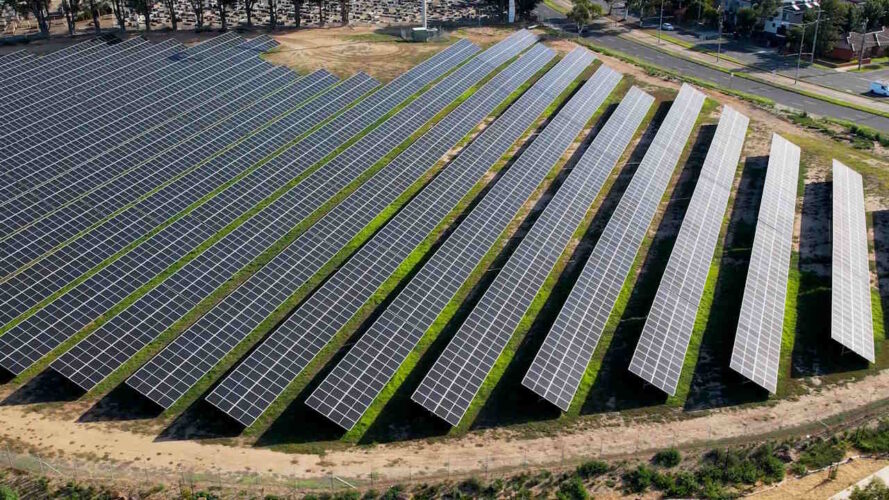
The solar farm will also act as a ‘living laboratory’ for a La Trobe-led agrivoltaic research project that will investigate the viability, yields, and quality of lavender grown in land shared with solar energy generation to optimise the productivity of the land.