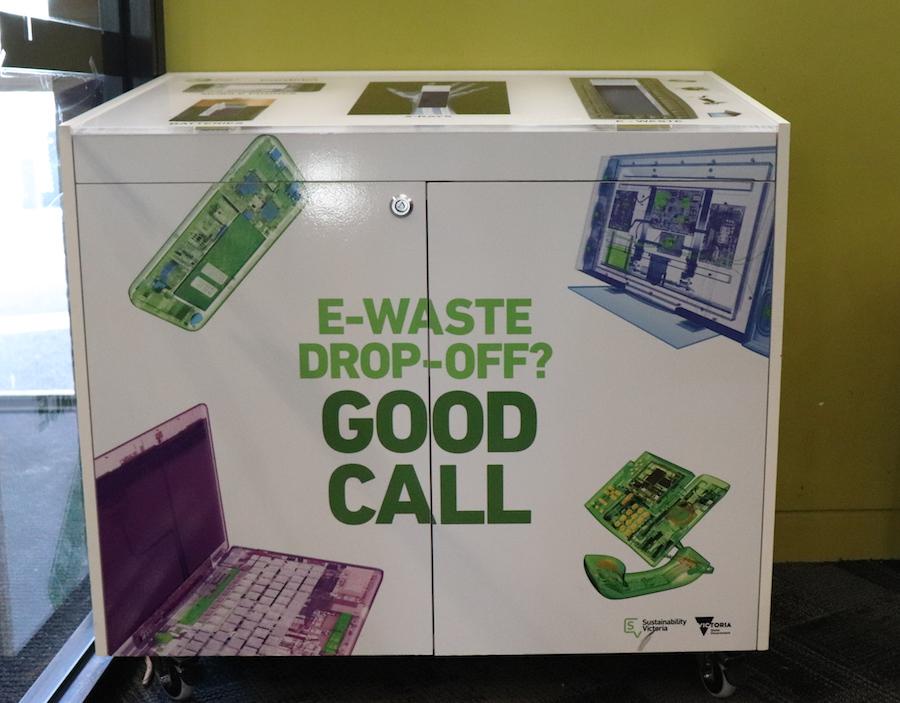
The Victorian government announced on Monday $1.7 million in funding for local councils and charities to make it easier for households to recycle batteries.
Part of an effort to combat the proliferation of e-waste – one of the fastest growing waste streams in Australia and consisting of embedded batteries in everything from vapes, shavers, toys and e-scooters – the new funding will be financed through the Circular Economy Hazardous Waste Fund – Round 4 to improve access to battery collection sites.
Funding will be made available to local councils and registered charities to allow for the creation of new battery drop-off locations.
Grants of up to $22,000 will be available to support the purchase, installation, and promotion of battery drop-off units which will accept a range of battery types including loose household batteries, batteries from e-cigarettes, embedded batteries, and larger batteries weighing up to 60 kg.
“Increasing access to battery collection points will make it easier for Victorians to safely and correctly dispose of batteries and prevent fires,” said Gayle Tierney, acting state minister for the environment.
“We are taking action to manage this problematic waste stream and reduce its impact on the environment by helping establish more drop off locations, keeping more batteries out of household bins.”
Waste collectors and fire rescue organisations such as Fire Rescue Victoria are reporting an increase in waste truck fires due to batteries being placed into kerbside bins.
This fourth round of funding through the Circular Economy Hazardous Waste Fund will hopefully benefit from third round funding, which saw two projects share in $3.5 million to build lithium-ion processing and recycling facilities.
The two facilities – one based in Stawell and another in Campbellfield – are set to increase Victoria’s capacity to process lithium-ion batteries by 19,500 tonnes per year and play a crucial role in increasing the state’s capacity to reuse valuable battery materials.
Victoria’s commitment to further bolster the safety of lithium-ion battery recycling was mirrored by an announcement in South Australia last week, with a new two-month safety campaign announced to help households prevent fires and highlight the risk posed with using lithium-ion batteries incorrectly.
Following a nearly ten-fold increase in callouts to fires caused by lithium-ion batteries – with the leading cause of these fires linked to mobility devices such as e-bikes and e-scooters – South Australia’s Metropolitan Fire Service (MFS) and Country Fire Service (CFS) have jointly launched the new campaign which will inform locals on a range of safety and handling concerns.
“When lithium-ion batteries are not used in accordance with the manufacturer’s instructions, are tampered with or are damaged, they can become extremely volatile,” explained MFS Chief Officer Jeff Swann.
“Without warning they can burst violently, releasing toxic and flammable gases, which can lead to intense fires and explosions.
“Our firefighters are increasingly attending fires where occupants have had near misses, and it is only a matter of time until someone gets seriously injured or killed. We implore the community not to tamper with battery packs, and to ensure the charging units are compatible with the batteries.”
For more information on the campaign visit mfs.sa.gov.au/news/lithium-ion-battery-awareness, or for product safety tips visit cbs.sa.gov.au/campaigns/lithium-ion-batteries.