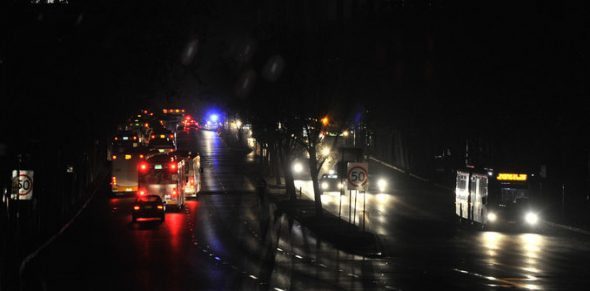
While you were asleep in Australia, Spain suffered a major and unprecedented blackout – the comfortable majority of load in the country was lost in a near-instant, around the middle of Monday.
Portugal and France were affected too. It is a developing situation at the time of writing, with many, many people without power and without access to critical services like transport, payment systems and internet.
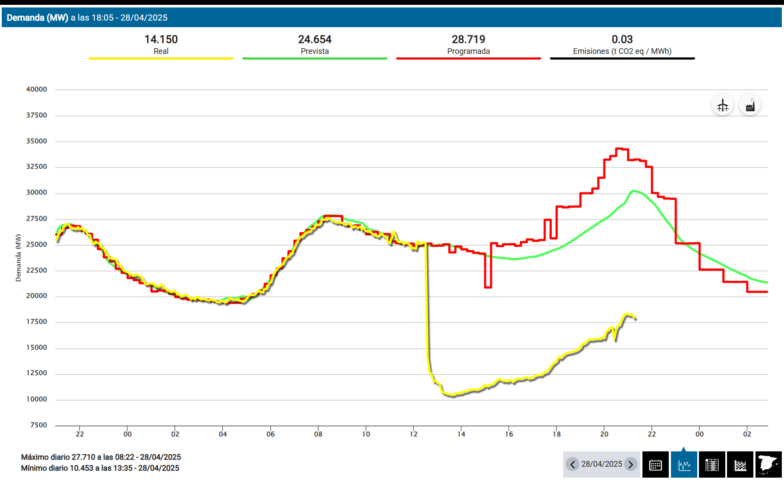
Not only is this an unprecedented blackout, it occurred right at the peak of Spain’s solar power generation in the middle of the day:

There’s a good chance some of the data after the incident is erroneous (it’s not clear solar was generating 3 gigawatts at 2100, for instance), but you get a very clear picture from the mix that solar was a major player in the Spanish mix at the time of the incident.
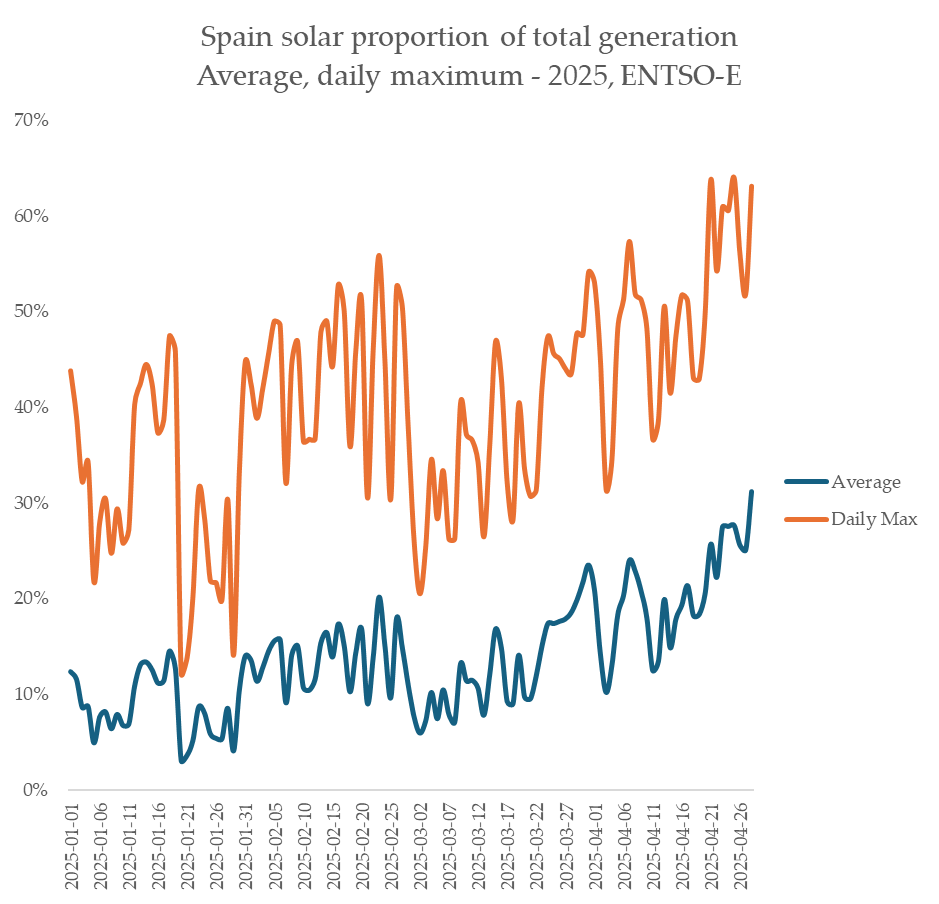
It has only been a few weeks since renewables in Spain hit a significant record level of output. The past few weeks have seen sustained high penetration levels of solar power generation in the country:
It is still very unclear what caused it. The most we have so part is Portugal’s grid operator blaming an ‘atmospheric phenomenon‘ in Spain. Spain’s grid operator hasn’t said anything, at the time of writing.
(Editor’s update: Energy analyst Gerard Reid says Spanish grid operator Red Eléctrica has a power “oscillation” and Reid points to problems on the Spanish-French power interconnector that led to the Spainish grid operator islanding their power system and potentially losing control).
But that hasn’t stopped a wide range of people doing exactly what we expect them to: blaming renewable energy.
One of the worst offenders has been Bloomberg columnist Javier Blas, who implicitly blamed the blackout on excess solar and wind power generation resulting in ‘not much inertia’.
Blas’ posts, in which he also blames solar power for a slower restart process and then explicitly blames the entire event on ‘too much electrification‘, seem to have been patient zero for the rapid spread of disinformation.
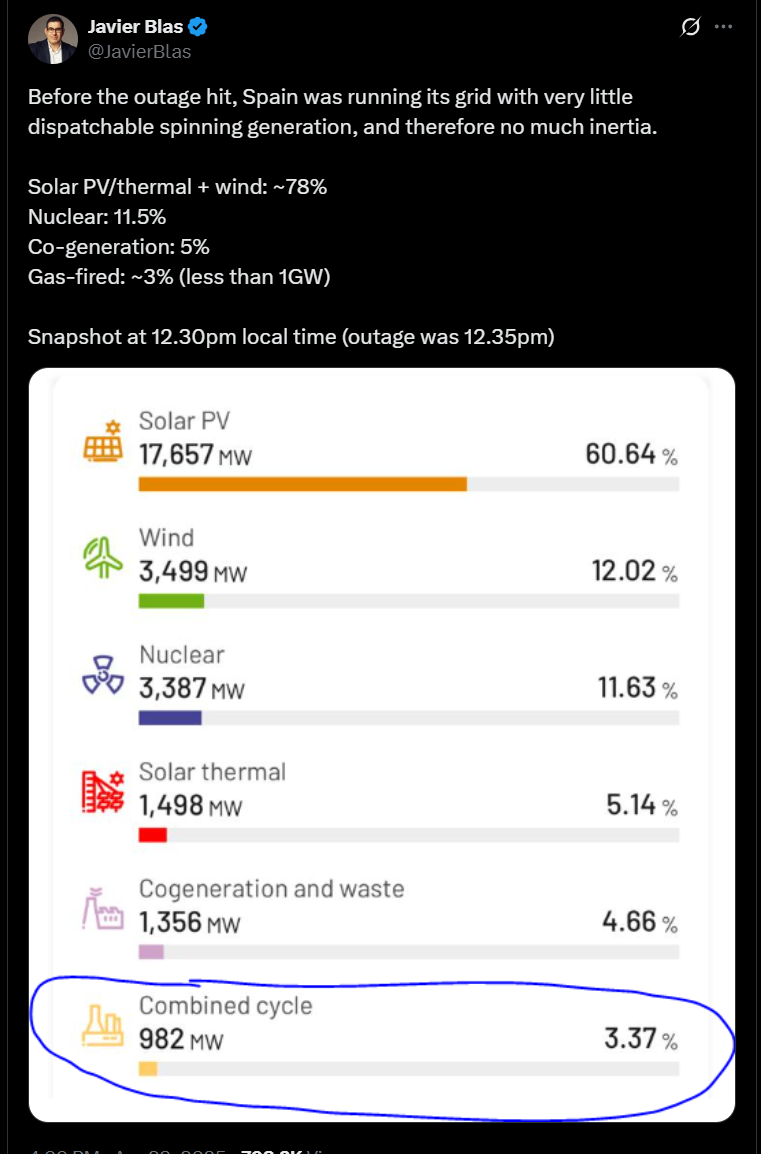
Notorious conservative climate delayer Michael Shellenberger, who has been involved in Australian politics several times but has recently taken to raising awareness about UFOs, actively jumped in, copying Blas’ language in a Substack post:

The denialist Substack “energy transition absurdities” cited Blas’ post, as did the right-wing blog ZeroHedge. The Daily Mail specifically cite Javier Blas in their frantic, rushed article blaming renewable energy for the blackout:


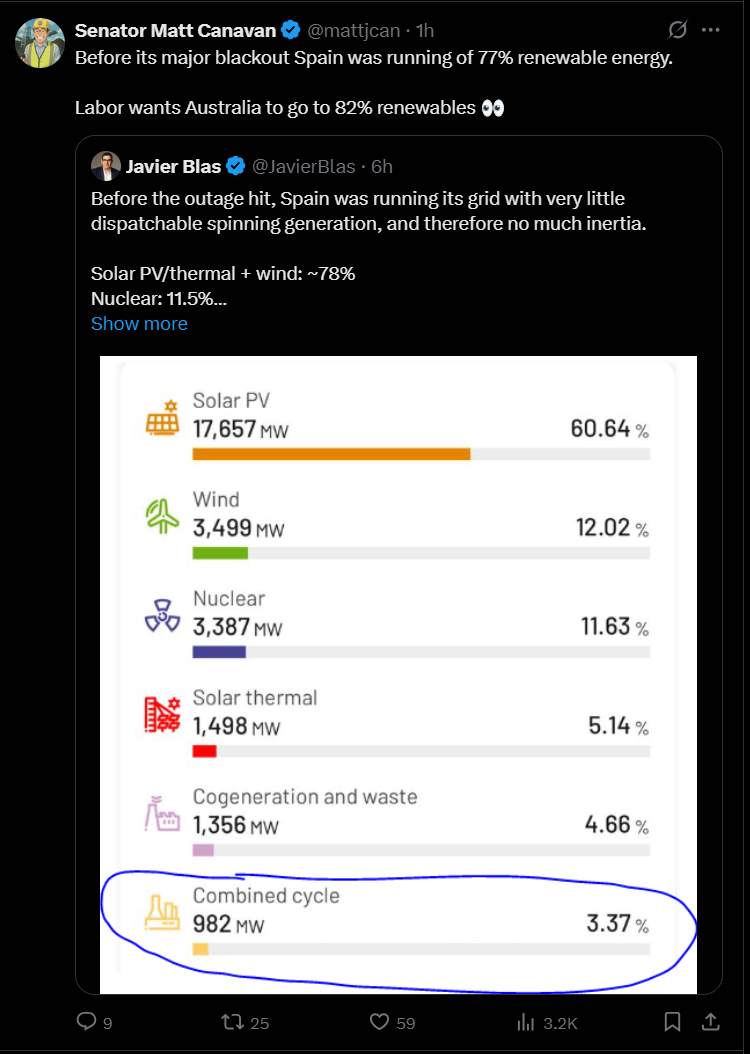
And then, waking up early, Senator Matt Canavan quotes Blas’ post and has been boosting other speculation about the blackout with real abandon:
Other players have been diving in too. The VP of energy at Equinor (Norway’s state-owned fossil fuel company), wrote that “One of the questions being asked tonight is whether high renewables penetration comes at the expense of grid reliability”, demonstrating the milder ‘just asking questions’ tactic.
Of course, Canavan’s posts come one day after opposition leader Peter Dutton claimed Labor’s climate policies would risk ‘blackouts and brownouts’. Considering the Coalition’s general mode of panic in their last week, I doubt this is last we’ve heard about this incident from the Liberal-National Coalition.
For those old enough to remember – this was exactly the pattern of events following the momentous 2016 South Australian blackout, which I covered in detail in my 2020 book “Windfall: Unlocking a Fossil Free Future”.
In researching that book, I managed to excavate a copy of the full nine minute interview that was broadcast on the ABC in the moments after that blackout, where the then ABC political editor Chris Uhlmann, trusted as a journalist by the ABC, interviews politician Nick Xenophon, and both men actively blame wind farms for the event (which was caused by a storm knocking over transmission lines):
Whether professional journalists at big outlets, well-paid disinformation agents or just armies of trolls, the most important priority for anti-renewable forces right now is getting out as much noise -as confidently and intensely as possible – in the early minutes and hours of the incident.
The core priority of grid services right now is getting power restored, rather than establishing the narrow chain of causal events, which will take weeks or likely months. That will be more than enough time for the narrative to be set in stone; immune to whatever reality emerges from careful investigation.