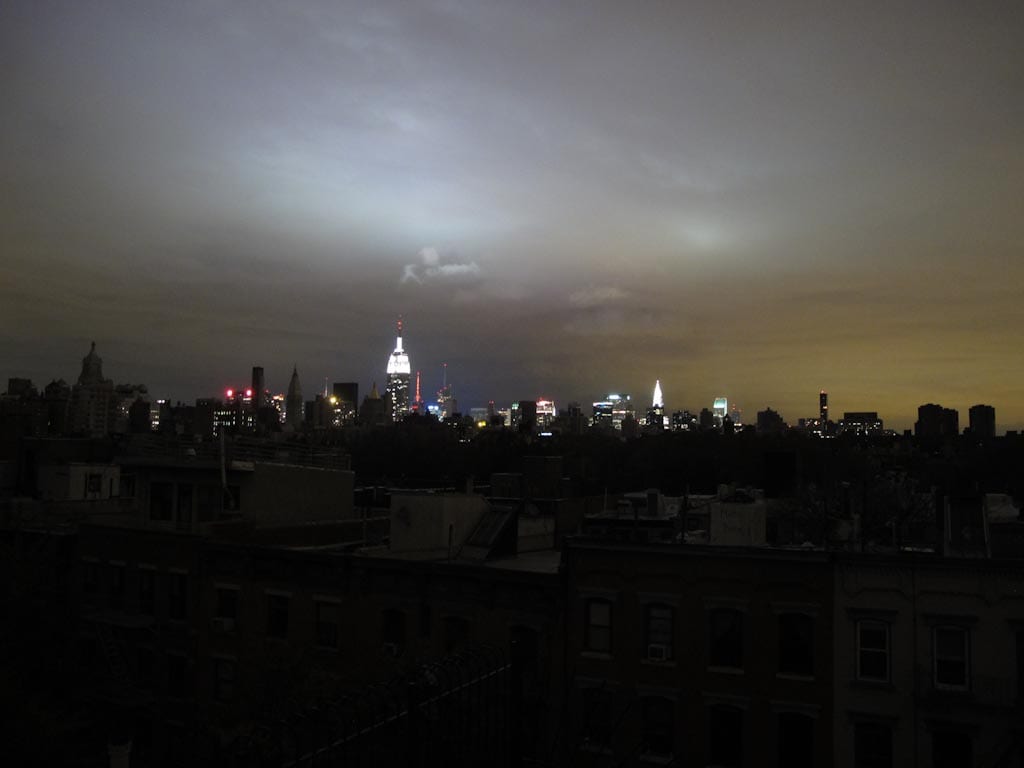
When Spain suffered a major blackout a few weeks ago, I spent plenty of time raising the alarm – not about the blackout itself, but about the disinformation firestorm that follows quickly whenever one of these incidents happens in a region with high wind and solar.
In a recent conversation I had with Bloomberg’s Akshat Rathi about the 2016 blackout that occurred in South Australia, an incident I’ve compared to the Spanish blackout, something significant occurred to me: what if misinformation isn’t particularly effective at stalling progress?
While a storm of lies about the cause of blackouts can put dents in the road, it is possible that the energy transition in Spain largely continues unabated, despite these stalling efforts. So, I thought I’d check in on recent incidents.
For each of the major incidents in recent history where blackouts were politicised specifically on wind and solar and climate policies more generally, it is worth checking on clean energy progress. The Regulatory Assistance Project published a compendium of these events in late 2022, and I have been writing, posting and reporting on renewable energy blackout disinformation for a long time now. My book, Windfall, contains a detailed breakdown of the 2016 blackout, along with a series of subsequent blackouts that were blamed on renewable energy.
Did any of these major, highly politicised and publicly significant events cause a material or noticeable dent in wind and solar growth? Let’s dig in….
South Australia, 2016
Probably the historical example I need to say least about, considering my audience here. Triggered by a storm knocking down power lines, accelerated by over-sensitive voltage settings on some wind turbines and intensified by a rate of change of frequency that was too great to arrest with load shedding, this event came to define climate politics in Australia for many, many years.
As I wrote in my book, Scott Morrison’s famous coal-waving stunt in parliament, recognised internationally, was specifically a taunt about the South Australia blackout. I would posit that it’s impossible to find another single event in Australia’s entire climate policy history that has had a greater direct impact on climate discourse (even including the Black Summer bushfires, which had a big but brief impact).

It’s tough to understate just how significantly this event shifted discourse in Australia. In my book, I reproduce this graphic created by the Grattan Institute, showing how massively media mentions of blackouts changed – even though the actual number of minutes of outages per customer barely changed, even when accounting for this blackout.

It shifted discourse – but did it shift physical progress? Checking in on South Australia, more than 8 years since that event, is pretty stunning. The state has risen from 39.5% renewables (as a 12 month rolling average) to now 71.3% in April 2025. Every single state has followed suit, with a significant rise in renewable energy proportion across the country (down to the success of the Renewable Energy Target policy, state-level schemes and falling prices for wind and solar). And as I wrote here, the volume of ‘unserved energy’ (blackouts due to supply and demand mismatch, mostly) remains essentially non-existent, save for occasional blips.
It is also worth recalling the 2019 blackouts in Victoria, where a severe heatwave caused major coal-fired power outages resulting in major load-shedding across the state – also heavily politicised, and also in a state where progress didn’t stall.

Britain, 2019
August 9, 2019, saw a lightning strike damage a transmission line. It caused a disturbance that triggered disconnection of wind and gas power, along with diesel and small-scale solar – 1 million people lost power for about one hour. Most of the usual suspects were out in force around this event, pushing as hard as possible to pin the blame specifically on the wind farms that disconnected.


On my old Twitter account, I catalogued examples of misinformation being thrown out in moments after that event, and it’s remarkable how similar the tropes are. But did it work? Did the UK put the brakes on its wind power development after 2019?

It is notable that the UK has seen a stagnation in wind power growth over the past few years, partly down to lower wind resource but also down to a slowdown in installations. It’s not helped by the news that Orsted cancelled a huge offshore wind farm project. But from 2019 to now, wind power has grown from about 20% share to more than 30% – and will hopefully get back on track soon. In recent months, wind isn’t going great in the UK, but there’s nothing to link that to the media firestorm a fair few years ago.
It is also worth noting that only a few weeks ago, the UK suffered a loss of power generation (a trip at the Drax plant), but avoided any wide-scale blackouts or cascading failures. The grid operator, NESO, ran a set of simulated models with even lower amounts of system inertia, and found that the loss of the power station could have been managed easily, without disconnecting customers.
California, 2020
As I covered at RenewEconomy back in 2020, this blackout was among the first to be explicitly linked to fossil fuels causing the heating of the atmosphere, and triggering heatwaves and blackouts. Other factors, such a record low rainfall and downed power lines themselves triggering fires contributed. It was relatively straightforward event – demand far exceeded supply, and load had to be shed in controlled bursts to manage the power system. Immediately – as in, literally during the blackouts – the usual suspects chimed in:

The Regulatory Assistance Project report has plenty of detail on the technicalities of why load shedding occurred, primarily relating to planning failures at the grid operator CAISO. Like every blackout that occurs on any grid with non-zero wind and solar, these two technologies were involved, but not the sole or key cause of the blackout, or a major accelerant of its consequences. “Nearly 10% of the natural gas generation fleet, about 60% of what was expected to meet the ramp up of demand to peak, and normally a reliable source of flexibility for following the evening ramp, was on a forced outage”.
Notably, this blackout (along with the Texas blackout below) was cited by conservative Democrat senator Joe Manchin in blocking Joe Biden’s original ‘build back better’ infrastructure bill. Here’s how California fared, after that incident:

Texas, 2021
I would posit this was probably the most famous of the lot, from a global perspective. Triggered by a ferocious winter storm, the blackout resulted in as many as 200 deaths, thanks to poorly insulated buildings in the state. It was almost immediately clear – as I wrote here on a few occasions – that this incident was primarily down to a massive, widespread and catastrophic “failure of gas and coal plants”, as RAP writes.
Like many other blackouts, we saw a scattershot of hypotheses offered by right-wingers, fossil fuel industry advocates and disinformation bodies, all contradictory but all somehow blaming wind power for the event. Notably, many of the worst pieces of disinformation and misinformation came from mainstream media outlets as well as right-wing forces. CNN, Reuters and others all contributed massively to the shockingly deceptive and sticky lie that this event was down to the state’s reliance on wind power.
Texas feels unique, in that it was comfortably the deadliest of the four, the blackout that was most explicitly and obviously caused by a failure of fossil fuelled power generators, and it was also the most intensely and aggressively framed as having been caused solely by wind farms – still cited by those trying to justify opposing renewable energy policies, four years on.


Well – four years later, let’s check the numbers:

After 2022, Texas did have a noticeable slowdown in wind power growth, but solar hasn’t skipped a step. The state has also seen eye-watering demand growth from air-conditioning, data centers and some electrification, which has kept fossil gas generation stubbornly high. You could maybe posit that the blackout played some role in the renewed antagonism towards wind and solar we’re seeing from Republicans in recent months, but it’s tough to say how much.
Spain, 2025
As I wrote here, a massive and historically significant blackout in Spain displayed all the common signs that emerge after a blackout occurs on a grid with decent volumes of wind and/or solar power. I have since done some analysis of the country’s nuclear fleet, and found that it was generating at its lowest level for at least ten years. That was justified on the taxes on nuclear waste being too high, paired with low electricity prices blamed on renewable energy growth. I have also written up a more detailed analysis of how Spain’s grid operator is managing the grid post-blackout, with some critics badly exaggerating what has been a relatively minor shift in dispatch.
I think that after the first few weeks of ‘blame renewables’ from media outlets, journalists and pro-nuclear, pro-fossil voices across social media, a significantly more complicated picture is going to emerge, and every player who contributed to blaming this event solely on the country’s renewable energy growth will be as muted as those in the examples above.

What happens from here? I don’t think there’s any guarantee Spain’s shifting energy system remains completely unaffected, but I do think there’s a high chance that the trend will continue moving in the right direction, as the government has itself pointed out.
There is plenty of engineering work to be done, but honestly, I strongly suspect that the world’s climate policy and renewable energy advocates could do well to be far better prepared for the disinformation firestorm that seems to emerge immediately after every single one of these instances. There is a 100% possibility this is going to happen again – blackouts happen, and many regions in the world are accelerating their shift to wind and solar, which means the chances of these ‘disinformation blackouts’ increases significantly.

Large institutions need to spring off the blocks far quicker. It shouldn’t be down solely to people like me or other freelance writers to be out there on social media questioning the assumptions and stories being woven by pro-fossil forces. There needs to be far more ‘pre-bunking’ explaining the exact tactics and patterns and inoculating people against the messages before they’re created and distributed. In the days after the blackout, I made this little guide to detecting disinformation, and I hope it helps in some small way.