Electricity retailers will be required to offer free power to households for at least three hours in the middle of the day, when rooftop solar generation is at its peak, in a federal government reform proposed for introduction next year.
The new offer, called Solar Sharer, is one of a number of “significant reforms” to the Default Mark Offer (DMO), which caps the price energy retailers can charge a small proportion of household and small businesses in New South Wales, south-east Queensland and South Australia.
As Renew Economy has reported, the annual setting of DMO prices – which also act as a sort of benchmark for all retail electricity offers – has become increasingly controversial, sparking debate over whether it remains fit for purpose in an increasingly complex energy market.
A key sticking point is that the vast majority of electricity customers on the NEM are not on standing offers and so are not directly affected by DMO prices.
Another point of contention is whether the DMO fulfils its role as a safety net, meant to protect vulnerable customers, when it is often priced well above more competitive retail electricity market offers.
Solar Sharer, unveiled by federal energy minister Chris Bowen, aims to tackle energy inequity by sharing the benefits of cheap solar with those who, for one reason or another, cannot install it.
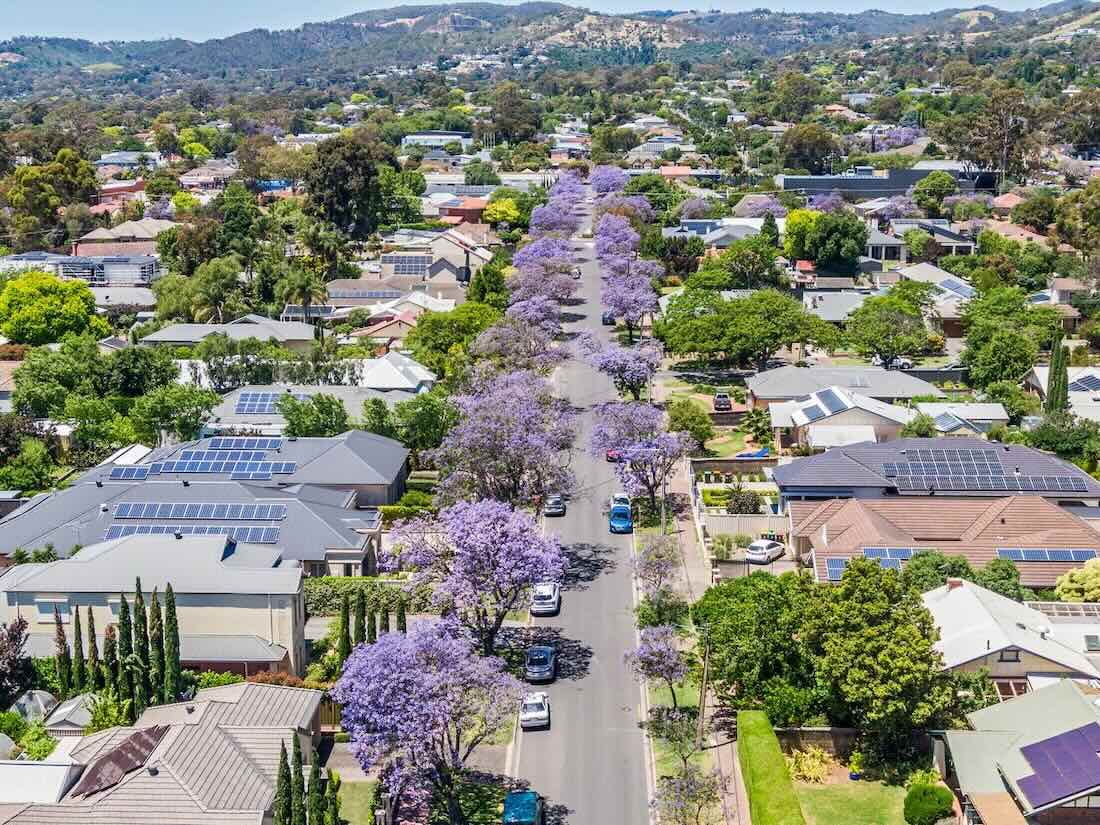
It also addresses the problem of increasingly high amounts of rooftop solar on the grid during the middle of the day, which can cause headaches for the market operator and drive up costs through network grid augmentations.
Bowen says the hope is that, by shifting electricity use, Solar Sharer will also have the effect of lowering peak demand in the evenings, which will in turn lower peak electricity prices and reduce the need for costly network upgrades and interventions to ensure grid stability.
But customers wishing to sign up to Solar Sharer will need to have a smart meter and be able to move their energy use into the middle-of-the-day windows when electricity is free to get the bill savings.
This is not necessarily an easy ask – particularly of those households that might be considered most in need of access to free power. And with consultation on Solar Sharer now open, debate over whether this is the best way to share Australia’s solar riches is bound to be robust.
Already, there are retailers with Solar Sharer-type offers available in the market, including AGL’s “Three for Free,” which requires shifting around 5 kWh/day into the free window to access full savings. Ovo Energy is also offering free power in the middle of the day in a move targeted at EV owners.
Red Energy offers its customers four free weekend hours, from 12pm–2pm Saturday and Sunday – for EV charging and chores, it says – in return for higher weekday charges.
But a report published in early 2025 found that the roll-out of time-of-use electricity tariffs was in some cases leading to higher instances of bill shock and was vastly overestimating consumer engagement and understanding.
The report found that time-of-use tariffs were more likely to force lower income people to cut their energy use when they really needed it, such as heating or cooling in the evenings.
“This is a potentially worrying finding given the importance of keeping homes at a comfortable temperature for health benefits,” it said.
For people who don’t live in properly insulated homes – and this is most of us, as the average Australian home has an energy rating of less than two stars out of ten – Solar Sharers would mean shifting loads that aren’t very energy intensive in the first place, such as washing machines and dishwashers.
“Large loads include items like electric vehicles, air conditioners, and clothes dryers,” the report’s authors told Renew Economy at the time.
“Wealthier households are more likely to own these appliances or, in the case of air conditioners, have more energy-efficient homes, allowing them to be more flexible with their usage.”
Nevertheless, Bowen says the new offer means more households and small businesses – including renters and apartment dwellers – can be part of Australia’s world-leading rooftop solar take up.
“People who are able to move electricity use into the zero cost power period will benefit directly, whether they have solar panels or not and whether they own or rent,” the minister said on Monday.
“And the more people take up the offer and move their use, the greater the system benefits that lower costs for all electricity users will be.”
The offer, which will be provided through energy retailers, will initially be available to all households in DMO-regulated states from July 2026.
Bowen says the government will consult with other states to potentially extend the offer beyond DMO regions by 2027. Solar Sharer will be overseen by the Australian Energy Regulator, the minister says “to ensure customers also get a fair deal outside of the free power period.”