When we talk to our friends and family about renewable energy, it’s easy to use a simple scene of sunshine, wind and flowing water.
But behind those familiar images lies a far more complex story of human ingenuity and innovation.
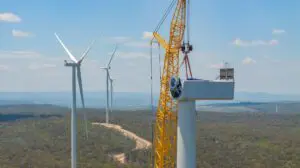
The technical feats that it took to design the hidden gear technology within a wind turbine are breathtaking. The shape and pitch of the blades are a triumph of aerodynamic and computational fluid dynamics.
Then there is the solar panel.
Australia is home to some of the best and brightest minds in energy
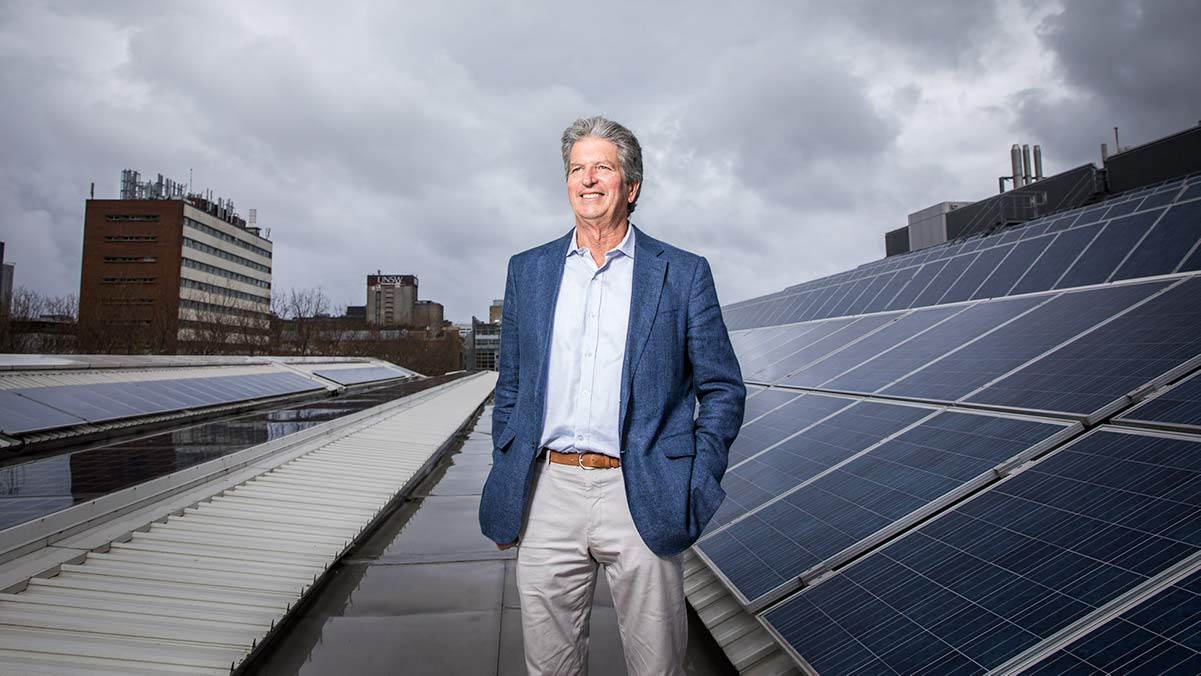
The first practical solar PV panel model was made in 1954, but it took a great Australian, Professor Martin Green, working with a team at University of New South Wales (UNSW), to improve the efficiency and produce the technology we see in the vast majority of solar cells used globally.
It was research that changed the world. The father of the modern solar panel is an Aussie.
Aussie know-how, supported by a university, led the world in arguably the world’s most important renewable energy technology.
The Sydney ferry recently named in Professor Green’s honour is a start, but his is a story we should be teaching in our schools.
This week, a pivotal energy conference was held at UNSW, that same university. It was hosted by the Energy Research Institutes Council for Australia (ERICA).
The event showcased the next world-changing ideas that are waiting to be developed with rigorous, supported and committed academic research.
It also highlighted breakthroughs in grid and system design, developments in the complex rules governing our market and research relating to the community’s role in the energy transition.
Our future as a renewable energy superpower is far from assured
We have all heard Australia described as a potential renewable energy superpower, but that ambition is yet to be achieved. And it is far from assured.
The story of our planet has never been that the countries with the richest natural resources necessarily prosper.
In fact, small innovative countries often outpace resource-rich nations by harnessing innovation and technology better than other nations.
There is a very real risk that we too will be left behind in the race for the next breakthrough.
Investment in research and development in Australia has declined sharply over the past 15 years.
Thankfully, local innovation is thriving with companies focusing on ocean energy, solar thermal and long duration storage technologies at the cutting edge.
Tesla’s Hornsdale battery in South Australia set a global benchmark and led to the battery boom we are now seeing. Sun Cable, Australia’s proposed Asia power link is a project with the kind of ambition that needs to be fostered.
However, it’s a global race.
If we don’t give innovators the support they need there is a real risk that our economy will lack sophistication, relying in smarter systems to bring the technologies we need to harness our vast resources.
This isn’t even the worst consequence.
We need to run together to win the race to net zero
The broader race is one we, as a planet, need to solve together.
The science is unequivocal and straightforward. We need to urgently stop billowing planet-warming emissions into our atmosphere.
While every industry has a role to play, it is our energy system that will do the heavy-lifting.
More bluntly, we need to stop burning coal.
Renewable energy is exceeding 40% in Australia, but we still have such a long way to go and it is through our research and innovation that we will begin to accelerate toward our goal.
The private sector has a role to play using the resources of universities to drive efficiencies of their operations
Our organisations, Potentia Energy and UNSW, have partnered to model, test and analyse complex grid scenarios in a controlled environment, which is 100 times quicker than when using regular modelling software.
It means we can move faster and assist the country in reaching its emissions reduction goals.
We need to develop our renewable energy and storage technologies, restructure our grid and deliver a system that incentivises the investments that will provide reliable, affordable and sustainable energy for homes and businesses.
The race to achieve net zero is one we simply can’t afford to lose and it’s a race we must run together.
Werther Esposito is CEO of Potentia Energy. Dani Alenxander is CEO of the UNSW Energy Institute