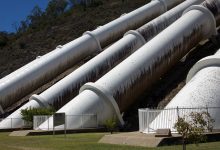
The federal government owned Snowy Hydro has won a tender to provide system strength from its Tumut 3 pumped hydro plant, but the scale of the payments are to be kept secret.
The Australian Energy Regulator has approved the payment proposals from transmission company Transgrid for an 18 month period beginning this month to provide system strength into the NSW grid.
The idea is that the Tumut 3 units will act in “synchronous condenser” mode, meaning that they won’t generate electricity, but the spinning machines will deliver the critical system service to the grid.
The NSW grid is facing emerging system strength issues as it prepares for the retirement of the country’s biggest coal generator, Eraring, currently set for August, 2027, but considered likely to be deferred.
System strength is normally provided by synchronous generators such as coal and gas plants, but Transgrid has been seeking synchronous condensers – big spinning machines that do not burn fuel – to provide that service, and also contract battery grid forming inverters.
Syncons, however, are proving costly and hard to find, and while the battery suppliers argue that their technology can do the job, and at a fraction of the cost of syncons, the market operator and the transmission companies say they need to see more evidence that that is indeed the case.
A number of trials are being fast-tracked over the next 12 months, including operating a world-first trial of an isolated grid of more than 100 megawatts without spinning machines.
In the meantime, there is a gap to be filled.
Transgrid argues that the short term contract is preferable than having to issue market directions, but it also says it needs to keep the price paid to Snowy Hydro secret.
“Transgrid submitted to the AER that publishing this information would negatively influence its ability to obtain competitive prices in future system strength tender processes it may undertake to meet future system security needs,” the AER wrote in its assessment.
Such secrecy is now (sadly) common in Australia’s main grid. The federal government itself has refused to release the pricing details of the underwriting contracts awarded under the Capacity Investment Scheme, arguing that it doing so will distort future auctions. There are many who argue the opposite.
Tumut also has a contract via Transgrid as part of the “System Integrity Protection Scheme” that allows the new Waratah Super Battery on the central coast to act as a kind of giant “shock absorber” to the grid and allow transmission lines to operate at much greater capacity.
Again, the scale of those payments – to the Waratah battery and the three generators (Tumut, Metz solar farm and Sapphire wind farm) that will also be paid to be “paired” and offset the battery should it be called to action – are also being kept secret.
In the case of the Tumut contract, the payments are made up of “availability” and actual “usage”, although Snowy Hydro will also be paid for the electricity it consumes to keep the turbines spinning without generating their own power.
The AER says the service term for the Tumut contract is 19 months from December 2025 to June 2027, which covers the first two years of Transgrid’s identified system strength requirements, before needs may increase with coal retirements in the subsequent year.
If you would like to join more than 28,000 others and get the latest clean energy news delivered straight to your inbox, for free, please click here to subscribe to our free daily newsletter.