Renewable energy certificate prices – the currency that has underpinned the growth of wind and solar in Australia over the past decade – have plunged to record lows in recent days, and are tipped to potentially halve again in coming months.
The price of LGCs (large scale generation certificates are their official name) were trading at around $50/MWh two years ago, and were at $70/MWh immediately after the invasion of Ukraine and then the election of Labor in 2022.
Now, however, they have plunged to a low of $6/MWh, and are forecast by some to possibly halve again in coming months – at least that it was the futures market is telling the world.
The reasons appear to be at least two-fold. One of them is the stunning lack of corporate buyers, who had supported the market as they sought to boost their environmental credential by being credits for green electricity if they could not buy the power directly.
That market has all but dried up, market observers say. And the other factor is the existince of the new flagship policy, the Capacity Investment Scheme, which eliminated lingering hopes that the original renewable energy target would be extended, adding value and tenor to the certificates that had underpinned new projects.

This graph above highlights some of the key moments in the trading of LGCs over the last five years. The other factor cited by market participants is the Guarantee of Origin bill, that allowed 12 million megawatt hours of pre-1997 “below baseline” generation. That served to further dilute the market.
The implications of this are quite simple: It makes the financing and building of new renewable energy projects that much harder. Developers have become used to factoring in the “spot price” of LGCs to boost their revenues in the years between project completion and the start of long-term overtake deals.
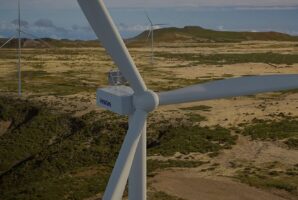
Some developers, such as TagEnergy, have been brave enough to “go merchant” with the country’s biggest wind project at Golden Plains, and rely on spot electricity and LGCs prices for revenue to support their financing arrangements, on the assumption that contracts will be written as the project is built.
That has proved successful – the first stage of the 1.33 GW Golden Plains project is complete, and a long term contract sealed with Snowy Hydro. But the falling price of LGCs is likely crimping earning expectations.
“It’s never been more economical for corporate Australia to voluntarily offset electricity use,” TagEnergy’s managing partner in Australia, Andrew Riggs, tells Renew Economy.
Alan Rai, an energy and environmental market expert with Core Markets, says the main reason for the fall is the big decline in voluntary demand over the last two years.
“There have been a few signings by big tech companies like Amazon and Apple, but really nothing much else has come into that space,” Rai tells Renew Economy.
The value of the LGCs is further diluted by the increase in supply, driven by the completion of projects such as Golden Plains and on the assumption that more wind and solar will be built via the CIS – which relies on an underwriting agreement with the federal government, rather than a market instrument like LGCs.
Rai says the commercial and industrial sectors are also tightening their belts, and dealing with relatively high electricity prices that is dampening enthusiasm for added costs from instruments like LGCs.
“The market dropped like a stone … and it has not recovered,” Rai says, noting that the futures markets are suggesting further falls to around $4/MWh or even $3/MWh.
Rai says there was some market expectation that the LGC price would at least be linked to those of the ACCUs, Australia’s de-facto carbon prices, which would suggest a price in the range of $10-$12/MWh.
“There is just a lack of interest in voluntary renewable procurement,” Rai says.
“It makes it harder for (project developers) to get to financial close,” Rai says. “The LGC price is about half of where it could or should be.”
Australia’s wind industry has been particularly badly affected, because it has also been struggling with an increase in costs since the Ukraine invasion that are only now showing signs of abating.
This week the small 108 MW Waddi project became the first wind project in Australia to reach financial close in 2025, largely because of the difficulties in financing issues. It was followed on Thursday by Aula Energy’s 256 MW Carmody’s Hill project in South Australia.
Andrew Fowler, the CEO of Waddi project owner Tilt Renewables, said this week the drought may have been broken.
Tilt is also close to reaching financial close on the Palmer wind project, in South Australia, and another wind project thought close to financial close is the 289 MW Goldwind’s Coppabella project in NSW.