Alinta Energy has been accused of abusing its power in the Western Australia electricity market, after being caught out allegedly inflating wholesale prices by tens of millions of dollars over a nine-month period.
WA’s Economic Regulation Authority (ERA) said on Thursday that an investigation has found Alinta Sales had breached the rules governing the state’s Wholesale Electricity Market (WEM) between October 2023 and June 2024.
ERA chair Steve Edwell says the evidence shows that Alinta, at a time when it had market power, had priced its electricity at higher prices than were efficient and permitted by the WEM rules.
More specifically, Edwell alleges that the cost assumptions Alinta used to price it gas-fired electricity were “materially greater” than the actual costs of generation.
“The ERA estimates this had the effect of increasing the wholesale real-time market cost of generation by around $66 million over the period,” he said.
Alinta is disputing the ERA’s determination, while the ERA has applied to the Electricity Review Board to decide whether has broken the rules and, if so, what should be done about it – orders can include civil penalties.
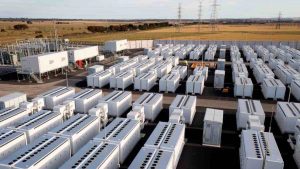
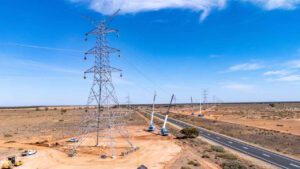
Alinta operates the Pinjarra gas fired generator in W.A., and the dual-fuelled (gas and distillate) Wagerup generator, as well as the Yandin wind farm. It is building a 100 MW, 200 MWh battery at the site of the Wagerup facility (pictured above).
Bad behaviour
Whatever the Electricity Review Board might find, the exercise of market power is not uncommon in Australian wholesale electricity markets, although it is rarely sanctioned by regulators.
As Renew Economy has reported, energy giants have pushed prices to market caps on repeated occasions whenever the opportunity emerges, even though the asking price has nothing to do with the cost of generation.
At times, particularly in the energy crisis of 2022, they drove up prices so high the market had to be suspended.
And in June of last year, the Australian Energy Regulator accused two of Australia’s biggest gentailers – AGL Energy and EnergyAustralia – of seeking to “maximise profits” by cashing in on tight market conditions caused by the failure of some of the country’s ageing coal assets.
As Giles Parkinson writes here, it is consumers who ultimately suffer from this inflating of wholesale prices, which is then used as an argument to push up retail bills. This sort of behaviour can also have an impact on the futures market, possibly locking in those high prices and the impact on consumers for longer.
“We are watching”
For its part, the ERA is keen to stamp out bad behaviour.
“In the Wholesale Electricity Market, companies generating electricity are not permitted to offer that electricity at anti-competitive prices, above their reasonable cost of producing it,” Edwell said.
“The ERA’s role is to protect the interests of Western Australian consumers, and to ensure that energy is delivered safely and reliably – and at the most efficient cost.
“The ERA strongly encourages all companies participating in the electricity and gas markets to ensure they are acting within the bounds of the market rules, because we are watching and will take action where required.”
*This article has been amended to reflect that Alinta operates the Yandin wind farm in Western Australia. An earlier version of the article said it operated the Warradarge Wind farm. This is incorrect. The owner of Warradarge Wind Farm is Bright Energy Investments.