Rainforest Reserves Australia has been called out for using artificial intelligence (AI) and fabricating citations in their submission to the Inquiry on Misinformation and Disinformation currently before the Senate.
The inquiry is looking into how social media, AI and false or misleading claims are being used to skew people’s views on important issues like climate change and renewable energy.
In the context of a rapidly changing media landscape where people are less likely to buy a newspaper and increasingly getting their news from social media, including AI-generated content, this conversation is important.
Our submission to the Inquiry highlighted the need for regional communities to have Local Energy Hubs, specialised resources to support communities to navigate high volumes of information and connect more people to the decisions being made about renewables in their local area.
We agree with Rainforest Reserves Australia’s call for better siting of renewable energy projects. But we are deeply concerned with the use of false and misleading information in submissions and in their inaccurate map of renewable energy released recently, which has been widely cited by federal politicians and national media outlets.
At RE-Alliance, we work with rural and regional communities across the country navigating the shift to renewable energy. Hands down one of the biggest concerns we hear about renewables is the impact they have on the environment.
We hear everything from genuine concerns about unnecessary impacts on important habitats, through to blatant untruths. We’re also seeing those genuine concerns of nature impacts being increasingly leveraged by people with other agendas, whether that’s fossil-fuel backed politicians or media outlets looking for a story.
It’s important to be honest about the fact that – just like any large-scale infrastructure – wind, solar, battery and transmission projects all have environmental impacts.
And just like any large-scale infrastructure, renewables need to be guided by strong environmental laws that provide clarity to the private sector about what environmental impacts can be mitigated and offset, and what is non-negotiable. We are working closely with the conservation sector in calling on the government to strengthen our environmental frameworks.
Having conversations about the real impacts of renewables on the environment can be tricky. There’s a few reasons for this: firstly, there are uncomfortable conversations about real impacts to be had.
Second, we know environmental critiques of renewables are often weaponised and exaggerated to slow action on climate. Finally, making our energy systems better for the environment and communities by guiding its placement and influencing its design is a new way of working and we are learning on the job together.
We commend organisations like the Australian Conservation Foundation, WWF Australia, and the Queensland Conservation Council who are working hard to push the government into strengthening environmental protections and helping the renewables industry to become ‘nature positive’ (reversing biodiversity loss and restoring nature).
Through their renewables and nature work, these organisations:
– Demonstrate the evidence-base of climate change and an understanding that climate change is a fundamental threat to nature.
– Demonstrate the need for stronger environment laws that can guide all types of development away from areas of high biodiversity value.
– Call out bad practice in the renewables sector, and even oppose renewable projects at times, without demonising renewable energy technology as a whole.
– Work to guide better renewable energy development in the future by advocating for stronger environment laws and working with industry to set the bar higher for environmental practice.
Without these guiding principles, environmental attacks on renewables unwittingly serve the agendas of those attacking renewable energy on an ideological basis, or because of their ties to the fossil fuel industry.
Case study: Navigating renewables and nature in Queensland
At RE-Alliance, we believe difficult conversations are the most important ones to have. That’s why a couple of years ago, when wind projects were causing a lot of angst and grief in far north Queensland, we started to work with Cairns and Far North Environment Centre (CAFNEC), a strong regional body with over 50 member environment organisations.
As a result of Queensland’s particularly weak environmental frameworks and the poor historical placement of the transmission line through the Great Dividing Range, a number of wind proposals were looking to clear roads through native highly biodiverse forest.
Alongside CAFNEC, we began working with climate and environment organisations to help articulate what a ‘nature positive’ shift to renewable energy looks like, and what work is involved in getting there. What started as a small conversation with mostly local climate and environment activists, spun into bigger conversations across Queensland and nationally.
In the end, CAFNEC decided that they needed to oppose a wind farm. But for every bit of work they put into stopping a wind farm, they put twice that into improving Queensland’s frameworks. And they achieved this, with the former government implementing stronger requirements for community engagement into the Wind Code.
We helped take the conversation further, and co-designed a number of meetings between environmentalists and the Queensland energy sector.
The result was a Renewables and Biodiversity Guide for industry and communities, which identified actions developers could take at each stage of a project’s life cycle to reduce impact and maximise opportunities for nature positive outcomes. It recommended four ways that environmental groups and the renewable energy industry could collaborate for nature positive outcomes:
– Co-design integrated vegetation management plans with local environmental groups because these are the people who know their regions best.
– Collect and share environmental data on project sites to support local conservation efforts.
– Maximise the possible use of utility corridors as nature corridors by planting shrubs and grasses that support local species.
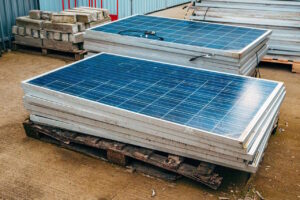
– Contribute to establishing renewable energy recycling industries in regional communities as a dual environmental and economic development measure.
We’re proud to work with the conservation sector in Australia and rise to the challenge of supporting the switch away from fossil fuels, while addressing impacts and pushing government and industry to do better at the same time.
We’re working with groups across the country on important reforms like the Environment Protection and Biodiversity Conservation (EPBC) Act, pushing the industry to stay away from biodiversity hotspots, and fostering collaboration for joint pilot projects that will see renewable energy projects deliver nature positive outcomes.
Lu Allan is Advocacy Director at RE-Alliance