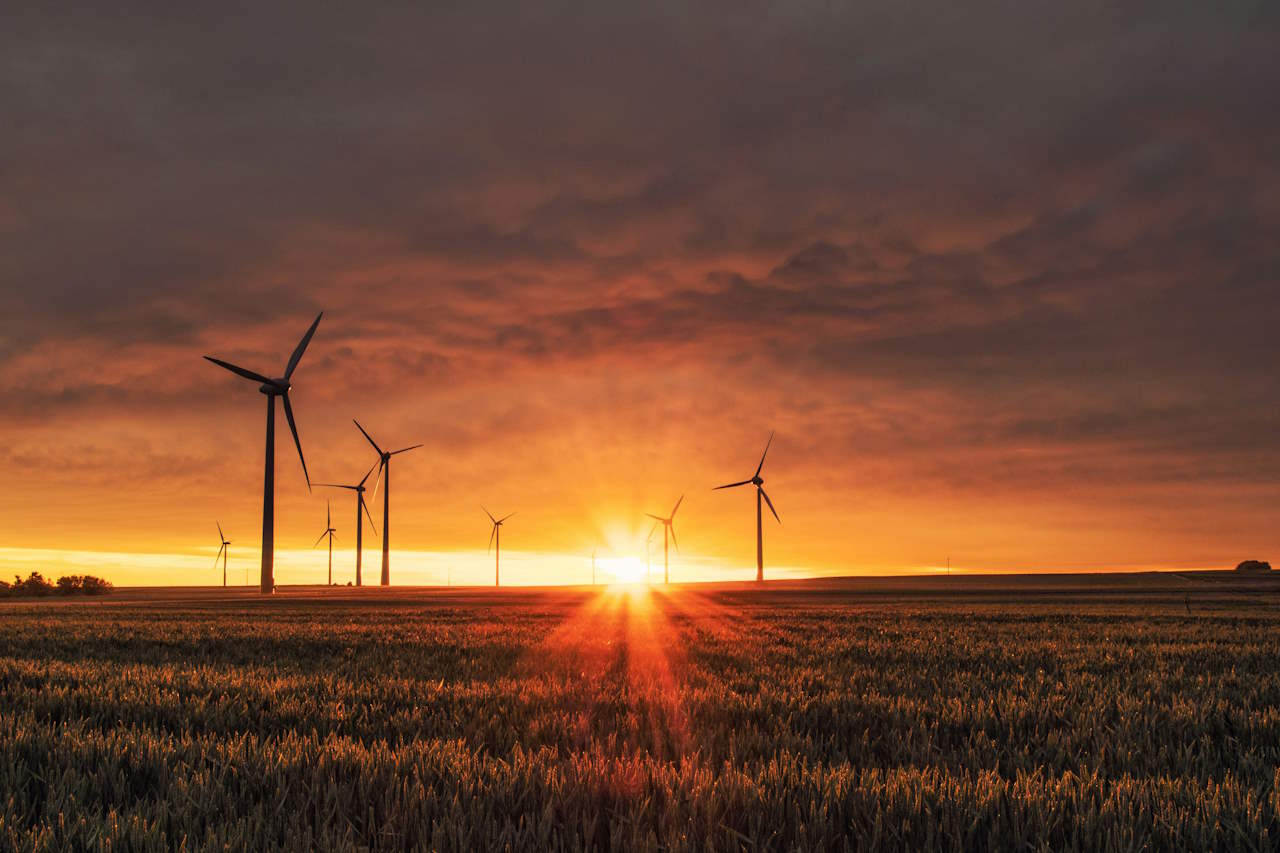
The powerful cold front sweeping across south Australian has delivered a surge in wind generation – and a string of new records across the country’s main grid over the past 24 hours.
These include new instantaneous output records in NSW, Victoria and across the whole National Electricity Market (NEM), and a new record share of wind generation – 41 per cent – across the main grid.
The new records are not a surprise, given the forecasts for the week, and the ramp up of capacity at a number of new wind projects that are working through their commissioning, including the two biggest wind projects at Golden Plains in Victoria, and MacIntyre in Queensland.
According to Geoff Eldridge, of GPE NEMLog, the new record wind share of 41.0% for the NEM occurred at just after midnight on Tuesday morning, beating the previous record of 40.8 per cent set in October last year.
A few hours earlier, a new record for maximum instantaneous output of 9,287.3 MW was set at 9.40pm on Monday, easily beating the the previous record set a year ago on May 30, 2024 of 8,430.7 MW.
It’s important to note that a number of new wind farms were operating at or near record outputs, including the Golden Plains and MacIntyre wind projects which are both working through their various hold points, and the Goyder South wind project in South Australia, the biggest in that state.
Output records were also set in individual states, with Victoria reaching a new peak of 4,205.9 MW at 12.05am on Tuesday, the seventh time the wind output record has been broken in the last few months, having previously not moved since July, 2023.
That growth can be sheeted down to the input of Golden Plains, which will eventually be the biggest operating wind farm in the country at 1.33 GW once all its stages are fully commissioned – although it will be overtaken in coming years by the likes of the Yanco Delta wind project in NSW and the Bungapan project in Queensland.
In NSW, a new maximum wind out of 2,342.8 MW was reached at 11.10 pm on Monday night, up slightly from the previous record set in the early evening of December 18 last year.
“These records didn’t catch us by surprise,” Eldridge writes in a LinkedIn post. “But they do underline the importance of continuing to invest in flexible load, storage, and dispatchable generation that can respond with nature’s fluctuations.
“Wind can’t be stored — at least not yet at scale — but its patterns can be predicted. A grid that works with those patterns, rather than against them, is one that stays both stable and sustainable. That’s a future worth aiming for.”