This is part three of a five-part series of articles examining the four accounting tricks that the Liberal-National Party employed in the costing of their energy plan to slow the roll-out of renewables and rely instead on nuclear power. The first article, which provides the overarching context is published here. Part 2 is here.
These four accounting tricks act to mislead voters that the Liberal-National Party could lower energy bills through a shift to nuclear when in reality it is likely to increase power bills.
This article focuses on accounting trick two of four: Only model the cost of electricity while ignoring the cost of petrol and gas.
In the first article of this series I explained that on a per unit of energy basis there is very little difference in cost between the Liberal-National’s preferred power system and the one they claim as Labor’s (once we ignore the fact the Liberal-National costing underestimated the cost of nuclear power) .
Instead, much of the higher cost the Liberal-National Party attribute to the Labor system is because this system has been sized to produce 30% more electricity than the electricity system claimed to represent Liberal-National policy (excluding generation from storage).
In absolute terms, the system claimed to represent Labor Party Policy produces 78,105 gigawatt-hours (GWh) more electricity per annum than the Coalition’s by the end of the modelling period.
In Australian terms this is huge amount of additional electricity. It is equal to adding another state to the grid with the same power consumption as NSW. It is four times greater than the electricity produced in Western Australia’s main grid from centralised generators.
Naturally a power system that produces 30% more electricity is going to need more power plants and power lines to be built and therefore involve more cost which is completely independent of any decisions around the fuel mix employed.
Yet at the same time that amount of extra energy can deliver a lot of extra economic value. The extra value includes the fact that almost all households no longer need to pay for petrol or gas because they’ve converted their cars and heating systems to electricity in the Labor scenario.
In addition, Australia’s aluminium smelters remain operational, whereas in the Coalition’s world they’ve shut-up shop. Plus a lot of that extra electricity goes towards either providing direct heat for manufacturers or producing hydrogen, which means a range of manufacturing industries are no longer having to buy fossil fuel gas.
If we were to just look at petroleum costs for example, then these alone add so much extra cost to the Liberal-National scenario that it ends up being $80 billion more expensive than the Labor Scenario, even if we were to accept that everything else in the Coalition’s costing was sound.
To explain, the difference in electricity consumption for transport purposes between the Labor (AEMO’s Step Change) scenario and that of the Coalition’s (AEMO’s Progressive Change) is 492,000 gigawatt-hours in cumulative terms across 2025 to 2051. (Based on AEMO data that the consultant used to estimate electricity demand under these two scenarios).
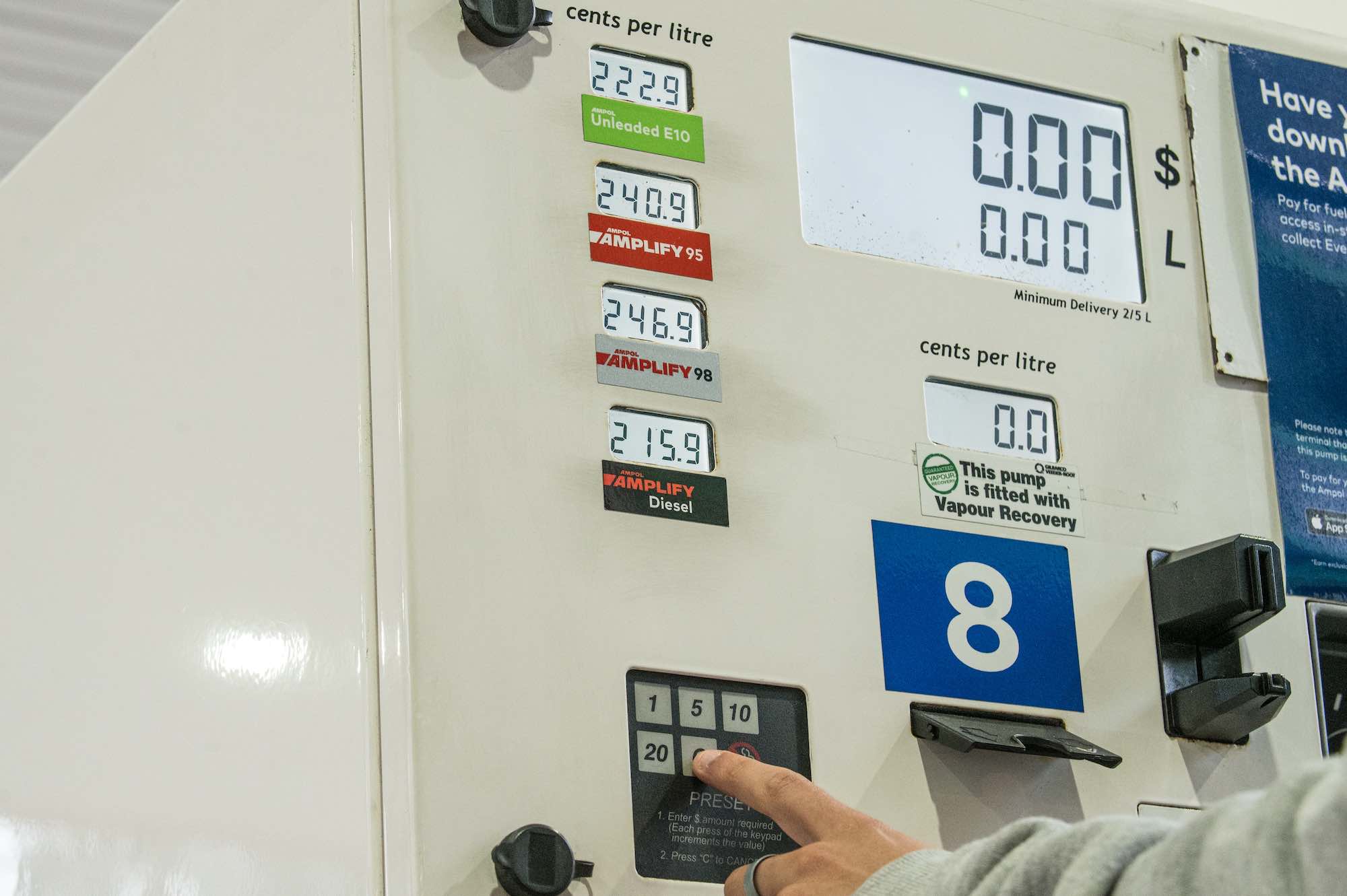
Based on typical electric vehicle efficiency of 18 kilowatt-hours of electricity to travel 100km that’s 2,773 billion kilometres of vehicle travel. Under the Coalition’s scenario that travel will need to be fuelled by petrol instead. If we use the average fuel efficiency of new vehicle sales (around 7.4 litres per 100km) that’s around 203 billion litres of petrol households will be paying for in the Liberal-National scenario, that they don’t pay for in the Labor scenario.
At a cost of $1.70 per litre that’s $345 billion in extra costs faced by consumers. The chart below illustrates how just taking the extra petrol cost into account results in the Liberal-National scenario being more expensive than Labor’s.

So, while the purported Labor system involves greater investment in the electricity sector, it delivers much lower bills for both households and industry on oil and gas. Yet while the extra cost of the electricity is included in the consultant’s model, the savings on oil and gas are omitted.
This makes the Liberal National Party’s claimed 44% saving meaningless because they’ve failed to account for the fact that in their preferred world households and businesses will be spending a lot more money on petroleum and gas.
It’s also a meaningless comparison because it doesn’t account for the extra economic output from manufacturing in the Labor scenario.
Lastly, the Coalition has neglected to take into account that the failure to stop burning lots of petrol for transport and gas for heating means they won’t get close to delivering on the net-zero emissions target, which covers the entire economy, not just electricity generation.
Tristan Edis is director of analysis and advisory at Green Energy Markets. Green Energy Markets provides analysis and advice to assist clients make better informed investment, trading and policy decisions in energy and carbon abatement markets.