1999 was a big year for Australia, and for the fossil fuel industry’s single-minded destruction of the environment. It was the year that the Howard government finalised the EPBC Act. (It came into effect in 2000). It was supposed to do what it said on the tin – Environment Protection and Biodiversity Conservation – but the deliberate exclusion of climate and greenhouse emissions has, of course, rendered it all but useless. 1999 was also the year climate issues and greenhouse gas emissions were deliberately excluded from the National Electricity Rules (NER), at the behest of the fossil fuel industry.
Australia has suffered ever since. Dumb decisions have been made, from power station approvals, network choices and now the extension of the North-West Shelf gas project – courtesy of environmental guidelines that do not and cannot consider climate and emissions. Who should we thank for that? Well, Howard of course. The environment minister at the time was Robert Hill, infamous for holding the Kyoto Protocol talks to ransom with the so called “Australia clause”, which has allowed Australia to pretend to cut emissions over the last 20 years without ever really doing soon. Nick Minchin was the minister for industry and his portfolio included science – presumably including the climate science he never accepted. That’s quite a legacy.
It’s all a matter of timing
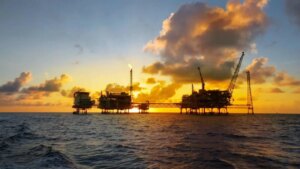
The issue of climate and emissions has now been dialled back into the NER, but will it be infused into the EPBC Act? It might have been before the last election, but the rug was pulled from under the then environment minister Tanya Plibersek by Anthony Albanese, after some cosy discussions with WA Premier Roger Cook. That delay meant that Woodside’s carbon bomb could be detonated before the EPBC Act was revised. New minister Murray Watt gave the approval within just two weeks of taking office.
Federal energy and climate minister Chris Bowen says the Safeguards Mechanism will require Woodside to offset those emissions. But faith in that outcome depends on how you view offsets, and what sort Woodside might buy. Iron ore billionaire Andrew Forrest says offsets are a con, and many would agree. Bowen made the point on Sunday that net zero by 2050 was the very minimum required for climate change. And he is not wrong. Net zero by 2040 is closer to capping temperatures as near as can be done to 1.5°C. Real zero, as advocated by Forrest, would be helpful.
On target
Bowen is waiting to hear the recommendations of the Climate Change Authority, conveniently punted beyond the election on the supposition that Trump’s re-election had changed the game. The CCA is now chaired by Matt Kean, who last week welcomed the birth of a daughter, Zoe. Congratulations. Kean announced the new addition on social media, along with the line: “Our kids are the best things that ever happened to me. They are a constant reminder that this is their world and their future and we need to fight to protect it.” Based on that, you would have to figure that the CCA’s recommended 2035 target will be at least a 70 per cent below 2005 emissions.
Albanese, gas, and open windows
In justifying the decision to extend Woodside’s carbon bomb, prime minister Anthony Albanese says gas will be needed to back up the renewable energy transition on the grid. That link is tenuous, given that Australia’s grid won’t need more gas, just enough to operate at the times when wind and solar can’t. And shipping it around from WA is not exactly the cheapest, most efficient, or lowest emissions way of delivering. In fact, it is probably about as polluting as burning coal.
But Albanese did make one astute observation: “We know that we have to deal with the challenge of climate change. People who question the science need to look out their window. Need to have a look at what’s going on, not just here, but in the world. But Australia is particularly vulnerable, and the science told us that that was the case, which is why we have a responsibility, in my view, not just to take action domestically, but to be a part of global action as well.” So, when the CCA report and Bowen’s recommendations are presented to cabinet in a few months, just a reminder about the window, Albo. Look out the window.
Tehan’s new career path
Congratulations to Dan Tehan, the new spokesman for energy and emissions reduction (but not climate change) in Coalition leader Sussan Ley’s newly announced shadow ministry. Tehan has a mixed record on energy, having once declared the future of the Portland smelter in his own electorate depended on offshore wind energy, and then declaring he was dead against it. At least now he might be able see his career path laid out in front of him: The three previous Coalition energy spokesmen – Ted O’Brien, Angus Taylor and Josh Frydenberg, have established a now well trodden path from the energy portfolio to the treasury portfolio. Must be their gift for numbers. Hopefully Tehan is not as completely useless or indifferent as his predecessors.
Changing of the guard
There has been a remarkable changing of the guard at the top of various green energy and climate policy organisations since Labor’s thumping victory in the May 3 federal election. First there was the announced departure of Clean Energy Council CEO Kane Thornton, followed by the Smart Energy Council’s Wayne Smith, the Carbon Market Institute’s John Connor, and the federal department of climate and energy’s David Fredericks.
See: Grid Connections 2025: Who’s going where in Australia’s green energy transition
What’s going on? Has the prospect of a six-year Labor term, and the realisation that the pathway for a transition to a renewables dominated grid is now locked in? Labor’s victory is certainly a relief, if the ructions going on in the Coalition is anything to go by, from the LNP’s triumphalism in reversing approval for a $1 billion wind farm in Queensland, to the South Australia’s Liberals vote to rescind the 2050 net zero target, just two years before their own state is due to reach 100 per cent net renewables by the end of 2027.
“Definitely going out on a bit of a high,” says the SEC’s Smith. Like Connor, Smith says the departures are coincidental, and not connected with the election result. It’s probably more linked to the sheer exhaustion of managing stakeholders, and continuing the fight against a well organised, deep pocketed and determined fossil fuel industry. We wish them all the best, and are just a little bit envious.