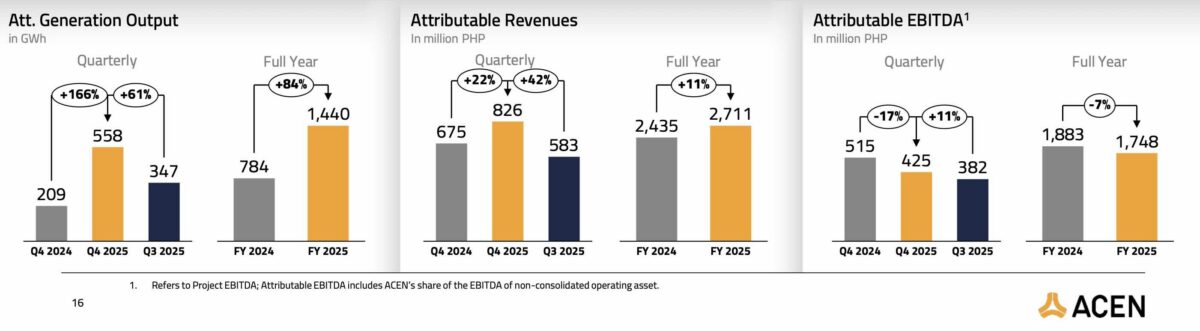
The owner of two of Australia’s biggest solar farms – the Philippines based Acen Renewables – has reported a fall in earnings for the 2025 calendar year, despite a near doubling in output.
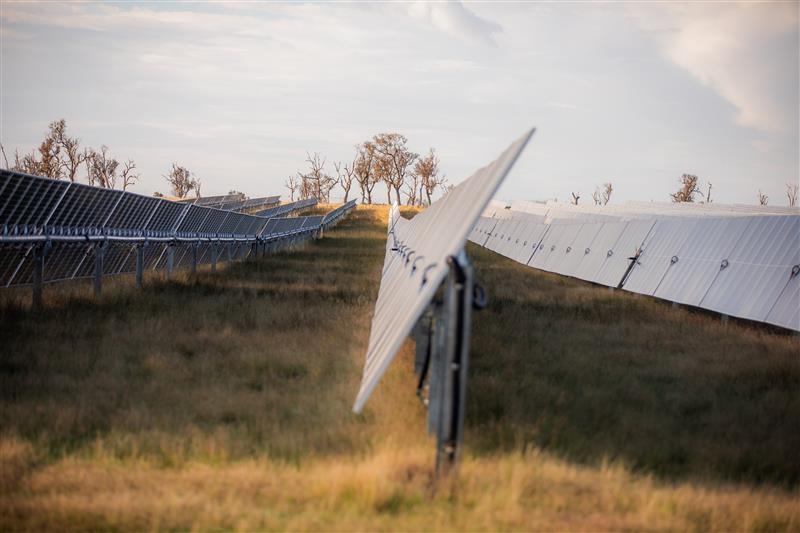
Acen owns the New England solar farm, which is currently being increased in size from 400 MW to 720 MW, and also recently completed the 400 MW Stubbo solar farm, which helped output from its Australian operations surge 84 per cent to 1,440 gigawatt hours in the latest year.
Revenues from Australia increased only marginally, however, by 11 per cent to P2.7 billion ($A64.2 million), but its earnings from Australia (on an EBITDA basis) fell 7 per cent to P1.7 billion ($A40.4 million)
The company blamed lower spot prices (it averaged around $45 megawatt hour for the year) and the expensing of previously capitalised operational and construction costs for the fall in earnings.
Acen has operations in a number of Asia-Pacific countries, including its home base in the Philippines, in India, and in south-east Asia, as well as Australia. But Australia is fast emerging as its biggest in terms of output, and will take that mantle in coming years as new projects are built and completed.
The company is currently constructing the 200 megawatt (MW), 400 megawatt hour (MWh) New England battery, next to the stage 1 and stage 2 solar farms, which it expects to complete in the first half of 2027.
It also has a number of wind, solar, battery and pumped hydro projects in development, but its most advanced is the 930 MW Valley of the Winds project in NSW which has won a federal underwriting agreement but which is locked in a legal battle with a neighbouring landowner.
Acen also has federal approval for the 900 MW plus Robbin Island wind project in Tasmania, which has been subject to multiple appeals from local environmental groups, and which still needs to submit an acceptable management plan to the federal government to minimise impacts on migratory birds.
“Acen faced numerous macro and sectoral headwinds in 2025, reflecting the complexities of today’s energy landscape and the long-term energy transition,” Eric Francia, president and CEO, said in a statement accompanying the results this week.
“Despite these headwinds, our core business and long-term outlook remain resilient. As we look ahead, we will continue to prioritize increasing our contracted capacity and accelerating investments in energy storage, while ensuring steady, continued progress on our pipeline projects.”
The Stubbo solar farm last year became the first large-scale renewable energy project certified for solar circularity, which means that nearly million solar panels are expected to be recycled at end of life.
The project plan has earned an “Exceeds” rating from the Circular PV Alliance – the developer of the world’s first certification framework for solar projects – for implementing circular economy practices beyond baseline requirements.