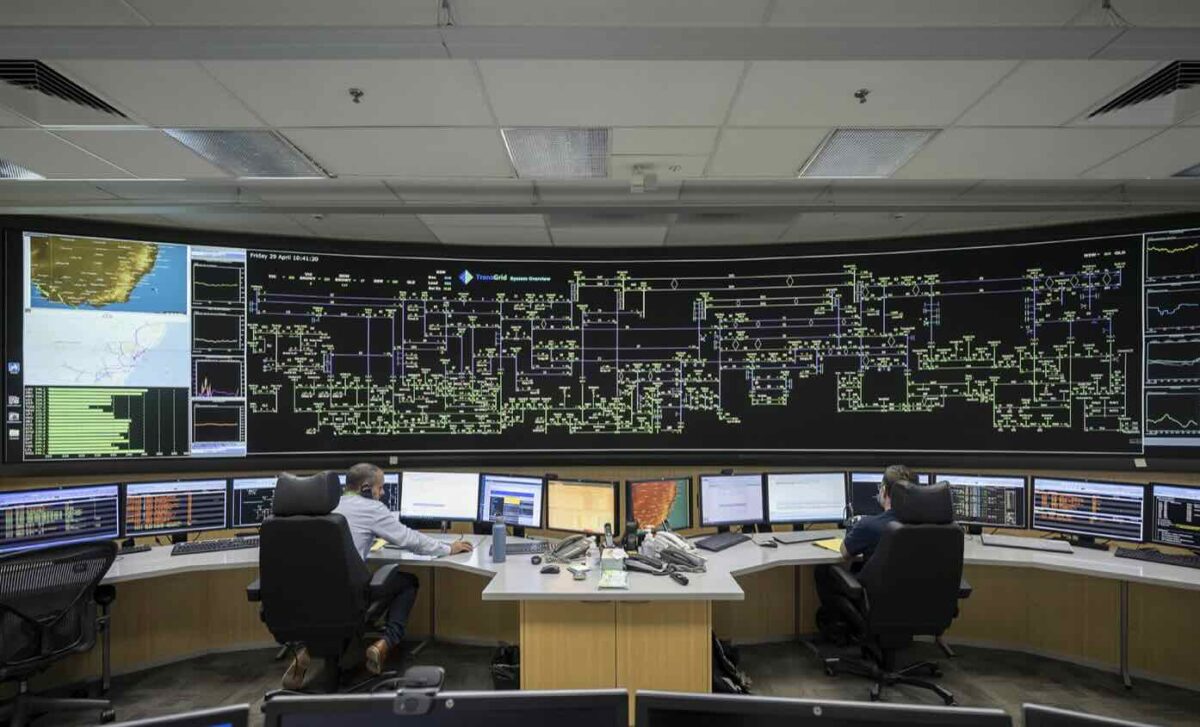
Transmission company Transgrid is asking the energy regulator for approval to spend $179.2 million to upgrade its control room systems so it can keep up with the rapid technology change driven by the transition from coal to renewables.
The company builds and maintains the transmission lines that are the backbone to the grid in NSW, and is responsible for maintaining grid security, but it says its control room systems now regular updates to manage an increasingly complex and dynamic renewables and inverter dominated grid.
Transgrid says in its Project Assessment Draft Report (PADR) that its control room operators are getting “overburdened” because of the sheer weight and complexity of the data they receive, and warns they may not be able to react quickly enough to contingency events to prevent blackouts.
“There is a greater risk of failure for operators to take required actions within the required time, in turn leading to an increased risk of expected unserved energy (EUE),” it says in its application to the Australian Energy Regulator.
This includes alarm management systems, outage coordination, forecasting and training. And it says new systems will deliver a faster response, and lower emissions, because it reduces risk and results in fewer constraints on renewables.
Transgrid argues that the $179 million investment will deliver $111 million in net market benefits over 15 years, including the avoidance of blackouts.
“Investing in smarter control room controls and technologies is essential to keep the lights on and ensure we can safely and reliably bring more clean energy into the system,” says Jason Krstanoski, the acting head of network at Transgrid.
“The upgrades would enhance the ability of our control room operators to monitor and manage incidents in real-time, making the grid smarter and more efficient which benefits everybody.
“Reducing the likelihood of blackouts provides greater certainty for the operators of renewable generators, ensuring fewer interruptions to the flow of their cleaner and cheaper energy to consumers.”
An independent report from EPRI says Transgrid cannot afford to wait, given the rapid transition to renewables, and the competition for equipment around the world.
“Even if the (Australian Energy Market Operators) Step Change scenario growth rates are not reached by 2030, they will be reached in the early 2030s,” the report says. The Step Change scenario reflects modelling for an 82 per cent renewables grid by the end of the decade, which is now the official government target.
“Time is also a factor in the need for imminent investment, as the nature of IT projects for control centres and high- reliability organisations requires many years from planning to commissioning.
“Also the vendor marketplace is small and stretched, as most other system operators around the world are embarking on similar capability uplift projects.”
Meanwhile, Transgrid reports “significant progress” on the construction of its part of Project EnergyConnect, the largest energy transmission project in Australia to date which will link South Australia and NSW, with a small spur line to Victoria that has already been completed.
Transgrid says construction of 540 kms of new high-voltage transmission line between Buronga to Wagga Wagga is now over 70 per cent complete, and foundation works have been completed for a new substation at Dinawan, near Coleambally in the south of NSW.
ElectraNet, operating South Australia’s transmission network, completed its 200-kilometre section of the EnergyConnect project in late 2023. The 159-kilometre western section of EnergyConnect, stretching from Buronga in the southeast of NSW to South Australia and into Victoria, was completed and energised earlier this year.