One of the Australia’s biggest battery projects – and one of the first eight-hour batteries to win an underwriting agreement from the New South Wales government – is making some key adjustments to its design, including a near doubling in its power capacity.
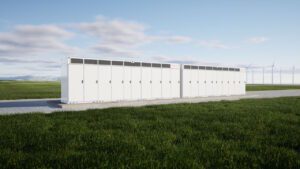
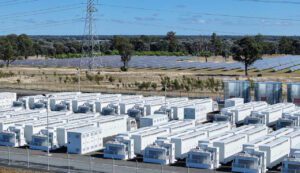
Ark Energy revealed on Monday that it has made a series of amendments to the Richmond Valley project in northern NSW, which was originally proposed as a 500 megawatt (MW) solar farm, along with a groundbreaking 275 MW battery with eight hours of storage, or 2,200 MWh.
The project was awarded a Long-Term Energy Service Agreement (LTESA) from the NSW government in December 2023, in a tender round that secured 574 MW (4,192 MWh) of the state’s legislated 2 GW target for long-duration storage.
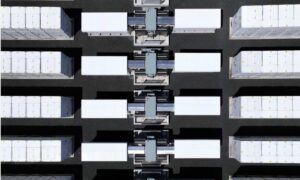
In a noticed published on the NSW planning portal, Ark says the proposed changes to the battery energy storage system (BESS) would increase its power capacity to approximately 475 MW – from 275 MW – and increase the number of inverters contained within the BESS facility from 106 to 186.
The primary reason appears to be to boost the power output of the big battery, and its charging rate, to better align with the size of its neighbouring solar farm, and to boost redundancy in the project.
While a lot of focus in battery storage technologies and projects has been on the increased storage duration, some analysts – including ITK’s David Leitch, the co-host of our weekly Energy Insiders podcast – have argued that power capacity is still key.
The company insists that the changes, which will also increase the battery project’s footprint from 5 hectares to 9, will not change the energy storage duration of the BESS and or affect the terms of the agreement with the state government.
“The Richmond Valley BESS will still be built and operated as a 275 MW, 2,200 MWh 8-hour BESS and meet the requirements of the awarded NSW Government LTESA,” the company said in an emailed statement to Renew Economy.
“The amendment for the maximum installed battery inverter capacity of the BESS in the development application of up to 475 MW is to allow flexibility in configuration and control of the BESS, but there is no change to the registered capacity duration of 8 hours.
“Additionally, increasing the number of inverters allows for more precise control over the energy flow between the solar farm, the BESS, and the NEM. This additional control will help balance and control output from the project during variable electricity demand periods across the NEM.”
The company further explains in its notice of amendment that the changes are “a result of improvements across multiple system components which will allow the BESS to deliver higher power output while maintaining the same energy storage capacity.
“The energy storage capacity of the BESS remains the same as presented in the EIS at 2,200 MWh. It is noted however that the nameplate capacity will be approximately 3,000 MWh.”
Ark says that the increased number of inverters are being proposed to provide additional redundancy to the BESS facility and to improve the system’s overall reliability.
“In the event that inverters fail within the BESS compound, the increased load will be distributed across these additional inverters, ensuring continuous operation,” the amendment notice says.
“The resulting design ensures compliance with voltage support obligations and contributes to overall power system security.”
Ark also notes that the increased size of the BESS footprint is aimed at boosting the overall safety of the project.
“The increase in the area of the proposed BESS compound … will decrease the stored energy density… [and] will provide adequate separation between the battery components and infrastructure to achieve non-propagation of thermal incidents,” the documents say.
According to a report summarising public feedback on the project, a “large number of submissions … raised concerns with perceived increase in bushfire risk and impacts to or reduction of biodiversity.”
The original EIS for the Richmond Valley solar and battery project received a total of 48 public submissions, 44 of which objected to the project. Just 12 of the total submissions were from people living within 5 km of the project (two were supportive) and another seven were between 5-100 km of the project.
The vast majority of submissions, just under 30, were from respondents living more than 100 km from the proposed project.