Industry insiders hope Victoria’s offshore wind auction in September will help the new sector regain momentum, after going very quiet during the battle of ideas between nuclear and renewable energy last year.
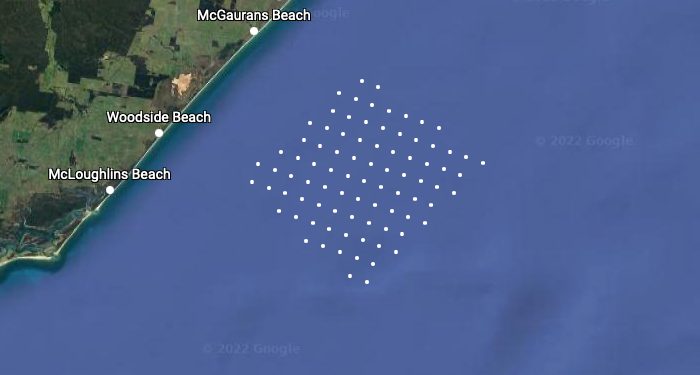
Penny Pickett, development director of the developer behind the Great Eastern offshore wind project in Gippsland, says the industry has definitely slowed.
“But I think there’s probably nothing better ahead than the launch of the first offshore wind auction in Q3 this year, to really build that momentum again,” she told the Australian Offshore Wind Industry Forum this week.
“It sends really clear signals to investors, to developers. It sends really pretty good signals that the funding has been allocated for the first projects. That really enables projects to continue to progress at risk.”
Pickett says big, capital intensive projects like offshore wind need strong signals from governments that they’re wanted and supported.
The auction will award projects with a contract-for-difference (CfD) and an availability payment, financial agreements with a government that guarantees a price for the electricity generated.
Victoria’s offshore wind auction won’t just be a signal to developers and investors, but also to suppliers which are still waiting to be convinced that Australia will get an offshore wind industry off the ground.
With OEMs still skeptical about Australia and whether it’s worthwhile to set up factories and supply chains here, government support that leads to scale is essential, developers say.
Government has to lean in
Offshore wind was a huge flashpoint in early 2024 as protests for and against particularly in New South Wales (NSW) meant it was front page news for months.
But nuclear power, which was pitched as an alternative to offshore wind in some regions, overshadowed the nascent industry and sucked some of the momentum from the sector, says Clean Energy Council managing director Morgan Rossiter.
“How can we pick up that pace again and get that buoyancy back that the industry saw six or 12 months ago?” she asked during the forum.
Many of the responses came back to a request for the federal government to lean in, as urged by Victorian energy minister Lily D’Ambrosio earlier in the day.
A supportive federal government means different things to different people, however.
Southerly Ten chief Charles Rattray would prefer for the federal government to focus on getting the Gippsland zone on its way, rather than splitting its attention to set up national targets.
“We need to line up… the alignment between federal and state. It’s something that we’ve been caught between as developers, as the federal government and state government have sought to get aligned on things,” he said.
But Offshore Wind Energy Victoria executive director Anh Mai says national offshore wind targets would be helpful, so Victoria wasn’t the only jurisdiction in Australia to have a target – a legislated 9 gigawatts (GW) by 2040.
A global example of a government that is serious about offshore wind is Denmark, says RWE’s Jens Orfelt.
In May, the Danish government repeated an auction for 3GW of offshore wind with a government guarantee of 27.6 billion Danish kroner ($A6.5 billion). The auction had already failed in December with no bids, prompting the Danish government to step in.
“That is a message that raises the eyebrows from the board levels, at least with the companies that we represent. That’s the kind of commitment you need, particularly in the novel market where you don’t have the regulators all formed together [and] having worked in an intricate way for the past 20 years,” he said during the forum.
“We really need to show that, and that’s where I think Victoria is now setting the pace for the next auction round, saying this is just the first and more to come. Because there are questions being asked at the moment saying it’s great to see the first auction, but what about the second and the third?”
Orfelt says the subdued global market for offshore wind is an excellent time for countries to stand out, an attitude critical for Australia which can’t lean on the cross-country collaboration that Europe enjoys.
Give us one regulator, please
Having to deal with both federal and state processes is challenging, and regulators to date have taken an onshore approach to the much more complicated offshore industry, Pickett says.
“We are very over regulated in offshore wind in terms of environmental impact assessment. So if you look at best practice overseas, in markets where they’re really moving things through efficiently, you’ll have a simple planning approvals process for these large scale, important infrastructure projects,” she says.
“If you take oil and gas for example… if you look at NOPSEMA with oil and gas, they’ve got a single regulator. So I think we’d really like to be moving towards that kind of model.”
“Australia has lots of amazing, sensitive species, and so we do expect to be highly regulated. We want to be highly regulated. We want to make sure that we are appropriately mitigating any impacts on the environment.”
One issue frustrating developers is the difference between the bar set by environmental planning processes, versus the wider impact of climate change caused by fossil fuel use.
During the forum, RPS senior marine scientist Carolyn Wheeler pointed out that offshore wind projects will be built in the context of increasing ocean warming, ocean acidification, deoxygenation, and increased severity of extreme weather events.
“I think personally, that ocean warming is probably one of the biggest concerns, especially for the southeast region of Australia,” she told the forum.
She says baked-in effects from climate change will mean sometimes-radical alterations in fisheries, as fish move polewards seeking cooler water, and as ocean changes begin to permanently alter sealife.
This is already happening off the coast of South Australia, where a toxic algal bloom is wrecking havoc on sensitive ecosystems.
Rattray says the planning processes for offshore wind, which is ultimately intended to mitigate some of those climate effects, are “challenging”.
“[We’re] hopefully seeing an alignment now between state and federal with Murray watt stepping into the [environment minister] role. Hopefully we see some pragmatism around some of those topics,” he said.
“We have to accept that everything humans do has an impact, and do our best to mitigate them and reduce those but we’re going to have an impact, and we have to decide what impact we want to have.”