The NSW Government has given the OK for transmission company Transgrid to put it in early orders for five giant spinning machines considered essential to preserve the “heartbeat” of the grid as the state’s remaining coal fired generators are shut down.
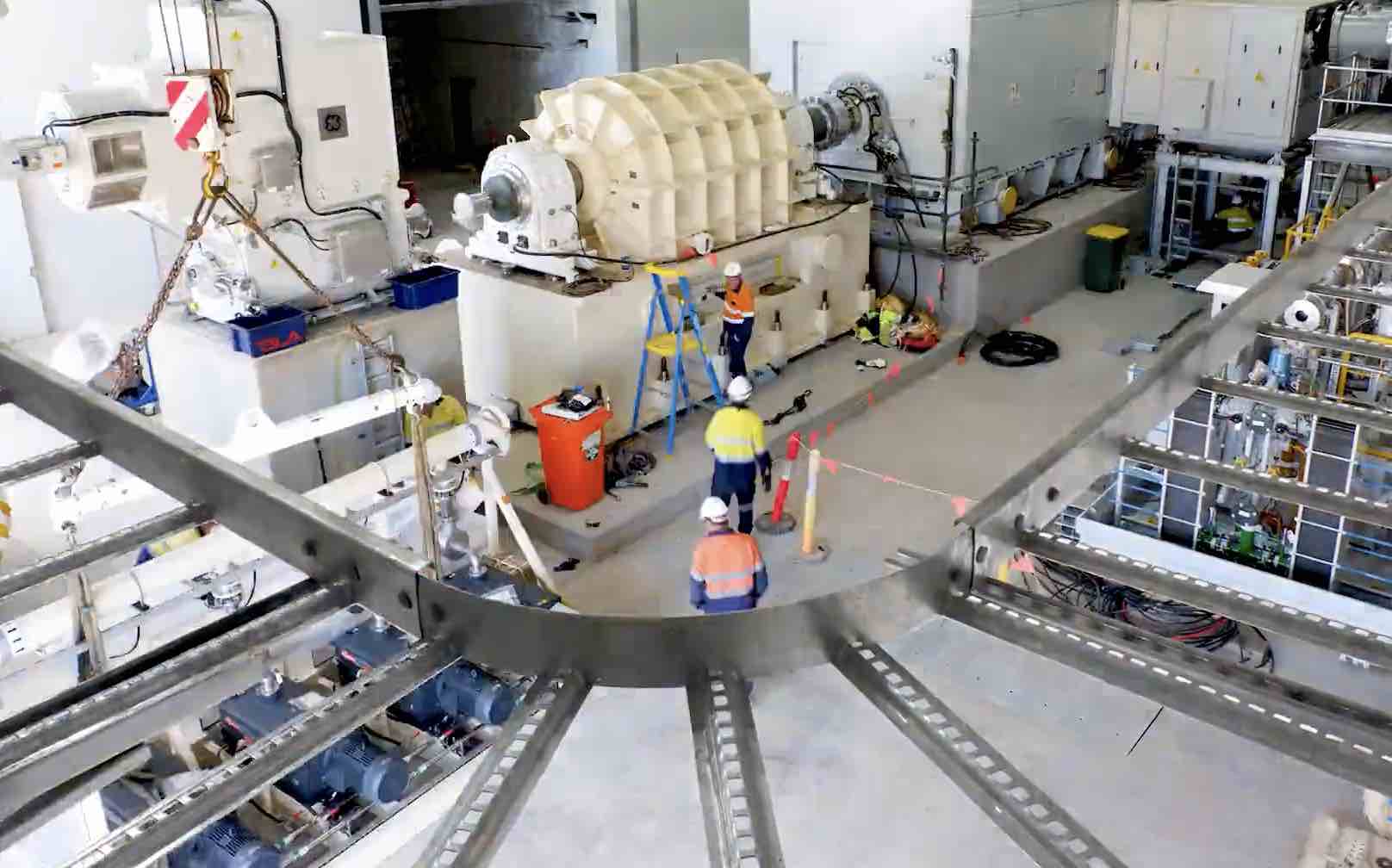
Synchronous condensers, or syncons, are giant spinning machines that do not burn fuel but can provide the essential grid services – such as inertia and system strength – considered essential to allow the grid to absorb any sudden disturbances, such as the loss of a transmission line or major generator.
But global demand for them is intense, with wait times of several years, and the NSW government has decided to step in with special approvals that allows Transgrid to hold a tender now and put in orders without having to wait first for what could be time-consuming regulatory approvals.
The move comes just weeks after after an amendment to the Electricity Infrastructure Investment Act 2020, which awarded special powers to state climate and energy minister Penny Sharpe to do just that.
“By moving quickly, we can help ensure households, businesses and essential services continue to have the dependable electricity they rely on every day,” Sharpe said in a statement.
“This is just one of the ways we’re taking action to replace the state’s ageing coal-fired power stations, to prevent power outages and price spikes.”
Transgrid has decided it needs to spend around $1.6 billion on 10 syncons that will be installed around the state grid – at existing substations at Newcastle, Kemps Creek, Armidale, Wellington and Darlington Point.
Nearly a dozen more may be required by the state to be built in the Central West Orana and the New England renewable energy zones.
Transgrid’s plan to ensure “system strength” – the so called heartbeat of the grid – also involves 5 gigawatts of grid forming battery inverters, which should be less of a logistical challenge given their modular nature.
The insistence of transmission companies such as Transgrid and Ausnet and others in focusing so much on syncons to solve system strength, rather than grid forming inverters, have frustrated battery technology companies such as Tesla and Fluence and battery storage developers.
Tesla, for instance, has argued that grid forming inverters can replicate all the system services delivered by spinning machines and traditional synchronous generators, and at a fraction of the price.
However, the transmission companies have insisted they need to see more evidence of that happening in practice, and need to turn to syncons because of the pressing timelines.
Sharpe says the ability to progress priority projects under the newly streamlined NSW Electricity Roadmap framework means delays can be avoided, and purchase orders can “bypass any hold ups” associated with national processes.
Note: This story has been corrected to say the special approval applies to only the first five syncons.