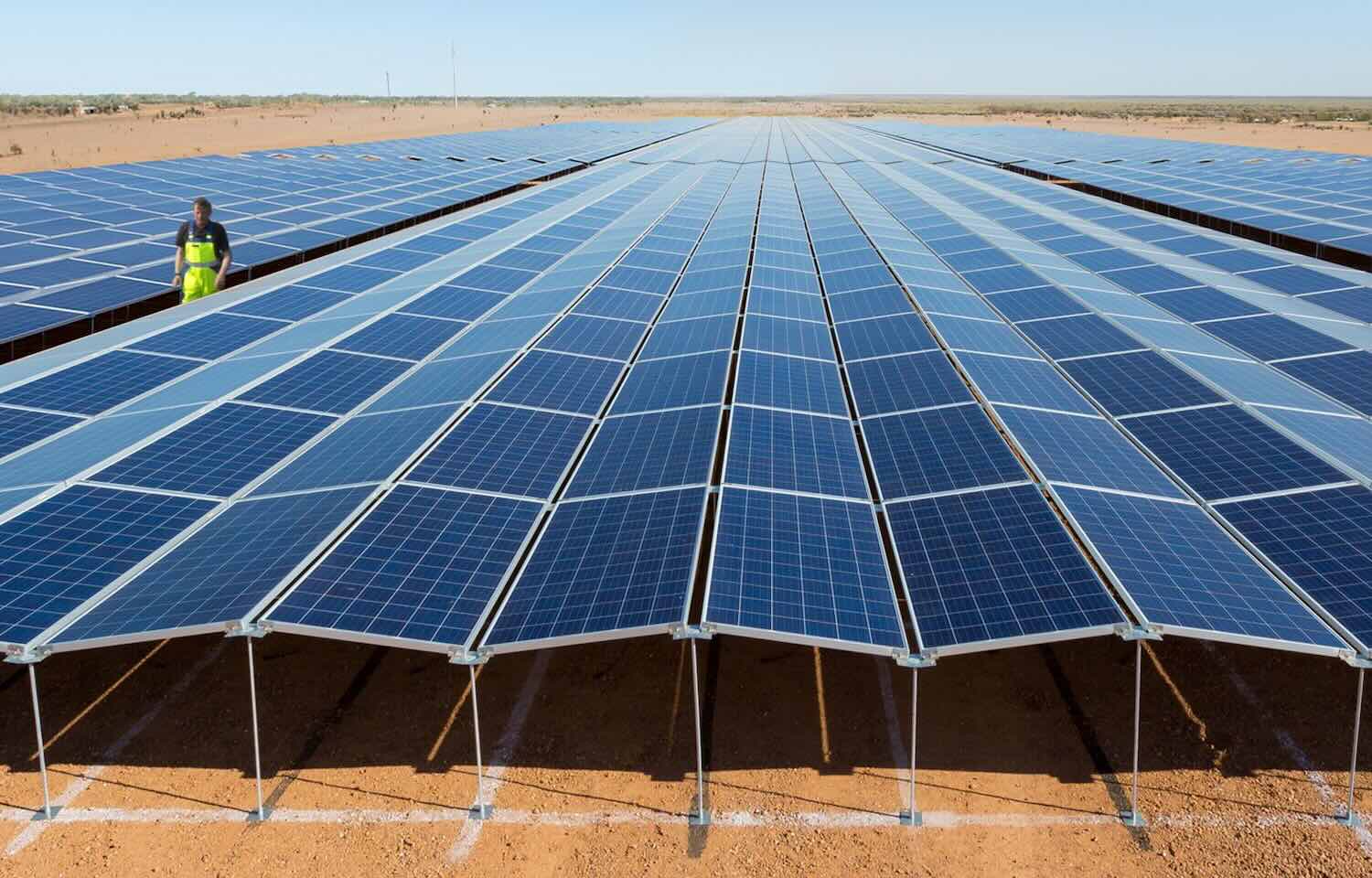
A large-scale solar and battery project seeking federal environmental approval for construction in Queensland’s South Burnett region proposes to use a low-profile, low impact and concrete-free panel mounting system that will slash the project’s physical and ecological footprint.
Plans for the Tumuruu solar and battery energy storage system (BESS) joined the EPBC queue for assessment on Thursday, seeking to develop a 400 megawatt (MW) PV array alongside an up to 2 gigawatt-hour (GWh) BESS in the town of Taromeo.
Local developer, Australia Solar Enterprises (ASE), says the plan is to use a the easy-install PEG system of German outfit Jurchen Technology – “or an alternative with the same characteristics” – to reduce the overall impact of the project while optimising its output.
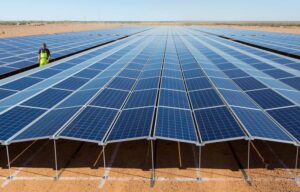
Jurchen’s PEG system uses “self-stabilising” grid of steel rods and plates to fix the solar panels into a flat wave-like pattern designed for east-west facing generation and sitting around one metre above the ground.
The thin rods can be rammed into the earth without the need for concrete footings and reduce the amount of steel used by around 75 per cent compared to conventional substructures.
“The design of these systems offer high land utilisation rates reducing the overall project footprint; they lower ground disturbance, minimise visual impact with a low height profile and fixed pitch panels that produces significant energy per hectare,” ASE CEO and founder Chris Elder said in an email to Renew Economy.
The lightweight and compact PEG system also removes the need B-double trucks and requires fewer freight deliveries than traditional concrete-footed technology, according to a consultation report on the project.
According to the project website, the use of the PEG system will reduce overall supply, logistics and installation time by up to 40% compared to conventional alternatives.
Another potential benefit of the system is that the install can be done with basic hand tools, making a simple process that could employ a larger number of unskilled local workers.
Elder says the PEG system has more than 500 MW of projects installed global and more than 15 projects in Australia, including the 8.9MW (DC) Baroota project that was installed in Port Germein in South Australia‘s Spencer Gulf region in just eight weeks.
For ASE, which was founded in 2021, Tumuruu is its only major development at this stage. The project has the approval of the South Burnett Regional Council and has submitted its grid application to Powerlink & AEMO, with the aim to get a offer to connect sometime this year.
Elder says state development approval was granted in late 2023, prior to the recent change in government and the change in legislation for renewable energy projects.
“ASE has initiated scoping with potential (EPC) contractors for equipment supply, civils and installation along with support to the high voltage connection works. Beyond this, current efforts are focused on securing the remaining permits and approvals needed to commence construction,” he told Renew Economy.
According to the EPBC referral, Tumuruu is proposed for construction on privately owned freehold land being leased to Australian Solar Enterprises on a commercial lease arrangement for an initial period of 30 years, with the option to add another 20 years, aligning to the duration of the DA.
The proposed site is currently cleared and in long-term use for cattle grazing. The property is intersected by two pre-existing 275 kV transmission lines, which would facilitate the supply of energy to Brisbane and other parts of southeast Queensland.
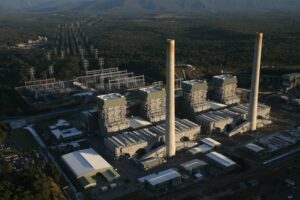
The project’s near-ish neighbours, around 18 km to the west, include Meandu coal mine, Tarong and Tarong North coal power stations. Just last month, federal energy minister Murray Watt waved through an extension to Stanwell’s Meandu King 2 East open cut coal mine, much to the dismay of the Queensland Conservation Council.
If you would like to join more than 29,000 others and get the latest clean energy news delivered straight to your inbox, for free, please click here to subscribe to our free daily newsletter.