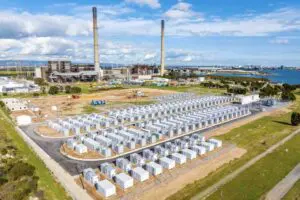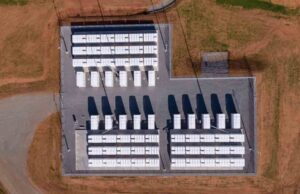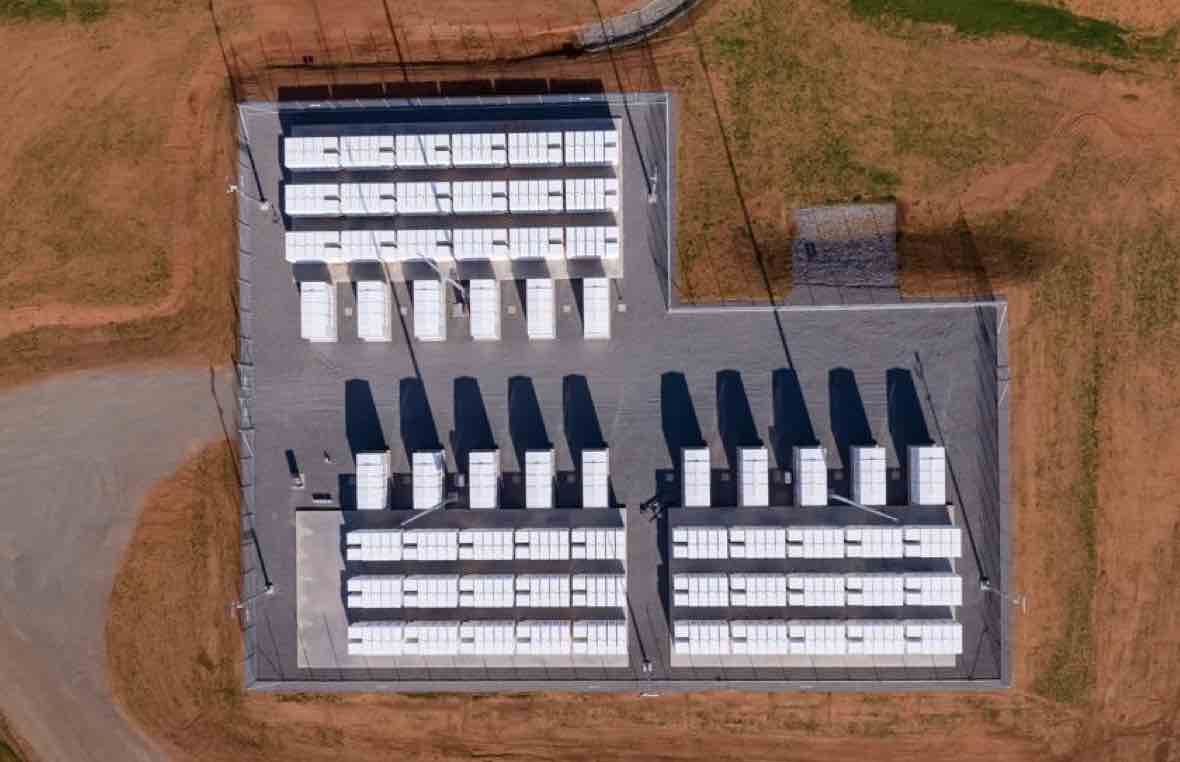
Transmission company Transgrid says it has shortlisted nine big battery projects, with a combined capacity of up to two gigawatts, to provide essential system strength services that are regarded as the heartbeat of the grid.
The nine big batteries have not yet been named, pending the outcome of contract negotiations, but comprise a mix of operating batteries and others in the advanced stages of development.
All, Renew Economy are gathered around the key regional centres of Armidale, Wellington and Darlington, which find themselves at the centre of much of the state’s renewable energy development and were Transgrid’s target areas.
Transgrid network boss Jason Krstanoski says the contracts – which Renew Economy understands will initially run for around three years – will start to take effect in the second half of 2026.
“Third-party owned batteries are integral to our system strength plan, because they enable us to accelerate the strengthening of the grid without the cost associated with acquiring new plant or major network upgrades,” he said in a statement.
“Our initial procurement process is focused on batteries that already exist, or are in the advanced stages of development, in specific locations on our network to address gaps in system strength as they emerge.”
A program of this scale marks a significant turning point for the Australian grid, which has historically depended on coal and gas generators to automatically provide system strength – the things that stop the grid from collapsing if things start to go wrong.
It was first considered that the best replacement for the services providing by those retiring coal generators were synchronous condensers – big spinning machines that does not burn fuel.
But the inability to source enough of these big and expensive machines has been cited by the NSW government as the key reason for the latest deferral of the Eraring coal generator, the biggest in the county.
But the rapid and accelerating emergence of battery grid forming inverters has provided another option, more easily deployable and likely at a fraction of the price of syncons. Some batteries like Koorangie in Victoria already have individual contracts to deliver system strength services.
However, the transmission companies and the Australian Energy Market Operator are yet to be convinced that battery inverters can deliver ALL of the necessary system strength services.
And while Transgrid is already committed to up to 5 GW of stabilising services from such batteries, it is designed to compliment the role of syncons.
This particular tranche of big batteries is the first of that 5 GW – and actually double what it first thought it would obtain – and will focus on supporting stable voltage wave form, which helps dampen voltage oscillation, one of the key ingredients of the total blackout that rocked Spain last April.
(Note: Only the power capacity, rather than the storage capacity – GW vs GWh – is mentioned in this article because it is the only factor that counts. It doesn’t matter if it is a two hour or 20-hour battery, the incidents they are designed to respond to will be over in milliseconds, or a few minutes if it’s a bad one).
Krstanoski says negotiating directly to secure services from up to nine select batteries will ensure there is “strong competition” on price and contract terms (and) “so we can select the battery fleet that provides optimal value for NSW consumers.”
The outcome of those negotiations will be keenly watched. Big batteries have a growing “stack” of potential revenue streams such as storage, time shifting, grid services such as frequency control and inertia and boosting the operating capacity of transmission lines.
These system strength services do not limit its ability to provide those other revenue streams, as long as the battery is actually operating. The revenue earned from them is likely to be ancillary rather than the main deal.
“System strength presents an additional opportunity for batteries to provide value to the energy system, and contracting for this service will help stabilise the grid and make NSW a better place to invest in this technology,” Krstanoski said.
“Our requirements will continue to evolve as the transition progresses, so we look forward to engaging with a wider pool of battery owners in future procurement rounds.”
Transgrid is responsible for ensuring sufficient system strength services are available to maintain power system stability in NSW, as are other transmission companies in their respective states.
If you would like to join more than 29,000 others and get the latest clean energy news delivered straight to your inbox, for free, please click here to subscribe to our free daily newsletter.