A group of local network operators have blamed private operators for keeping costs high as they seek a regulatory exemption to install kerbside EV chargers, a key but so far elusive solution to one of the major barriers to widespread EV adoption in Australia.
The contentious claim comes in an application to the Australian Energy Regulator for an iexemption to ring-fencing rules that currently block networks from owning charging infrastructure.
CitiPower, Powercor and United Energy -collectively known as CPU – are arguing that they should be allowed to conduct a five year, $1.2 million trial to install 80 chargers across Melbourne, where EV adoption is highest, and another 20 in other areas.
CPU promises to put operation of the new charger network into the hands of a third party via a competitive tender, but it plans to install and maintain the devices.
It says the trial will provide data on how EV charging will change local demand, where people are more likely to charge their EVs be it on a residential street or a commercial site, and the impact on power quality from customer charging behaviour.
CPU blames ring-fencing for stifling EV charger growth
The AER expects some 1,000 government-supported, public EV charging locations to come online from June 2024 to December 2025, as federal, state and ARENA support kicks in.
But with one in four Australian drivers having no access to off-street parking, according to ARENA data, there is a need to ramp this up.
And a major barrier – at least according to CPU – is the AER’s ring fencing rules that forbid distribution network service providers (DNSP) from providing services that are not distribution or transmission of electricity.
In other words, services outside their regulated monopoly which could see them use existing market power within the private sector.
In its application to the AER, CPU blames these rules for hampering EV growth in Victoria and stifling efforts to build out charging infrastructure.
“Third-party operators aiming to establish EV charging networks face significant barriers, particularly due to regulatory delays and the complexity of obtaining necessary approvals,” CPU said in its AER application.
“Networks, however, are uniquely positioned to address these barriers by leveraging our existing infrastructure and expertise.
“By using our extensive network assets, such as powerlines, poles, and substations, we can lower the capital investment required for EV charging stations, making the deployment process more efficient and cost-effective, benefiting electricity customers that own EVs or would benefit from the purchase of EVs.”
CPU says it can also streamline regulatory approvals because it’s already familiar with those processes.
Private charge companies appalled
But the DNSP’s proposed advantages are exactly what worries charge network owners.
In January, Evie Networks chief executive Chris Mills said DNSP’s special rule requests will create an uneven playing field, where networks can reap the benefits of both infrastructure and existing connections that others must pay for.
Costs faced by other charging providers included application fees for energy connections and upgrades to capacity where needed, as well as higher energy access fees, Mills says.
But those fears have already been shuffled aside by the AER once before.
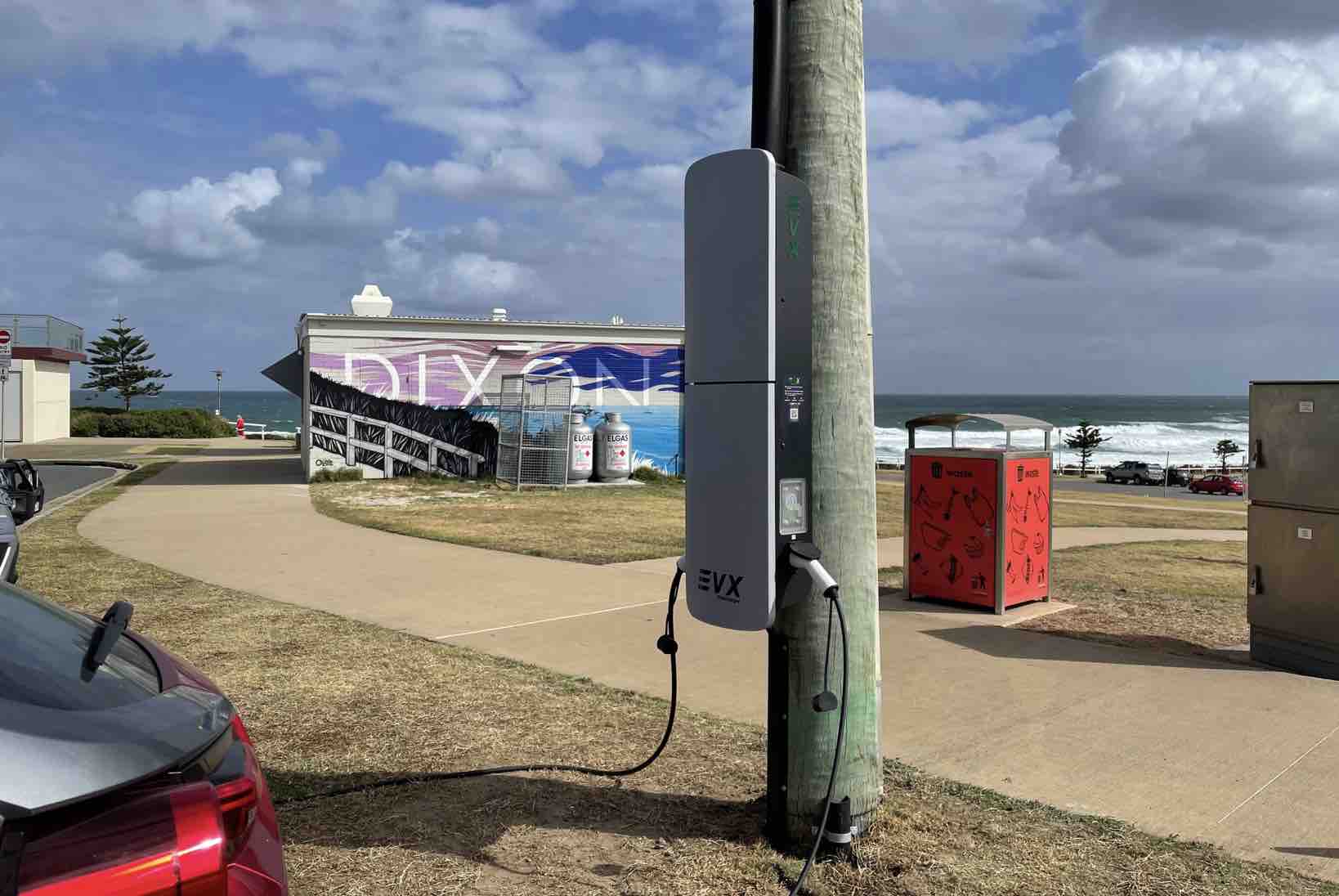
In New South Wales (NSW), a similar trial of 1000 chargers is already underway by Plus Es which is leasing space on poles from its owner Ausgrid and must operate at arms-length from its parent.
Evie, another pole charger company EVX, and the National Electrical and Communications Association (NECA) all made submissions outlining fears that network-owned charger companies will be anti-competitive.
Each raised concerns around transparency about deals between the two companies, but the AER said it had faith in its ring fencing rules.
However, in this case the regulator is very aware of the risks posed from allowing a monopoly to play in private markets.
“For example, DNSPs control third-party access to the power poles and third-parties must pay access fees to connect to DNSP networks and to lease the network assets – a cost which a DNSPs would not need to incur,” the AER consultation paper says.
But CPU piously says preventing it from entering the potentially lucrative EV charging space “is not in the long-term interests of customers”.
“We understand some industry participants do not wish networks to be involved in EVCI,” it said in a January update to the AER.
“It is not in the interests of some industry participants for these economies to be accessed.”
It claims that private, non-DNSP charge providers are trying to preserve the market for “potentially higher cost providers” who provide less infrastructure.
The AER says in a consultation paper that this is the first ring fencing waiver request its had directly from a network operator around EV chargers, and noted there are rules in other countries such as the EU, US, and UK which actively prevent DNSPs from getting involved in charging infrastructure because of their existing market power.
But it’s also keen to find out why private companies haven’t moved into kerbside charging in the areas CPU wants to build its trial.
If it does grant the waiver, CPU will need to publish an explanation as to why it’s chosen certain sites, and potentially lower or remove access fees for private EC charging companies in the areas where it’s running the trial.