French renewable energy and storage developer Neoen, arguably the most successful builder of wind, solar and battery projects in Australia this past decade, has reported a strong surge in revenue and earnings from its big battery portfolio in what is likely to be its last result as a publicly listed company.
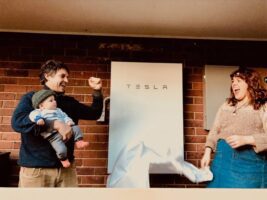
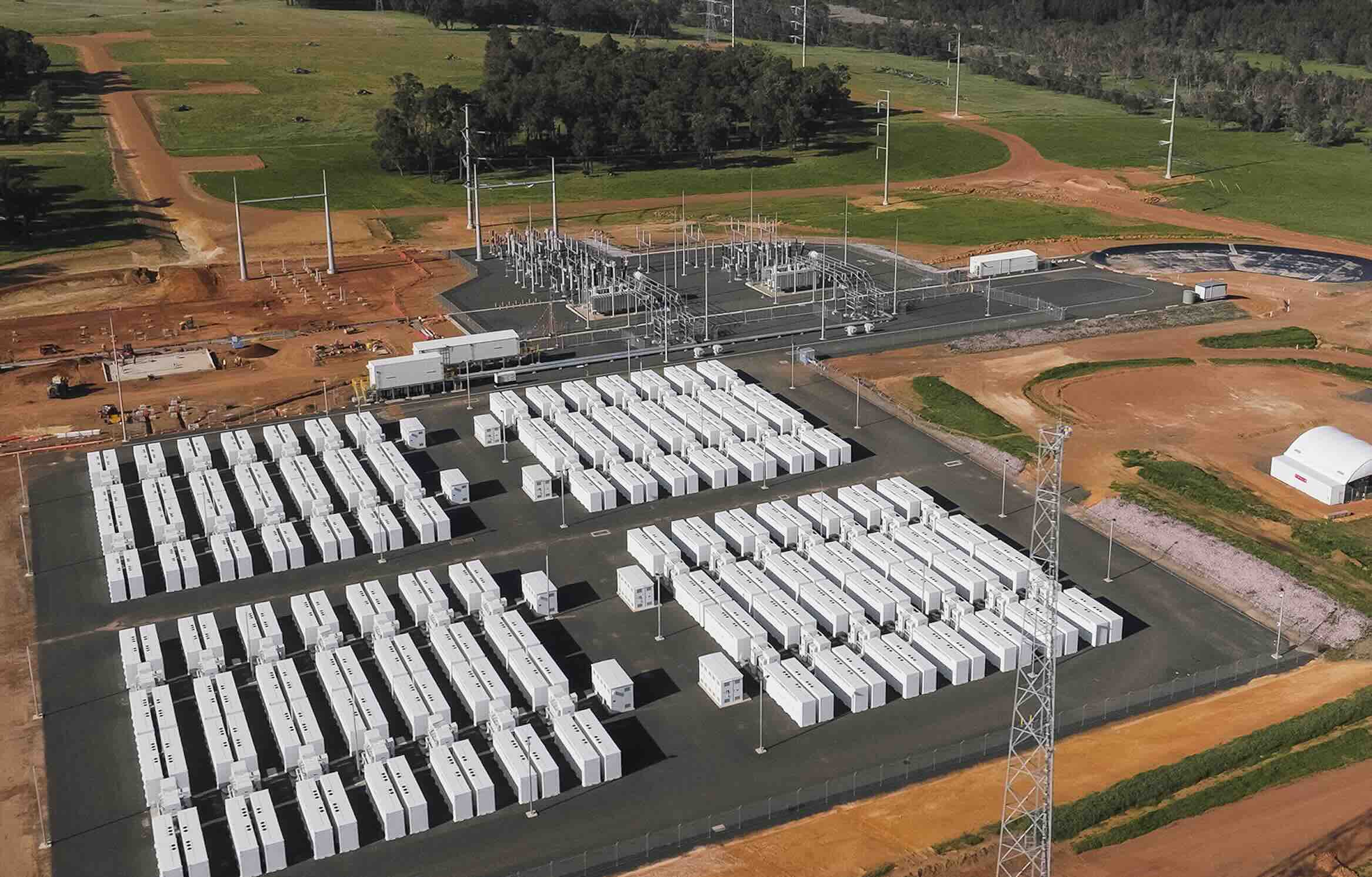
Neoen has built a large array of wind and solar projects across the country, but has made its biggest impact through its landmark battery projects, from the original “Tesla big battery” at Hornsdale, the Victoria Big Battery and through to the Collie battery in Western Australia, which will be – at least for a time – the biggest in the country.
In the past year Neoen has brought a number of new battery storage projects online in Australia, including the first 270 MW, 540 MWh stage of the Western Downs and Collie (219 MW/877 MWh) batteries, and the 100 MW, 200 MWh Capital battery in the ACT. It is also working through the commissioning process of the Blyth battery in South Australia.
Its status as a listed company and its obligation to release quarterly results has meant rare insight into the performance of renewable and storage facilities in Australia, given that most owners are no longer or never have been listed.
Neoen is about to go private after agreeing to an $11 billion offer from Brookfield, which turned its attention to Neoen after having its joint $18 billion offer for Origin Energy rebuffed by institutional shareholder attached to the fossil fuel economy.
The latest results show that the Collie and Western Downs batteries, even though connected late in the year, underpinned a major boost in storage revenues, up 66 per cent to €95 million ($A161 million) over the previous year, with the fourth quarter particularly strong.
This was boosted by the Collie battery has a very lucrative off-market contract with AEMO to soak up rooftop solar in the isolated Western Australia grid and feed it back into the grid in the evening peaks.
The storage revenues were also boosted by the performance of the Victoria Big Battery (300 MW and 450 MWh), which earned more money from energy arbitrage – trading on the market.
The VBB, and other Victorian assets, have since been sold to HMC Capital in a $950 million deal to satisfy regulatory needs because of Brookfield’s controlling stake in network company Ausnet.
Wind and solar revenue, although significantly bigger than storage at €229 million and €207 million respectively in 2024, reported slight falls over the previous year as recently completed projects.
These include the Western Downs solar farm (next to the big battery) and the Kaban wind farm – both in Queensland -which moved from market pricing into lower-priced but still lucrative long term contract arrangements.
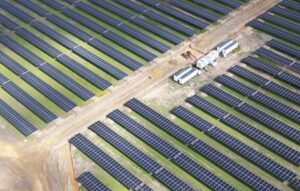
Neoen has 5.8 gigawatts of wind, solar and battery capacity in operation, and a further 3 GW under construction – including the second stages of the Collie (341 MW/1,363 MWh) and Western Downs (270 MW/540 MWh) batteries – with a further 1.9 GW of “awarded projects.”
It intends to reach 10 GW of total capacity in operation or under construction in the course of 2025.
“As our shareholding structure evolves, Neoen is determined to keep pursuing its value-creation strategy,” chairman Xavier Barbaro said in a statement.
“Thanks to the expertise of our teams, the quality and size of our pipeline and our robust financial position, we will resolutely continue to accelerate the energy transition in the countries in which we operate.”
Brookfield already has a majority stake in Neoen after agreeing a deal with its biggest shareholders, and its offer to remaining shareholders closes at the end of next week (March 13). It intends to implement a “squeeze-out procedure” for the remaining Neoen shares.