Australia’s onshore fuel reserves will be expanded to at least 50 days under a $10 billion energy and fertiliser security package set to “future-proof” supply in the face of global shocks.
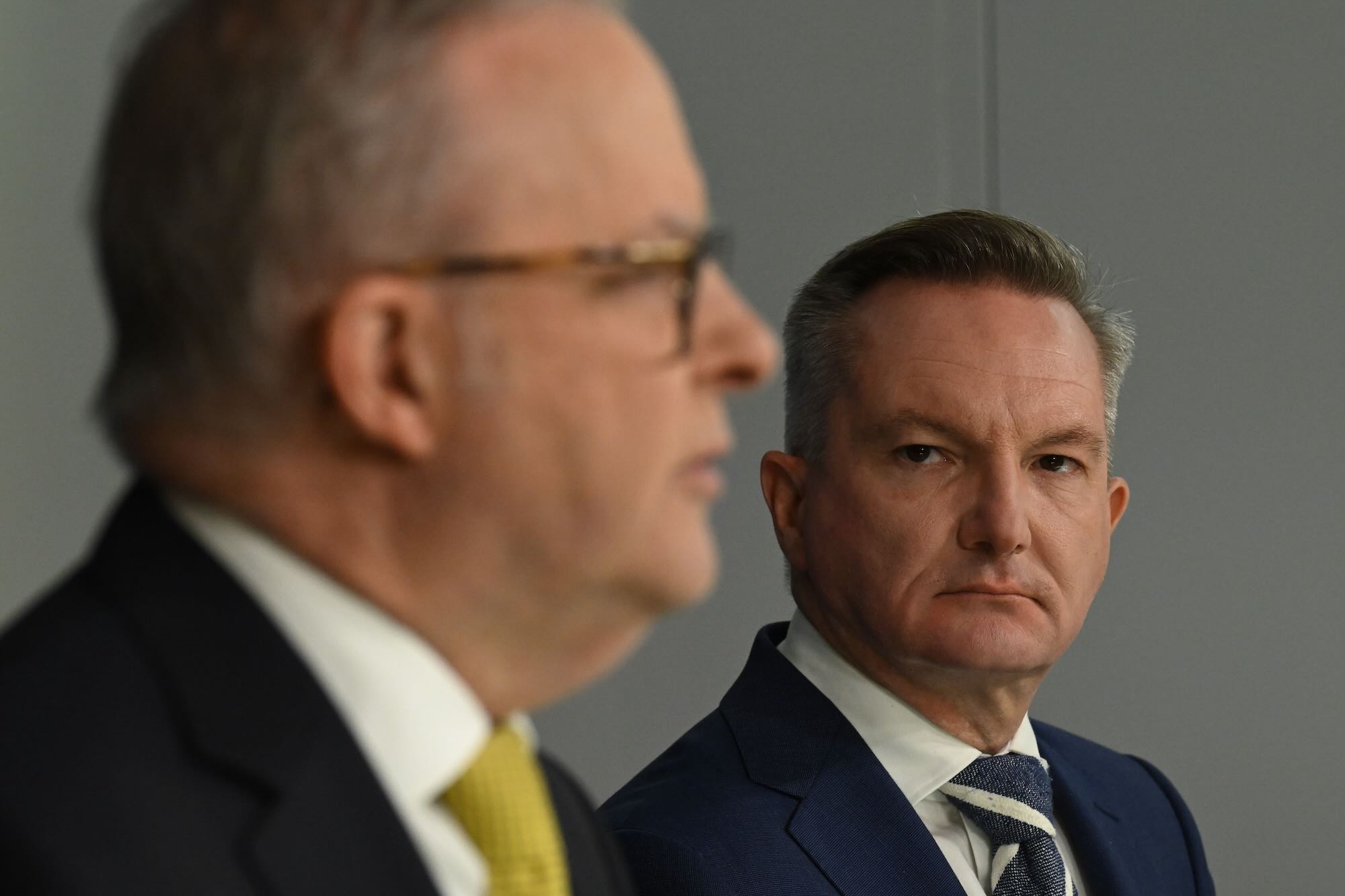
Prime Minister Anthony Albanese announced a suite of measures on Wednesday after a national cabinet meeting with state and territory leaders to discuss the fuel crisis.
They include a permanent, government-owned fuel reserve of about a billion litres to be established at a cost of $3.2 billion.
The minimum stock-holding obligation for suppliers will also be increased by about 10 days for every type of fuel.
The government will set aside $7.5 billion to set up a fuel and fertiliser security facility to increase supply and storage by providing financial support through loans, equity, guarantees and price support.
Australia’s onshore fuel reserves will be expanded to ensure at least 50 days of fuel supply, including stores of diesel and aviation fuel.
Latest figures show Australia has 43 days of supply of petrol, 33 days of diesel and 28 days of jet fuel.
Feasibility studies into newer, expanded fuel-refining capabilities will be given $10 million.
“What Australians can be certain of is that we are throwing everything at this to make a difference, to protect the interests of Australians,” Mr Albanese told reporters in Sydney.
Energy Minister Chris Bowen said Australia was in a minority of countries in the International Energy Agency that didn’t have a national reserve.
“If we had a government-owned reserve, which, at the direction of the government, could be sent to those areas of shortage … that would have been very handy and that’s what we’re building,” he said.
NRMA spokesman Peter Khoury said the measures “makes sense” and meant government would have a stake in storage capacity.
“Governments have repeatedly kicked the fuel security can down the road despite the clear warnings,” he said.
“Today, after the world’s worst oil shock, Australia’s fuel and energy requirements will go some way to being future-proofed.”
Opposition Leader Angus Taylor said the nation needed more fuel stocks, calling for the minimum stock-holding obligation to meet the 90-day requirement under the international energy treaty.
“We’ve laid out the costings to do that, the government needs to get on with it,” he told reporters in Melbourne.
“They’re not going that far and that’s disappointing.”
Climate Council chief executive Amanda McKenzie said the funding would not get Australia far in managing future fuel supply issues.
“This is a $10 billion plan for two weeks of fuel. That’s junk logic: keeping us chained to foreign oil from the Middle East rather than investing in solutions that give Australians control over their own energy like electric vehicles,” she said.
“True energy security means unshackling ourselves from price hikes and supply shocks that foreign oil drives.”
A temporary cut to the fuel excise has already been unveiled, carving 26 cents off a litre.
That $2.5 billion measure is due to run out at the end of June, but the treasurer has not confirmed whether the excise cut would continue beyond that point.
The federal measures have been outlined as Victoria becomes the second Australian state to secure a diesel stockpile.
The 10 million litre supply will be reserved for the state’s agricultural sector as an “insurance policy”, with the cost to remain secret due to the deal being commercial in confidence.
Western Australia has struck a deal to buy and store at least 4 million litres of diesel in the Kimberley as a backup supply for remote Aboriginal communities and key industries such as agriculture.
Source: AAP