Western Australia has awarded capacity credits to more big battery projects, solar battery hybrids and wind farms, highlighting the rapidly changing face of the world’s biggest isolated grid.
The final capacity credit allocations for the 2027/28 capacity year – which starts in October – were announced late Tuesday by the Australian Energy Market Operator, and reflect the ramp up of new capacity as it prepares for the closure of the last state-owned coal generators by the end of the decade.
W.A. currently sources around 40 per cent of its electricity needs from wind and solar, with peaks of around 85 per cent, but these numbers will jump significantly as the last coal units are wound down before 2030 and more wind, solar and battery projects are added to the grid.
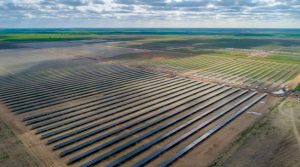
The capacity credit allocations are seen as a make or break for some projects, particularly for the likes of the listed company Frontier Energy, which finally secures credits for its proposed Waroono solar battery hybrid, combining 120 MW of solar and an 80 MW, 360 MWh battery, having missed out last year.
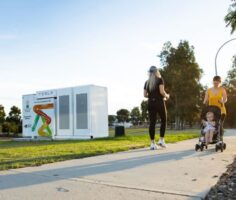
The main new battery to join the list is the 164 MW /905MWh Muchea battery to be built by Neoen, its first six hour battery, adding to its rapidly growing portfolio that includes the country’s biggest battery at Collie – 560 MW and 2,240 MWh – and a host of other batteries around the country.
Neoen, of course, built the world’s very first large scale battery at Hornsdale in South Australia in 2017. The Muchea battery has been assigned credits for 150 MW, equivalent to around $54 million for the year.
The addition of Muchea, along with the Merredin battery a year earlier in the 2026/27 allocation, means that seven big batteries will be receiving capacity credits in 2027/28 – Neon’s Collie and Muchea, Synergy’s Collie, and its two Kwinana batteries, Atmos Renewables’ Merredin, and Alinta’s delayed Wagerup battery.
There is also the Cunderdin solar hybrid facility – the first of its type in Australia, which is already feeding power into the grid in the evening peaks and well into the night, which will be joined by the Waroona solar battery hybrid facility.
AEMO executive general manager WA Kirsten Rose says a record 6,375 megawatts has been allocated for 2027/28, more than the 6,238 MW reserve capacity requirement, with 60 per cent of new facilities being batteries, renewables or hybrids.
“The growth in batteries and renewable energy entering the fuel mix is an example of the mounting investment underway in the SWIS,” Rose said in a statement.
“Importantly, AEMO assigned 4,077 MW of flexible capacity for 2027-28, which can rapidly ramp up and down when required to support an increasingly renewable-dominated system.”
In 2027/28, according to AEMO data, batteries have been assigned 1,568.5 MW of capacity credits, solar and battery hybrid facilities 134 MW, with wind getting 231 MW, wind and solar 36.5 MW, and standalone solar 9.5 MW.
Each facility receives an annual payment of $360,700 per megawatt. In a further sign of the changing times, the price was once based on the construction cost of a 160 MW gas turbine. Now it is based on the cost of a 200 MW battery facility.
“The annual regulated process in assigning capacity credits assesses specific criteria for each facility, including size and technology-type, against the forecast requirement,” Rose says.
These are set in the W.A. market’s annual Electricity Statement of Opportunities (ESOO). This helps to ensure adequate electricity capacity is available two years ahead of when it’s required.
“This rigorous process supports the efficient, secure and reliable flow of electricity through the SWIS to meet consumers energy needs, while accounting for the network’s physical constraints,” she said.
See also Renew Economy’s Big Battery Storage Map of Australia
If you would like to join more than 26,000 others and get the latest clean energy news delivered straight to your inbox, for free, please click here to subscribe to our free daily newsletter.